 15 Sep, 2026
151Views
15 Sep, 2026
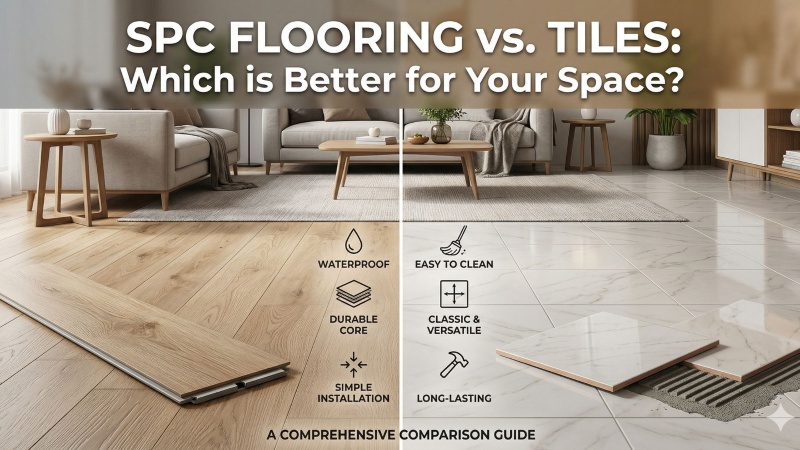
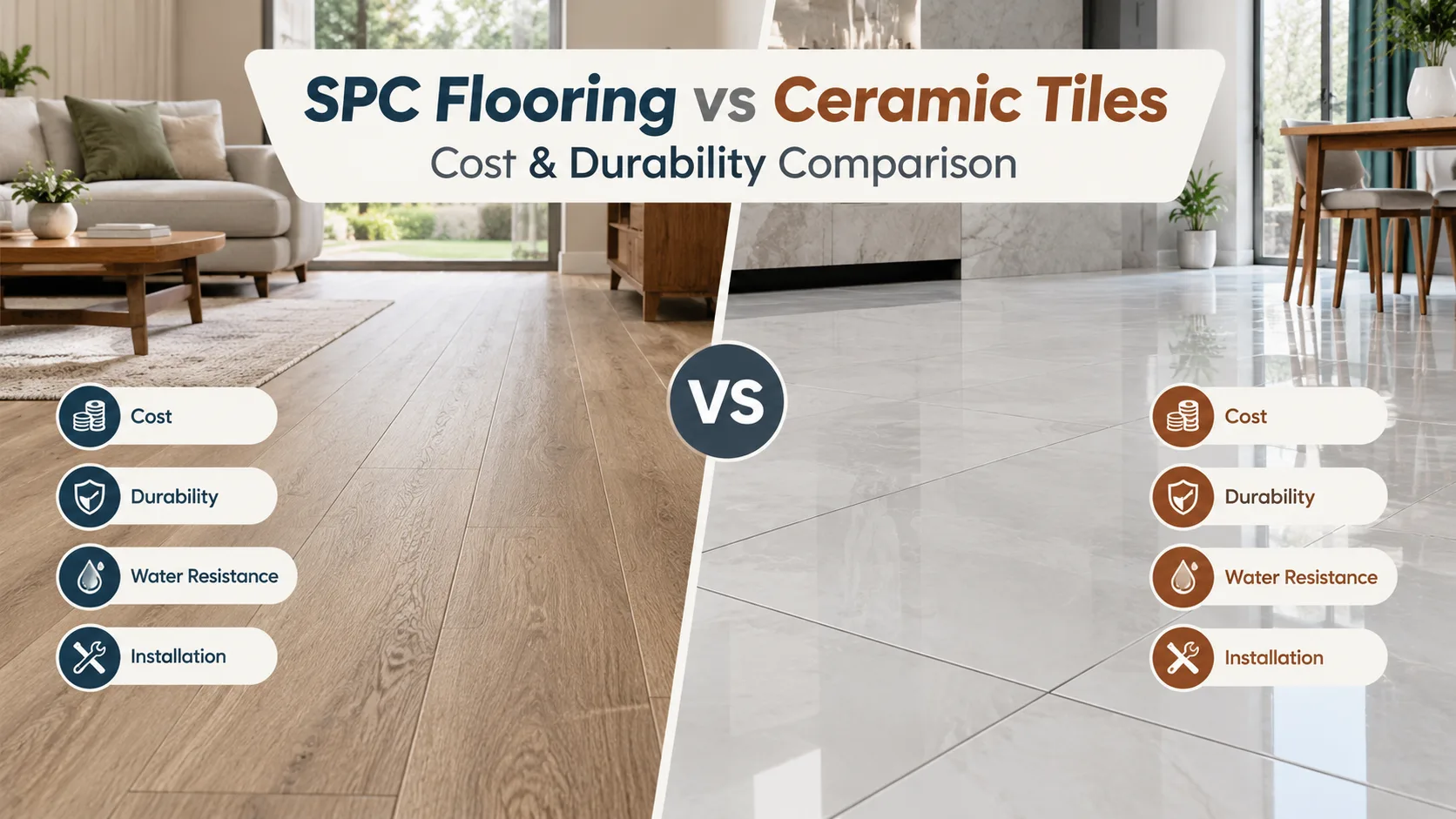
151Views If you have spent any time comparing flooring options lately, you have probably landed on some version of the same question everyone else is asking. Is SPC flooring actually worth it, or should you just stick with tried and true ceramic tiles? Searching SPC flooring vs ceramic tiles usually brings up the same generic points repeated across dozens of sites, without much depth. It is a fair question, and honestly, one that does not have a single right answer, because the right floor depends entirely on your budget, your room, and how long you are planning to live with the result.
This guide breaks down SPC flooring vs ceramic tiles specifically on the factors that matter most in practice. What it actually costs, how each one holds up over time, how they perform in Indian climate conditions, and where each material genuinely wins. No vague marketing language, just real numbers, real trade offs, and an honest look at both sides.
What Are We Actually Comparing?
Before getting into cost and durability, it helps to know what is structurally different between these two materials, since that difference is what drives every other comparison point in this guide.
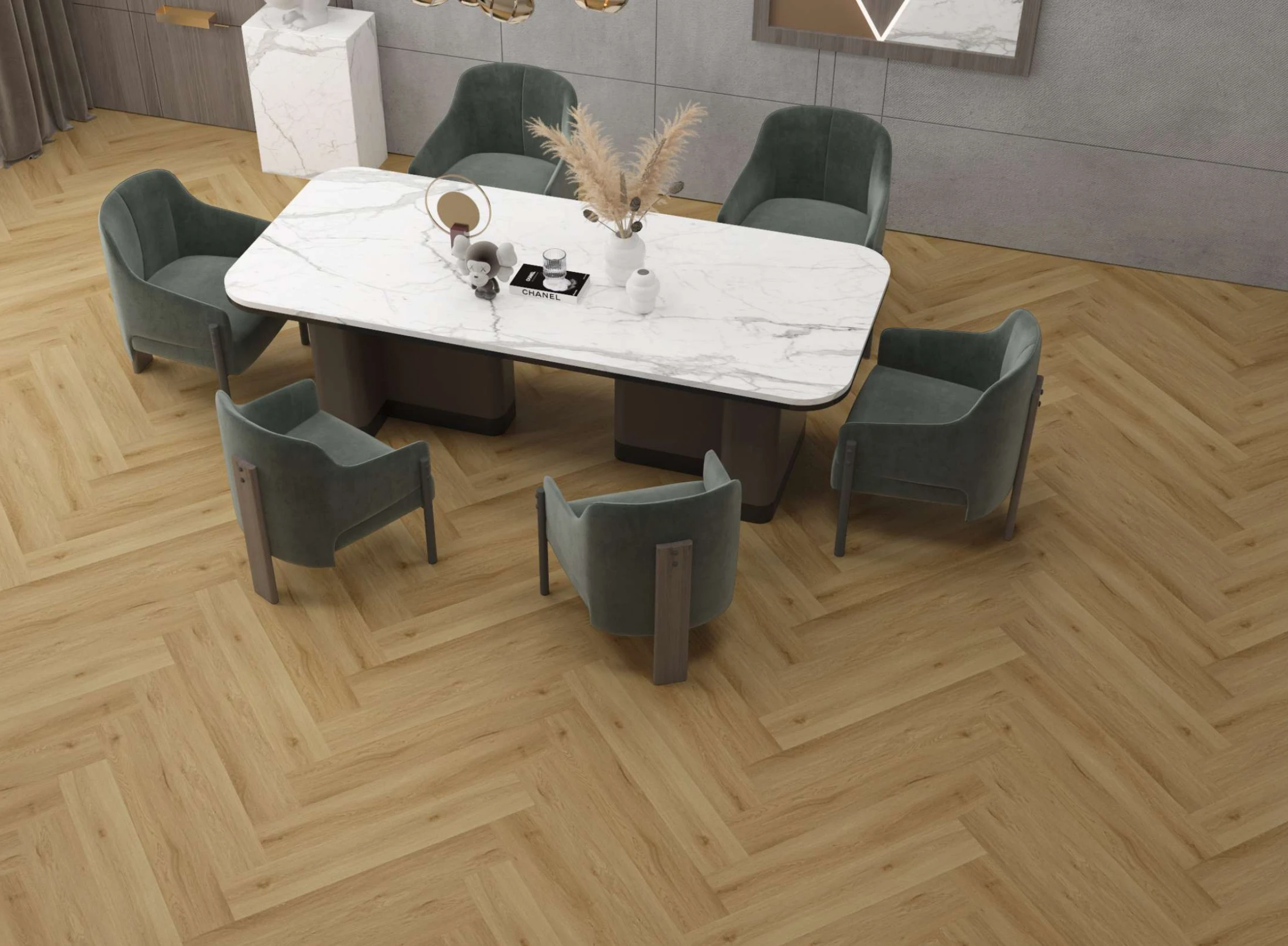
SPC (Stone Plastic Composite) flooring is a rigid core vinyl product built from limestone powder, PVC, and stabilisers, topped with a printed design layer and a protective wear layer. It is manufactured in interlocking planks or tiles, typically 4mm to 7mm thick, designed to click together in a floating installation that sits on top of your existing subfloor rather than being bonded to it.
Ceramic tiles are fired clay products, a genuinely different manufacturing process entirely, using natural clay, sand, and feldspar pressed and kiln fired at high temperatures. Porcelain and vitrified tiles are denser sub categories of ceramic, fired longer and hotter, which is why they are generally more water resistant and scratch resistant than standard glazed ceramic.
That structural difference, engineered composite versus fired natural material, is the root cause of almost every cost and durability difference covered in the sections below.
SPC Flooring vs Ceramic Tiles: Cost Comparison
This is usually where the decision actually gets made, so let us be specific with real Indian market figures rather than vague ranges.
Material Cost, City by City
Ceramic tile pricing spans an enormous range depending on where you buy and what quality tier you choose. Based on current 2026 pricing guides across Indian markets, basic ceramic tiles typically run ?30 to ?80 per square foot for material alone, vitrified tiles run ?50 to ?150 per square foot, and porcelain tiles run ?80 to ?250 per square foot. Location matters more than people expect. Buying directly from manufacturing hubs like Morbi, Gujarat, can save 15 to 20 percent compared to buying the same tile through a metro city retailer, since you are cutting out several layers of distribution markup.
SPC flooring tends to sit in a narrower, more predictable mid range band. Mid range SPC flooring typically costs ?130 to ?180 per square foot for material, with premium options running higher. That places SPC roughly in line with mid to premium vitrified tile pricing on material cost alone, and often below premium porcelain.
Installation Cost, Where the Real Gap Shows Up
Here is the part most people underestimate. The material price tag is rarely where the real cost difference lives. Ceramic and vitrified tile installation requires mortar, grout, backer board, spacers, and a skilled tiler working through subfloor levelling, tile cutting, and joint finishing. Tile installation labour in India typically runs ?30 to ?80 per square foot, and can push higher for complex patterns, borders, or large format tiles that need extra care during handling.
SPC flooring's click lock floating installation skips almost all of that complexity. There is no adhesive curing time, no grout to finish, and no specialised wet cutting tools required. SPC installation typically adds ?40 to ?60 per square foot on top of material cost, and because the process is faster and requires a smaller crew, total project timelines shrink significantly too.
This is exactly why an SPC flooring vs tile cost comparison almost always favours SPC once total installed cost is factored in, particularly against premium porcelain or intricately patterned tile work. A rough total installed cost comparison looks like this:
|
Flooring Type |
Material Cost (per sq ft) |
Installation Cost (per sq ft) |
Total Installed Cost |
|
Basic ceramic tiles |
?30 to ?80 |
?30 to ?45 |
?60 to ?125 |
|
Vitrified tiles |
?50 to ?150 |
?30 to ?60 |
?80 to ?210 |
|
Porcelain tiles |
?80 to ?250 |
?40 to ?80 |
?120 to ?330 |
|
Mid range SPC flooring |
?130 to ?180 |
?40 to ?60 |
?170 to ?240 |
|
Premium SPC flooring |
?200 to ?350+ |
?50 to ?70 |
?250 to ?500+ |
Note that these are general market ranges compiled from current Indian flooring cost guides, and actual pricing varies by city, brand, and project complexity, so always get a direct quote from your supplier before finalising a budget. Running your own SPC flooring vs tile cost comparison against local supplier quotes is always worth doing before committing either way.
Long Term Cost, Where It Gets More Complicated
Cost does not stop at installation day, though. Ceramic and porcelain tile, properly installed, can last 25 to 50 years without needing replacement. SPC flooring, while genuinely durable, typically has a realistic lifespan closer to 15 to 20 years under normal residential use. So while SPC usually wins on upfront and installation cost, tile can win on cost per year over a multi decade horizon, which matters if you are renovating a forever home versus a rental property or a space you will redo again within a decade regardless.
SPC Flooring vs Ceramic Tiles Durability: A Closer Look
Durability is not a single property. It is really several different kinds of resistance bundled together, and SPC and ceramic trade wins across different categories depending on what your household actually needs.
Scratch resistance. Ceramic and porcelain tile's fired surface is genuinely harder than SPC's wear layer, and premium porcelain often carries a PEI rating of 4 to 5, the industry's toughest durability classification for foot traffic. SPC resists scratches reasonably well too, but a hard soled shoe or a dragged piece of furniture is more likely to leave a mark on SPC than on porcelain.
Impact resistance. This is where SPC flooring durability genuinely pulls ahead of tile in one specific way. Ceramic tile is hard but brittle. Drop something heavy on it and it can crack or chip, sometimes requiring a full tile replacement that disrupts the surrounding grout lines too. SPC's engineered composite core flexes slightly under impact instead of shattering, which makes it a notably better choice for kitchens with dropped pans and dishes, or homes with young kids and pets running around.
Water resistance. Both materials are marketed as waterproof flooring options, but the mechanism differs in a way that matters long term. Tile itself is essentially waterproof, but its vulnerability is the grout. Grout is porous, can stain, and if it degrades over years, water can work underneath the tile and cause structural problems that are expensive to fix. SPC flooring's layered, locking construction forms a more genuinely continuous waterproof barrier across the whole floor, with far fewer weak points than a grid of grout lines, which is one reason SPC is increasingly marketed specifically as a waterproof flooring solution for bathrooms and kitchens.
Temperature and dimensional stability. Tile does not warp or expand meaningfully with temperature changes, and it pairs exceptionally well with underfloor heating, since it conducts heat efficiently. SPC has good dimensional stability across normal room temperatures too, but most manufacturers cap safe underfloor heating temperatures around 27 to 35 degrees Celsius, worth checking carefully if you are planning high temperature radiant heating systems.
Sound and comfort underfoot. This is an underrated durability adjacent factor. Ceramic and porcelain tile is hard and can feel cold and noisy, with footsteps echoing in larger rooms unless you add rugs. SPC flooring has a slightly cushioned feel thanks to its composite core and often an attached underlayment, resulting in a warmer, quieter walking surface, which matters a great deal for households with young children, elderly residents, or apartment living where noise transfer to the floor below is a genuine concern.
Maintenance and Cleaning, Day to Day Reality
Ceramic and vitrified tile requires relatively low daily maintenance, a regular sweep and damp mop keeps most tile looking good, but grout lines need periodic attention. In humid or high traffic homes, grout should be resealed roughly every one to two years to maintain its stain and moisture resistance, and deep grout cleaning is a genuinely tedious task most homeowners put off longer than they should.
SPC flooring is largely maintenance free by comparison, and its status as a genuinely waterproof flooring product means spills and daily moisture are a non issue. Its seamless, grout free surface means there are no joints for dirt or moisture to collect in, and a simple sweep and occasional damp mop is usually all it needs. This lower maintenance burden is one of the more practical, if less discussed, reasons SPC flooring has grown so quickly in popularity across Indian homes over the past few years, and it is a point worth weighing heavily in any SPC flooring vs ceramic tiles decision.
Best Flooring for Humid Climates: SPC vs Ceramic
This deserves its own section because it is one of the most common real world deciding factors, especially across South Asian, Gulf, and coastal markets where humidity genuinely stresses flooring choices year round.
Ceramic and porcelain tile has a long, proven track record in humid climates. It does not absorb moisture, does not support mold growth on its surface, and porcelain specifically, with water absorption typically below 0.5 percent, performs exceptionally well in bathrooms, kitchens, and even semi outdoor spaces. The one caveat is grout maintenance. In consistently humid environments, grout needs periodic resealing to keep performing as a genuine moisture barrier, and without that upkeep, humid conditions can eventually lead to grout discoloration or minor mold growth in the joints themselves.
SPC flooring also performs well in humidity, with its fully sealed, waterproof composite core resisting swelling and moisture damage far better than laminate or engineered wood flooring ever could. It is a legitimately strong option for humid climates, with the caveat that standing water left too long at seams can still find its way through over time, same as most floating floor systems regardless of brand.
For genuinely extreme, sustained humidity, think ground floor rooms in monsoon heavy regions, or spaces with poor ventilation, tile or vitrified flooring generally remains the more battle tested choice, though quality SPC is a very close second and considerably easier to install without disrupting an existing household.
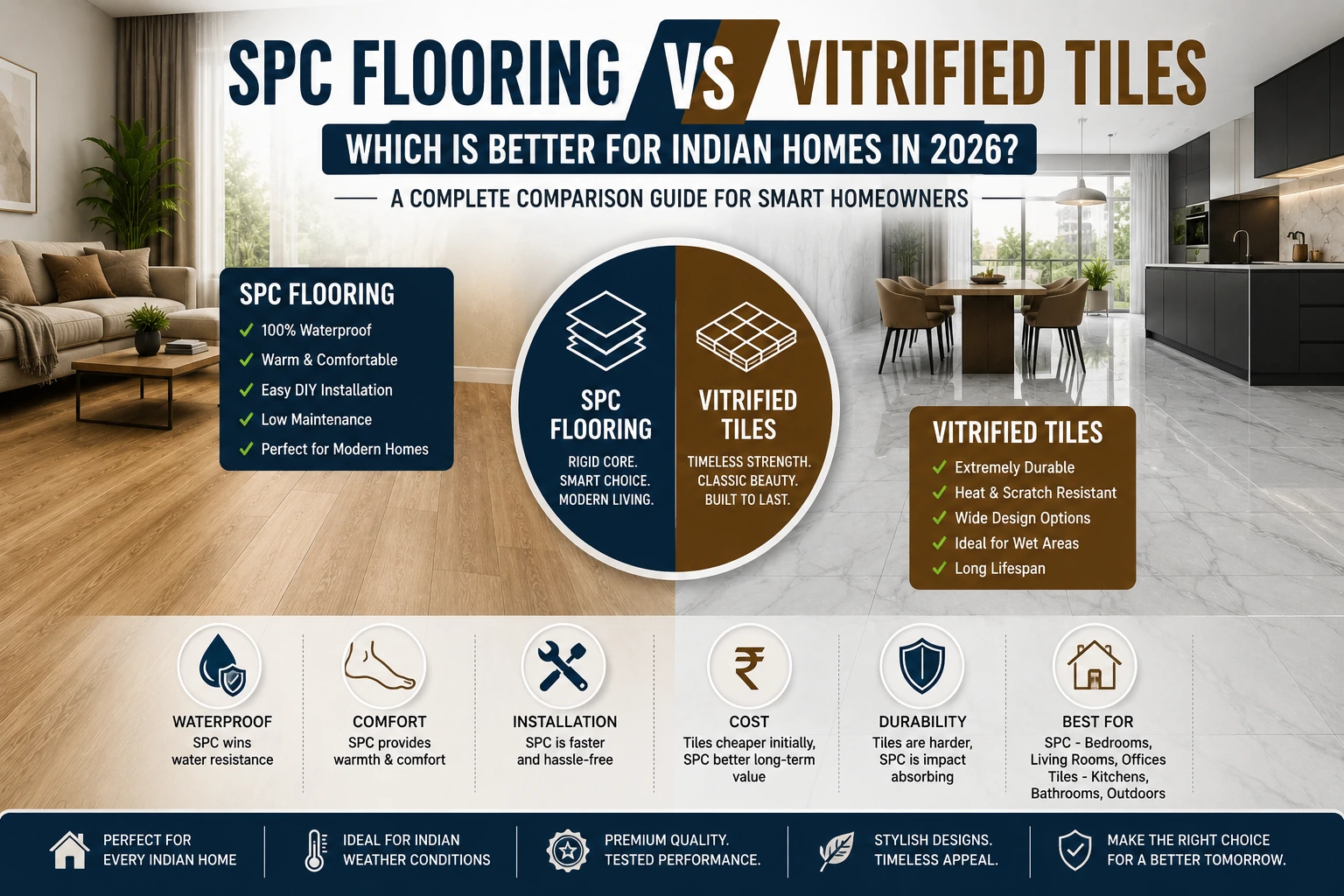
SPC Flooring vs Vitrified Tiles: A Comparison Worth Having Separately
Most SPC versus tile comparisons default to ceramic tile as the benchmark, but across India and much of Asia, vitrified tiles, not standard ceramic, are actually the dominant flooring category homeowners are choosing between. It is worth calling out the distinction directly rather than lumping every tile type together.
Vitrified tiles are manufactured through a process where the raw materials vitrify, or fuse into a dense, glass like structure, during firing, giving them lower porosity and higher strength than standard ceramic, without necessarily costing as much as imported porcelain. In an SPC flooring vs vitrified tiles comparison specifically:
- Strength: Vitrified tiles generally edge out SPC on raw surface hardness and scratch resistance, particularly relevant for very high traffic commercial areas
- Installation speed: SPC remains dramatically faster to install, the same advantage it holds against standard ceramic
- Cost per square foot: Often closer between SPC and vitrified than between SPC and premium porcelain, since vitrified tiles span a wide budget to premium range themselves, roughly ?50 to ?150 per square foot for material
- Design realism: Vitrified tiles can now be manufactured with genuinely convincing wood and stone look finishes through digital printing, closing much of the design gap that once favoured SPC
- Comfort: SPC retains its edge in warmth, quietness, and softer underfoot feel, an area where vitrified tile has not closed the gap at all
If you are choosing between these two specifically, the decision usually comes down to installation timeline and budget flexibility rather than a clear durability winner either way.
Installation Process, Side by Side
SPC flooring installation cost advantages become clearest once you look at the actual process step by step, not just the final invoice. Here is what actually drives that gap in practical terms.
- Subfloor prep. Both need a clean, flat, dry base, but tile is far less forgiving of minor imperfections, often requiring self levelling compound where SPC would tolerate the same surface without issue.
- Labour specialisation. Tiling genuinely requires a skilled tradesperson experienced in spacing, levelling, and grout finishing. SPC's click lock system is approachable enough for a confident do it yourself homeowner, though professional installation is still recommended for larger rooms.
- Project timeline. A mid sized room in SPC can often be completed in a single day. The same room in tile typically needs multiple days spread across subfloor levelling, laying, and grout curing time before the floor is even usable.
- Mess and disruption. Tiling is a wet, dusty job involving mortar and grout that can disrupt an entire household for days. SPC installation produces minimal mess and no drying or curing downtime, meaning rooms are usable almost immediately.
- Reversibility. SPC flooring, because it floats rather than bonds to the subfloor, is genuinely easier to remove or replace later without damaging the underlying structure, an advantage tile installation simply cannot offer.
Sourcing at Scale: What Builders and Bulk Buyers Should Know
If you are specifying flooring for a project rather than a single room, a few additional factors matter beyond the homeowner level comparison above.
Shipping efficiency matters more than people expect. Ceramic and vitrified tiles are heavy, and international shipments often hit container weight limits before they hit volume limits, meaning you are effectively paying to ship mostly empty space in the container. SPC flooring, being thinner and lighter per square foot of coverage, typically ships more efficiently, which can meaningfully reduce landed cost on large export orders, particularly for buyers importing across long distances.
Working with a manufacturer that produces both product lines has real advantages. Rather than sourcing SPC from one supplier and porcelain or vitrified tiles from another, each with separate certifications, lead times, and quality standards to vet independently, a manufacturer producing both under one roof can align specifications, packaging, and delivery schedules across a single project that uses both materials in different rooms or zones.
Antovia Surfaces manufactures both SPC flooring and a full porcelain and vitrified tile range from its facility in Morbi, Gujarat, India's largest ceramic manufacturing cluster, with dedicated domestic and export contact channels for builders and contractors sourcing either product line, or both, for a single project.
Environmental Considerations
Sustainability is increasingly part of this decision too, and neither material has a clean win here. Ceramic and vitrified tile is made from natural, abundant raw materials and is fully recyclable as construction aggregate at end of life, but the firing process is energy intensive, with kiln operation representing a significant share of manufacturing costs and carbon output industry wide.
SPC flooring uses PVC as a core component, a petroleum derived material, though the limestone content reduces the overall plastic proportion compared to standard vinyl flooring. SPC's longer replacement cycle when properly maintained, and its lighter shipping weight reducing transport emissions, are worth weighing against its material composition when making a genuinely informed comparison.
Room by Room: Which Wins Where
Your SPC flooring vs ceramic tiles decision does not have to be all or nothing across the entire home. Many homeowners mix both, using each material where it performs best.
- Kitchens: Tile remains the traditional pick for heat resistance near stovetops, but SPC's impact resistance against dropped dishes and warmer underfoot feel are winning over more buyers each year.
- Bathrooms: Both perform well with proper installation. Tile's long track record with anti slip textured finishes still gives it a slight edge in consistently wet zones like shower areas.
- Living rooms and bedrooms: SPC's comfort, quieter footfall, and faster installation make it the more popular modern choice for these lower moisture, higher comfort priority spaces.
- Basements and below grade spaces: SPC's waterproof, floating installation, which tolerates minor subfloor imperfections, is generally the safer, faster option for these trickier spaces.
- Outdoor and semi outdoor areas: Porcelain and vitrified tile remain the standard here. SPC is not typically rated for direct sun and weather exposure the way outdoor grade porcelain pavers are engineered to be.
- Home offices and study rooms: SPC's quieter, warmer surface is generally preferred for spaces where comfort during long hours of sitting or standing matters more than raw durability.
Resale Value and Buyer Perception
When weighing SPC flooring vs ceramic tiles for a home you might eventually sell, resale perception is worth considering alongside comfort and cost. Real estate professionals in India still tend to associate vitrified and porcelain tile flooring with a premium finish, particularly in living rooms and entryways where first impressions matter most to prospective buyers. SPC flooring, while growing rapidly in popularity, has not yet built the same decades long reputation in the resale market, though that gap is closing quickly as more homeowners and buyers become familiar with the product. For a home you plan to sell within the next few years, tile may carry a slight perception edge. For a home you plan to live in long term, that consideration matters far less than day to day comfort and maintenance.
Frequently Asked Questions
These are the questions we hear most often when people are actively deciding between SPC flooring vs ceramic tiles for a real project.
Is SPC flooring cheaper than ceramic tiles overall?
Usually yes, once installation is included. SPC's material cost is comparable to mid range vitrified tile, but its labour cost is significantly lower due to faster, simpler installation, often bringing total installed cost below premium porcelain and even some vitrified tile options.
Which lasts longer, SPC flooring or ceramic tiles?
Ceramic and porcelain tile generally outlasts SPC over a multi decade timeframe, often 25 to 50 years versus SPC's typical 15 to 20 year lifespan, though SPC remains highly durable for standard residential use throughout that period.
Is SPC flooring good for humid or coastal climates?
Yes, SPC's sealed, waterproof construction performs well in humidity, though tile and vitrified flooring remain the more proven choice for consistently extreme, sustained moisture exposure in ground floor or poorly ventilated spaces.
What is the difference between SPC flooring and vitrified tiles?
Vitrified tiles are a denser, low porosity ceramic subtype known for strength and scratch resistance, while SPC flooring is an engineered composite prioritising installation speed, comfort, and impact resistance. The choice usually comes down to timeline and budget rather than a clear durability winner.
Can SPC flooring be used in kitchens?
Yes, SPC is increasingly popular in kitchens for its waterproofing and impact resistance against dropped items, though tile remains the more traditional choice for direct heat exposure near stovetops.
Does SPC flooring feel as premium as porcelain tile underfoot?
It feels different rather than lesser. SPC is warmer and softer underfoot, while porcelain feels cooler and harder, which some homeowners associate with a premium, solid impression. Preference here is genuinely subjective.
How much does SPC flooring installation cost compared to tile in India?
SPC flooring installation typically adds ?40 to ?60 per square foot, compared to ?30 to ?80 per square foot for tile installation, with tile costs rising further for intricate patterns or large format pieces requiring specialised handling.
Final Thoughts
There is no universal winner in the SPC flooring vs ceramic tiles comparison. SPC generally wins on cost, installation speed, comfort, and maintenance, while ceramic and vitrified tile generally win on long term lifespan, scratch resistance, heat compatibility, and resale perception. Your specific room, budget, climate, and timeline should drive the decision more than any general recommendation can.
If you are sourcing either product, or both, for a project, Antovia Surfaces manufactures and exports SPC flooring alongside a full porcelain and vitrified tile range from Morbi, Gujarat. Visit antoviasurfaces.com for current specifications and export pricing.