 11 Oct, 2026
31Views
11 Oct, 2026
31Views Choosing a kitchen floor tile sounds simple until you start looking at the options. Porcelain, ceramic, marble, granite, slate, terrazzo, vitrified tiles, and then someone asks whether you want matte, polished, textured, large format or patterned.
Suddenly, “I just need a kitchen floor” becomes a small research project.
The good news is that you don't need to choose based on appearance alone. The right kitchen floor tile should balance durability, cleaning, moisture exposure, traction, maintenance and the overall look you want. Some options are excellent for busy family kitchens, while others make more sense when design or natural character is the priority.
In this guide, we'll look at 16 different types of kitchen floor tiles, explain what makes each one different, and then compare them based on the things that actually matter when you're choosing flooring.
What Are the Different Types of Kitchen Floor Tiles?
Before getting into the list, there is one important distinction to make.
“Tile type” can describe different things. It might refer to the material, manufacturing method, construction, appearance or format. Porcelain and marble, for example, are different material categories, while glazed and full-body describe aspects of tile construction. A mosaic describes a format or design approach rather than one specific material.
For this guide, the 16 options are grouped mainly around tile materials and construction types, with finishes, sizes and looks discussed separately.
That makes it easier to compare what you're actually buying rather than putting completely different categories into one bucket.
16 Different Types of Kitchen Floor Tiles
1. Ceramic Tiles
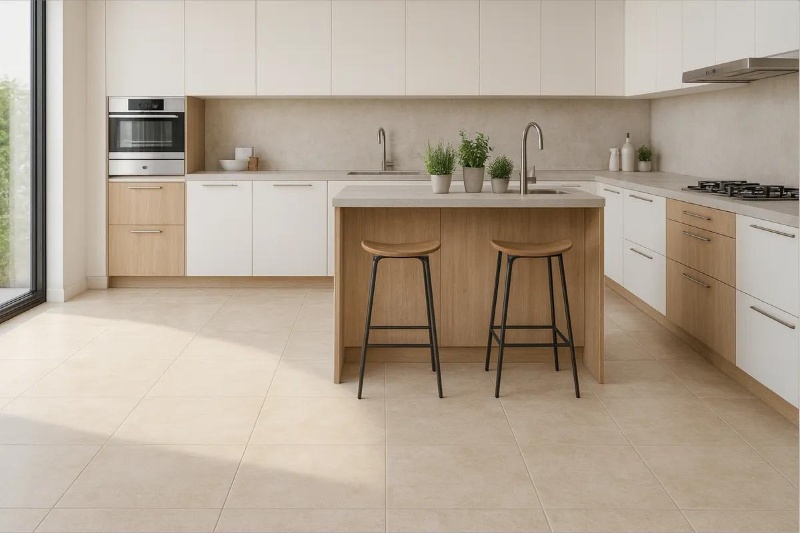
Ceramic tiles are one of the most established choices for residential flooring. They are manufactured from clay-based materials and available in a huge range of colours, patterns, sizes and finishes.
For kitchens, ceramic can be attractive because of its design flexibility and relatively straightforward maintenance. It can work particularly well in homes where the floor doesn't face extremely heavy traffic.
The important thing is to check the specifications of the individual product rather than assuming every ceramic tile has identical performance.
Best for: Everyday residential kitchens, versatile designs and projects with a broad choice of styles.
2. Porcelain Tiles
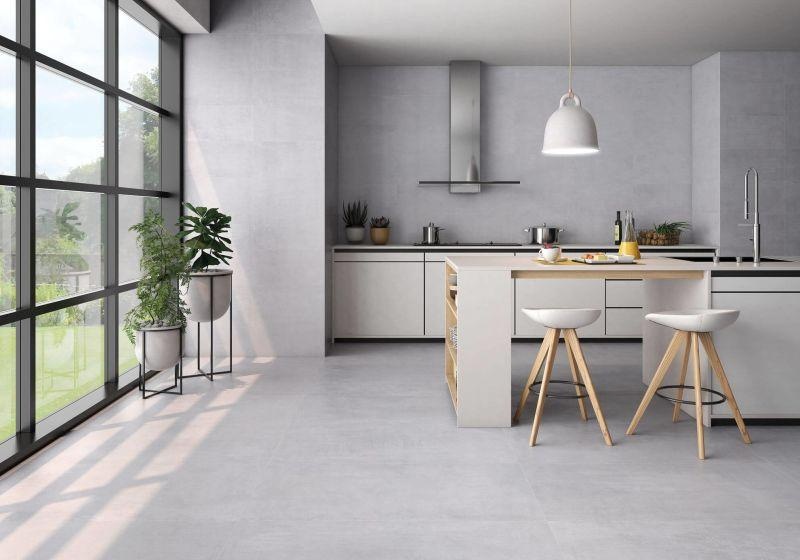
Porcelain tiles are made from refined clay and fired at high temperatures, producing a dense tile with low water absorption when manufactured to the relevant standard.
That makes porcelain a particularly popular option for kitchen floors, where spills, wet cleaning and regular foot traffic are part of daily life.
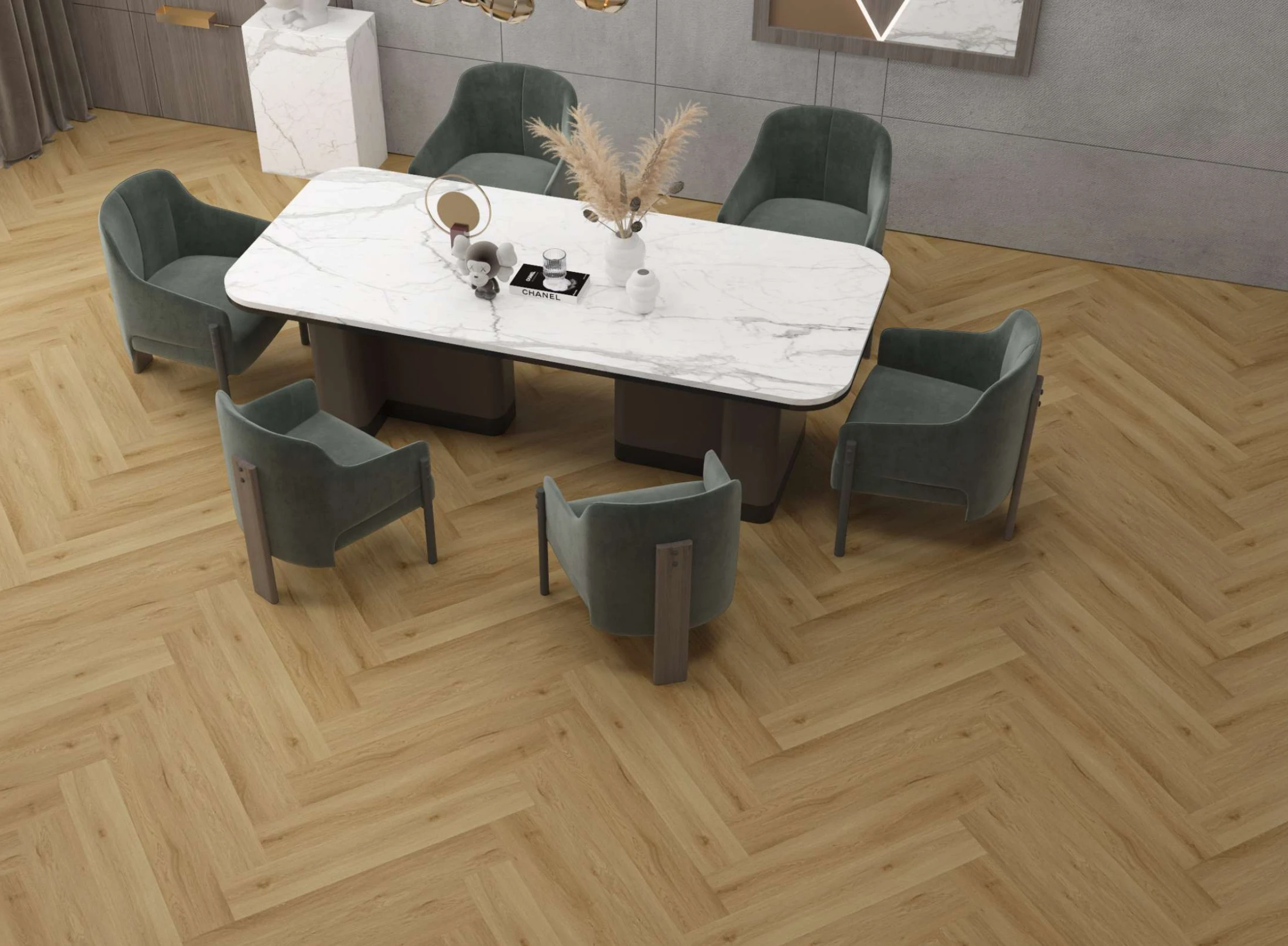
Another advantage is design flexibility. Modern porcelain can replicate marble, natural stone, concrete, terrazzo and even timber-inspired surfaces.
Porcelain tiles offer a practical combination of design flexibility and low maintenance for many kitchen projects. You can explore the available porcelain tile collection to compare designs, sizes and finishes for your space.
Best for: Busy kitchens, low-maintenance flooring and homeowners who want both performance and design flexibility.
3. Vitrified Tiles
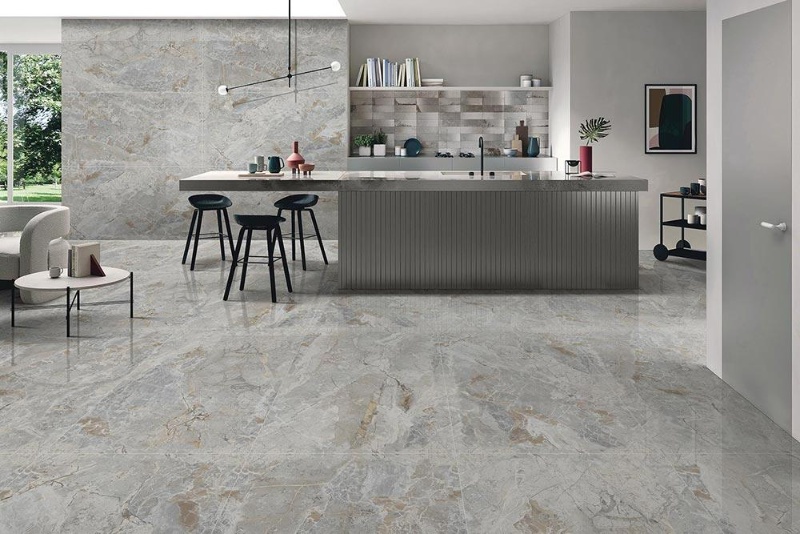
Vitrified tiles are manufactured through a process that produces a dense, glass-like structure with relatively low porosity. They are widely used in residential and commercial flooring applications.
For kitchens, vitrified tiles can provide a practical combination of durability, easy cleaning and contemporary appearance.
However, “vitrified” is not a guarantee of identical performance across every product. Always check the manufacturer's technical specifications, especially for water absorption, surface finish and intended use.
Best for: Modern residential kitchens and areas requiring durable manufactured flooring.
4. Full-Body Porcelain Tiles
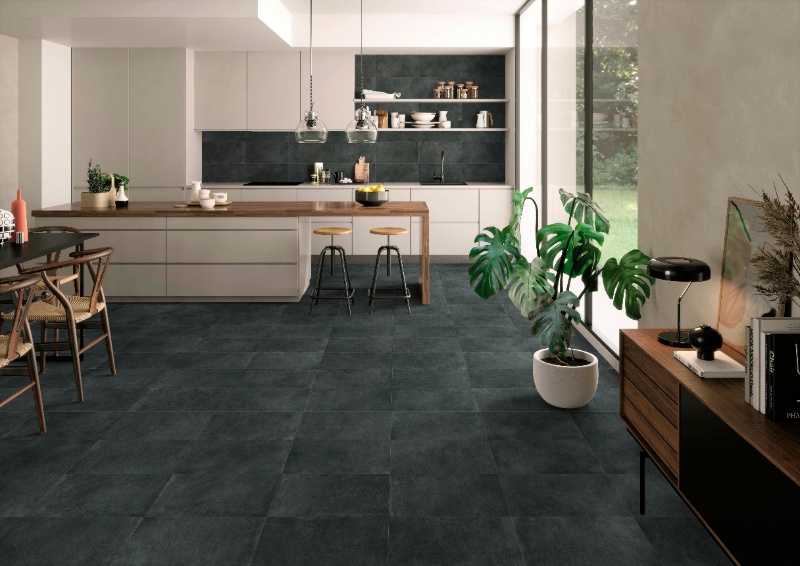
Full-body porcelain tiles have colour and material characteristics that extend through the body of the tile rather than relying only on a surface layer.
This construction can be useful where wear resistance and long-term appearance are important. The exact visual effect depends on the product, but full-body options can have a particularly solid, architectural character.
They are worth considering for kitchens with demanding everyday use, although the right choice still depends on the product's technical specifications.
Best for: High-use kitchens and projects where robust tile construction is a priority.
5. Glazed Porcelain Tiles
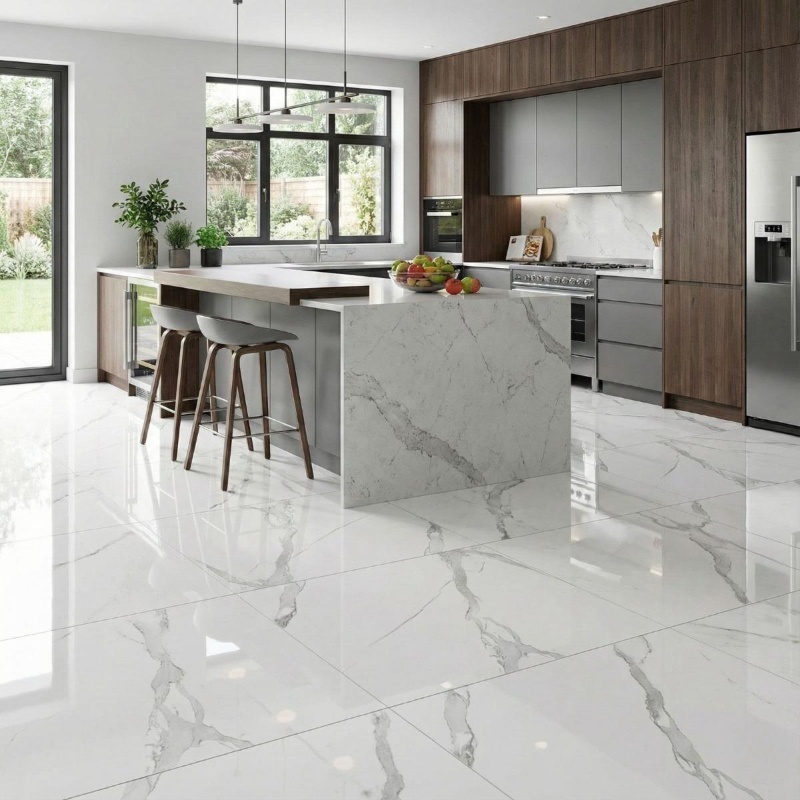
Glazed porcelain tiles combine a dense porcelain body with a decorative or protective glaze on the surface.
This gives manufacturers considerable freedom to create marble effects, stone patterns, colours, concrete looks and other decorative finishes.
For a kitchen, glazed porcelain can be a strong choice when you want the performance characteristics of porcelain alongside a specific design.
Best for: Design-led kitchens where appearance is just as important as practical performance.
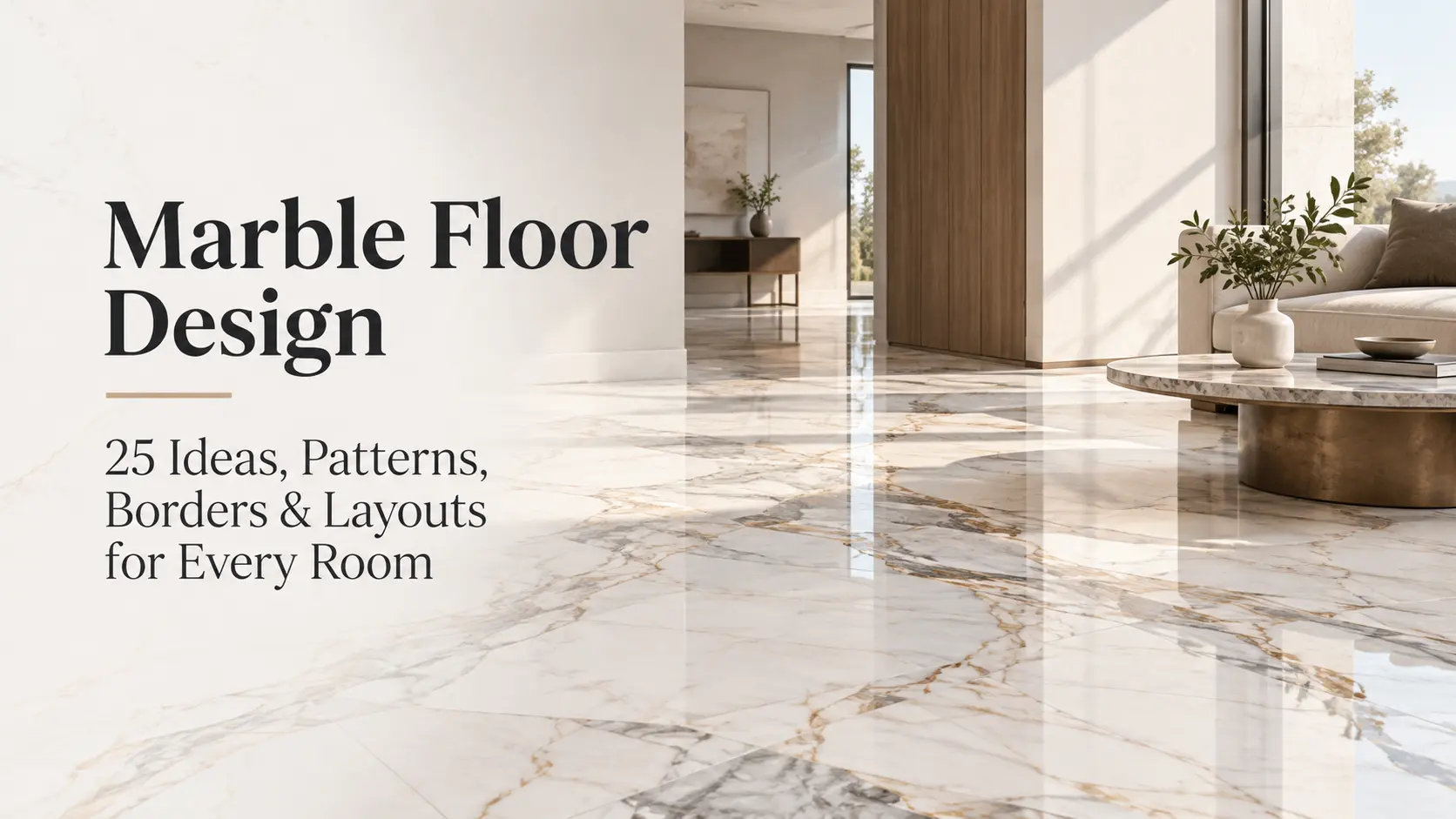
6. Marble Tiles
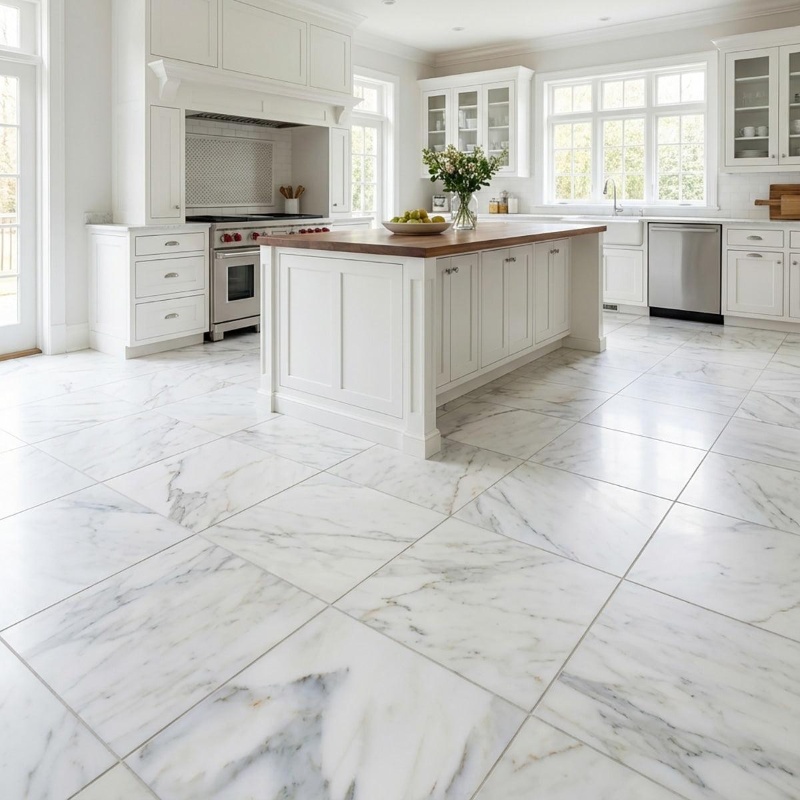
Marble brings a completely different character to a kitchen. Natural veining, colour variation and polished or honed surfaces can create a premium, high-end appearance.
But marble isn't simply a “luxury version” of porcelain. It is a natural stone and can require more care. Certain marble surfaces can be susceptible to staining, scratching or etching, depending on the stone and finish.
If you love natural variation and are comfortable with the maintenance requirements, marble can create a spectacular floor.
Best for: Luxury and classic kitchens where natural stone character is a major design priority.
7. Granite Tiles
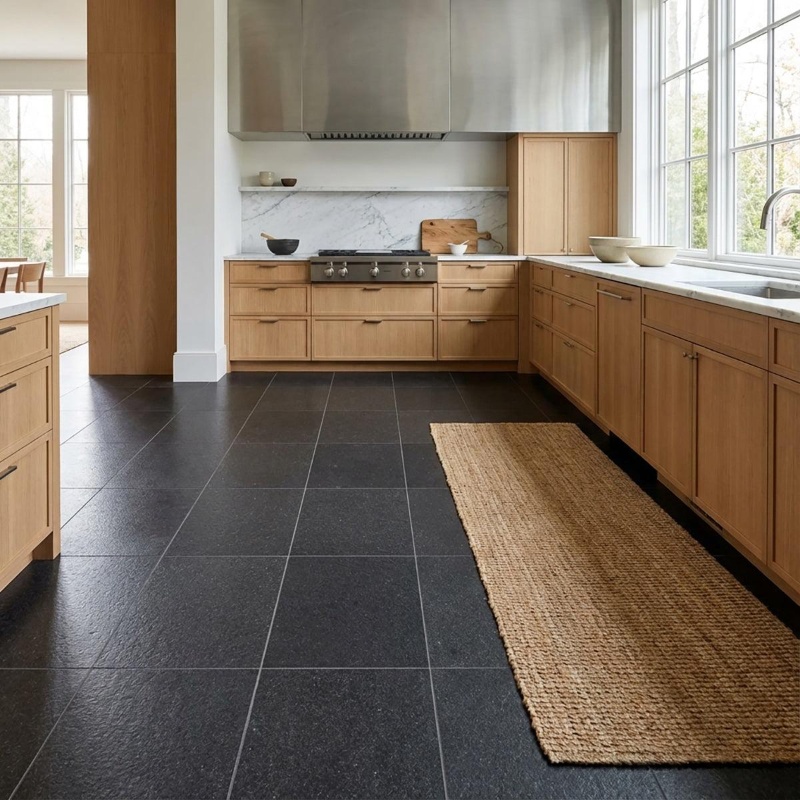
Granite is a dense natural stone known for its strength and distinctive mineral patterns.
Granite flooring can work well in kitchens that need a substantial natural-stone appearance. Colours range from relatively restrained greys and blacks to more complex patterns with visible mineral variation.
Maintenance and sealing requirements depend on the specific stone and finish, so the supplier's care recommendations should be followed.
Best for: High-use kitchens where natural stone and a strong visual presence are desired.
8. Slate Tiles
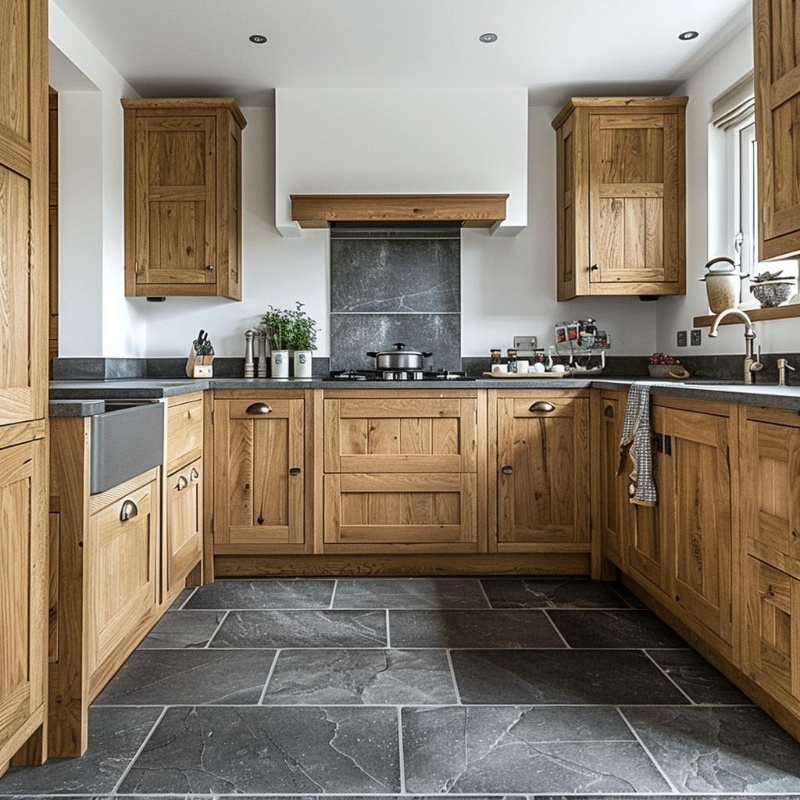
Slate has a naturally layered appearance and often brings earthy shades of grey, charcoal, brown or muted tones into an interior.
Its natural texture can give a kitchen a more relaxed, rustic or contemporary-natural appearance.
That texture is also something to think about before buying. A highly textured surface can require more cleaning effort than a smoother manufactured tile.
Best for: Rustic, industrial and nature-inspired kitchens.
9. Travertine Tiles
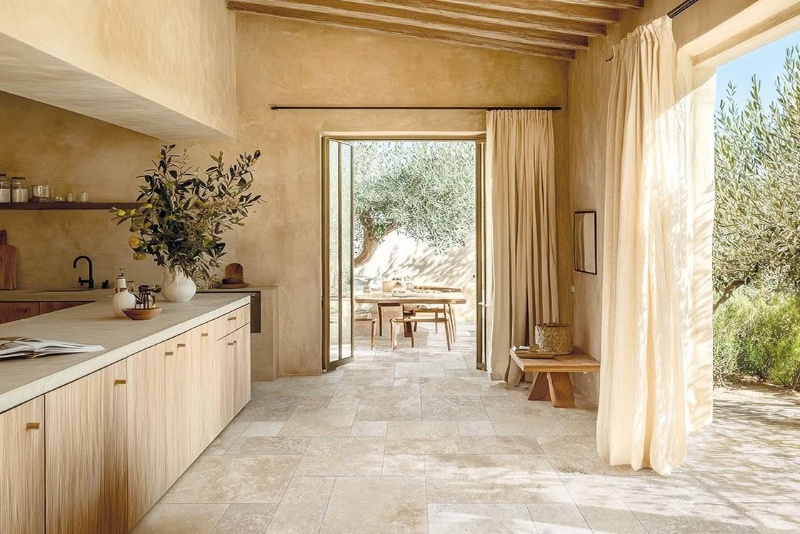
Travertine is a natural stone with characteristic pores, variation and warm earthy colours. It can create an inviting, traditional appearance that works particularly well in Mediterranean, rustic and classic interiors.
However, natural travertine generally requires more maintenance than many dense manufactured tiles. Sealing and appropriate cleaning practices may be necessary depending on the product and finish.
Best for: Warm, traditional and natural-looking kitchens.
10. Limestone Tiles
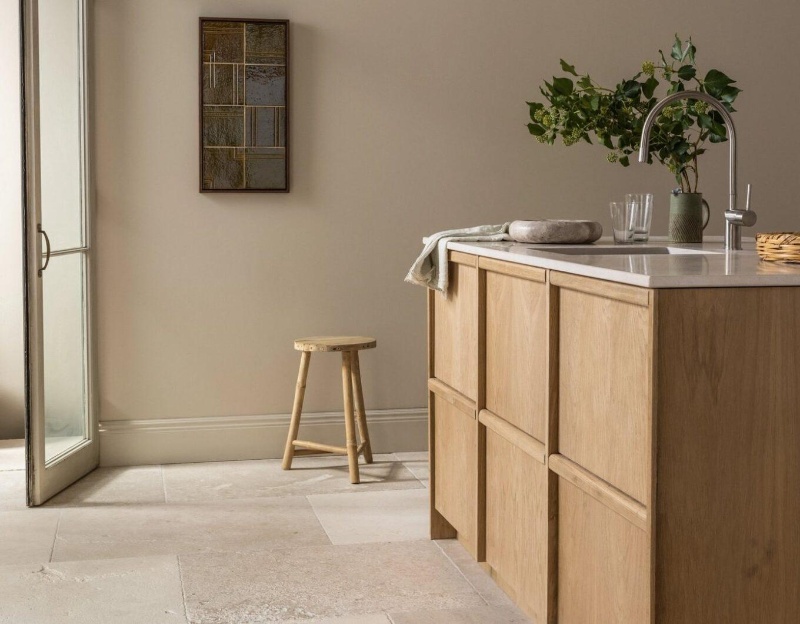
Limestone offers a softer, understated natural-stone appearance. Its neutral colours can work beautifully with minimalist, traditional and contemporary kitchen interiors.
Like other natural stones, limestone isn't a maintenance-free choice. Its suitability depends on the specific stone, finish, sealing and expected kitchen use.
If you're considering limestone, don't choose from a small sample alone. Natural stone can show meaningful variation between pieces.
Best for: Neutral, natural and understated kitchen designs.
11. Terracotta Tiles
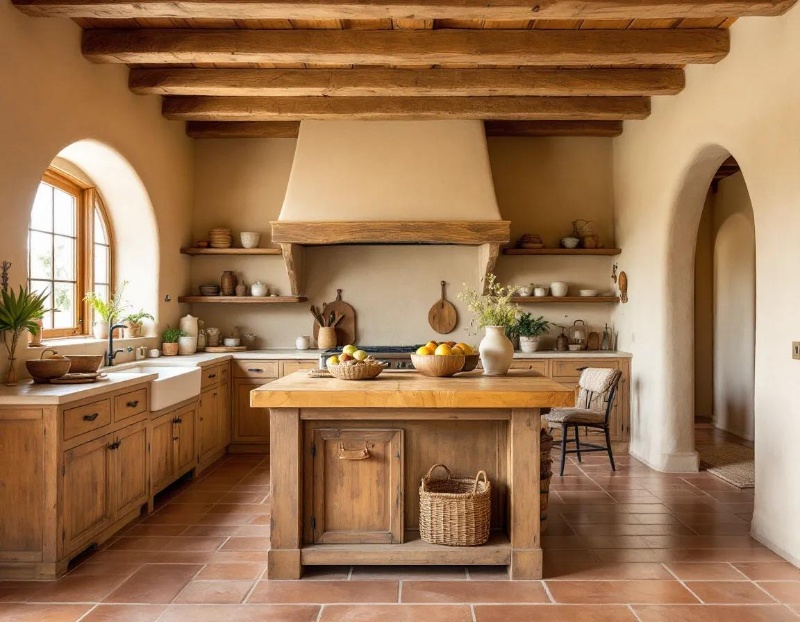
Terracotta tiles bring warm earthy colours and a handcrafted feel to a kitchen. Their reddish-brown tones can create a strong connection with traditional, Mediterranean and rustic interiors.
Their appeal is largely aesthetic, but that doesn't mean installation and maintenance can be ignored. Porosity, sealing and cleaning requirements should be considered before installation.
Best for: Rustic, traditional and Mediterranean-inspired kitchens.
12. Cement Tiles
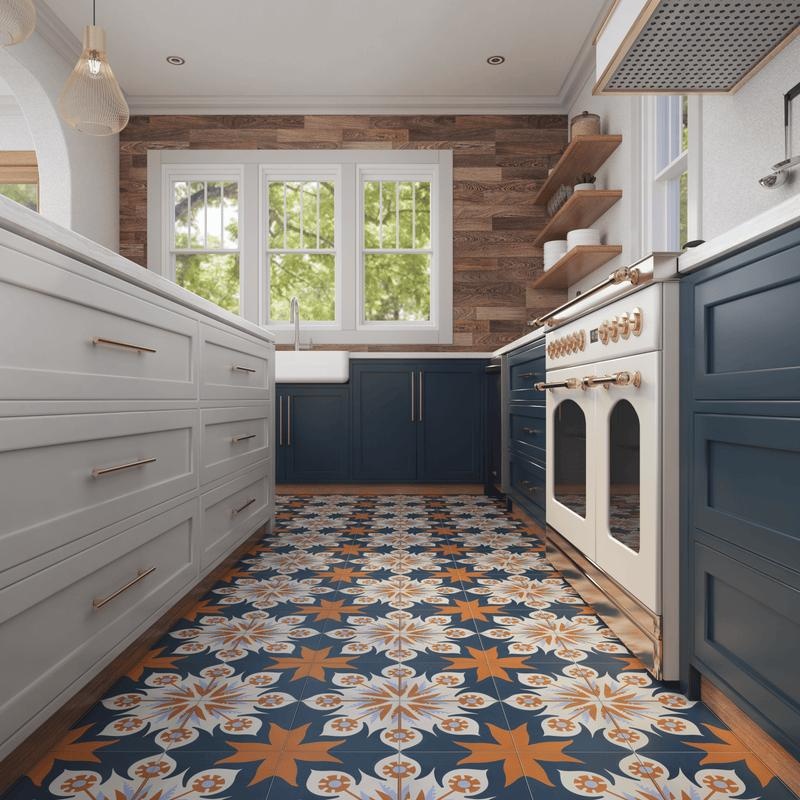
Cement tiles are known for bold patterns, decorative motifs and strong colour combinations. They can turn the kitchen floor into a major design feature rather than simply a background surface.
Their decorative nature makes them particularly interesting for patterned kitchens, but maintenance requirements can vary and some products may require sealing.
They also tend to work best when the rest of the kitchen is relatively controlled. If everything is competing for attention, even a beautiful patterned floor can become visually exhausting.
Best for: Pattern-led, vintage and statement kitchen floors.
13. Terrazzo Tiles
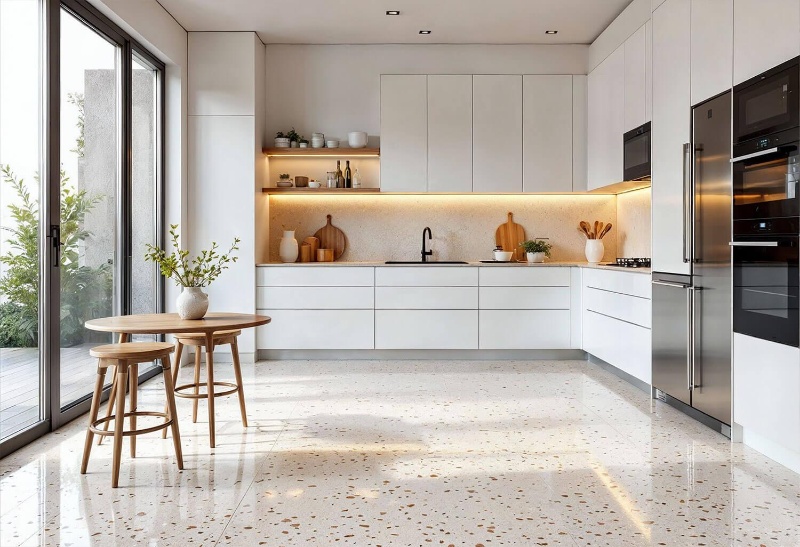
Terrazzo-inspired flooring is recognised by its characteristic chips or aggregate appearance distributed through a contrasting base.
It can create a contemporary, playful or architectural look depending on the colour combination and scale of the pattern.
Modern terrazzo tiles also make it possible to achieve this visual language through manufactured products, giving designers more control over consistency and installation.
Best for: Contemporary kitchens, colourful interiors and modern design schemes.
14. Mosaic Tiles
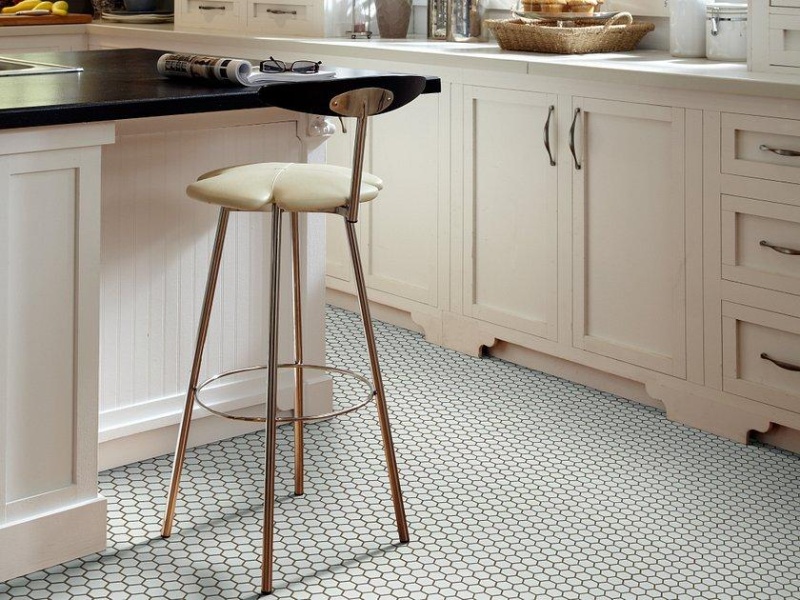
Mosaic isn't a single material. It is a small-format tile format that can be produced using ceramic, porcelain, glass, stone and other materials.
Mosaics can create borders, patterns, geometric floors and detailed feature areas. Their biggest visual advantage is flexibility.
The trade-off is grout. More individual pieces generally mean more grout joints, which can influence cleaning and maintenance on a kitchen floor.
Best for: Decorative flooring, geometric designs and kitchens where pattern is important.
15. Quarry Tiles
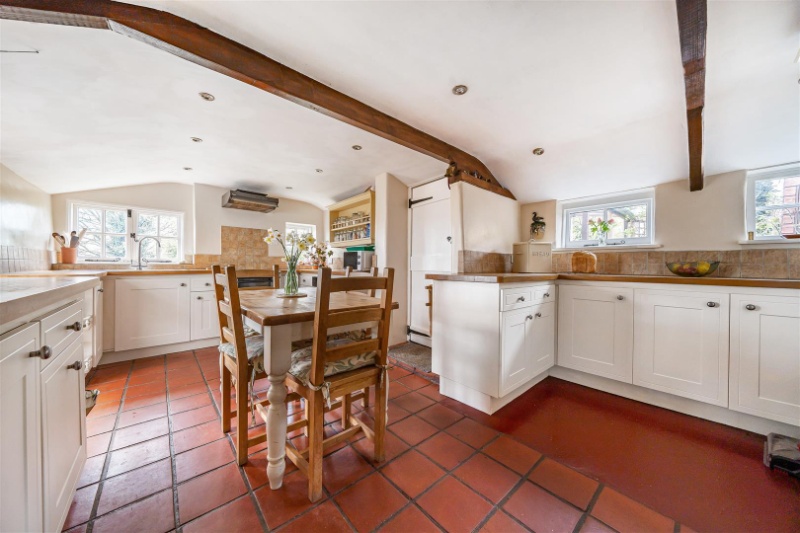
Quarry tiles are traditionally associated with dense, unglazed clay-based tiles and earthy colours.
They can create a practical, grounded appearance that suits traditional and rustic interiors.
As with any kitchen floor, the actual performance depends on the product, installation and surface characteristics. Cleaning and sealing requirements should be confirmed before installation.
Best for: Traditional, rustic and utility-style kitchens.
16. Glass Tiles
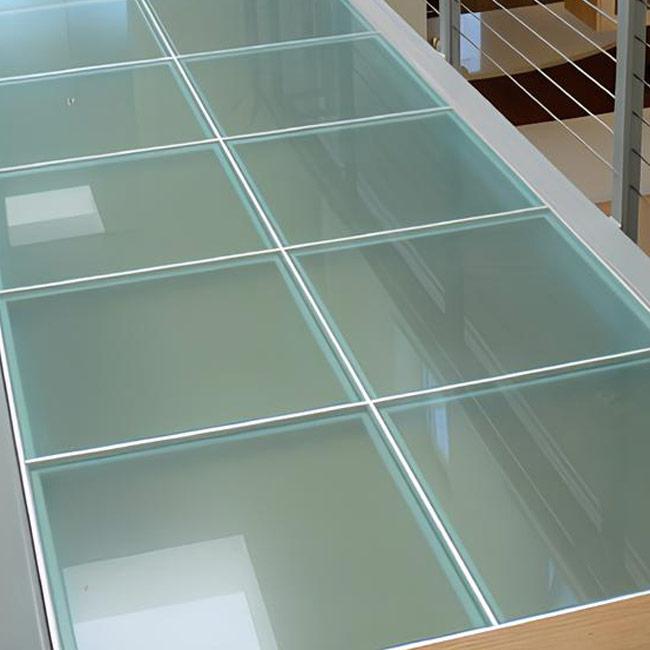
Glass tiles are far more commonly associated with walls and decorative applications than general-purpose kitchen flooring.
That distinction matters.
While certain specialised glass products can be designed for floor applications, you should never assume that a glass tile intended for a backsplash is automatically suitable for walking surfaces.
If you're considering glass for the floor, confirm that the specific product is rated and designed for flooring.
Best for: Specialised decorative applications where the product is specifically suitable for floor use.
16 Kitchen Floor Tile Types Compared
With so many options, comparing them side by side makes the decision easier.
|
Tile Type |
Main Characteristic |
Maintenance |
Common Kitchen Style |
Key Consideration |
|
Ceramic |
Versatile manufactured tile |
Low–Medium |
Almost any style |
Check floor suitability |
|
Porcelain |
Dense and versatile |
Low |
Modern, classic, contemporary |
Product specifications matter |
|
Vitrified |
Dense manufactured construction |
Low |
Modern |
Compare technical ratings |
|
Full-body porcelain |
Consistent body construction |
Low |
Contemporary, commercial |
Check exact product construction |
|
Glazed porcelain |
Decorative surface options |
Low |
Design-led |
Surface finish matters |
|
Marble |
Natural veining |
Medium–High |
Luxury, classic |
May need more care |
|
Granite |
Dense natural stone |
Medium |
Premium, traditional |
Sealing/care requirements |
|
Slate |
Natural texture |
Medium |
Rustic, industrial |
Texture affects cleaning |
|
Travertine |
Warm natural variation |
Medium–High |
Rustic, Mediterranean |
Porosity and sealing |
|
Limestone |
Soft natural appearance |
Medium–High |
Minimal, natural |
Requires appropriate care |
|
Terracotta |
Warm earthy character |
Medium–High |
Rustic, traditional |
Porosity and sealing |
|
Cement |
Decorative patterns |
Medium–High |
Vintage, statement |
Maintenance varies |
|
Terrazzo |
Aggregate-style appearance |
Medium |
Contemporary |
Product construction varies |
|
Mosaic |
Small-format design flexibility |
Medium |
Decorative |
More grout joints |
|
Quarry |
Dense, earthy appearance |
Medium |
Rustic, traditional |
Check product specifications |
|
Glass |
Reflective decorative look |
Product-specific |
Specialised |
Must be floor-rated |
Performance varies by product, finish, installation and manufacturer specifications.
What Should You Look for in Kitchen Floor Tiles?
A kitchen floor has a harder job than it first appears. It deals with food spills, water, cleaning, foot traffic, dropped objects, chairs, appliances and everyday dirt.
So don't choose your floor based only on a showroom sample.
Water and moisture
Kitchen floors regularly encounter water and wet cleaning. Lower water absorption can be an important characteristic, particularly where regular spills are expected.
This is one reason dense manufactured tiles are popular in kitchens.
Slip and traction characteristics
Don't assume that every matte tile is automatically slip-resistant or that every polished tile is automatically unsuitable.
Look at the manufacturer's stated performance and consider how the surface behaves when exposed to water, grease and cleaning residue.
Stain resistance
Coffee, oil, sauces and food spills are part of normal kitchen life.
A floor that is easy to clean can save considerable effort over the years, especially in a busy household.
Wear and abrasion
Think about how much traffic your kitchen receives. A kitchen connected to the main entrance or living area may experience much more foot traffic than a lightly used secondary kitchen.
Cleaning and maintenance
Texture, grout quantity and surface finish can all affect cleaning.
A dramatic textured floor might look fantastic in photographs but may require more effort than a smoother surface.
Matte, Polished or Textured Kitchen Floor Tiles?
Once you've selected the material, there is another decision: the finish.
Matte
Matte surfaces create a softer, understated appearance and are popular in contemporary interiors.
Polished
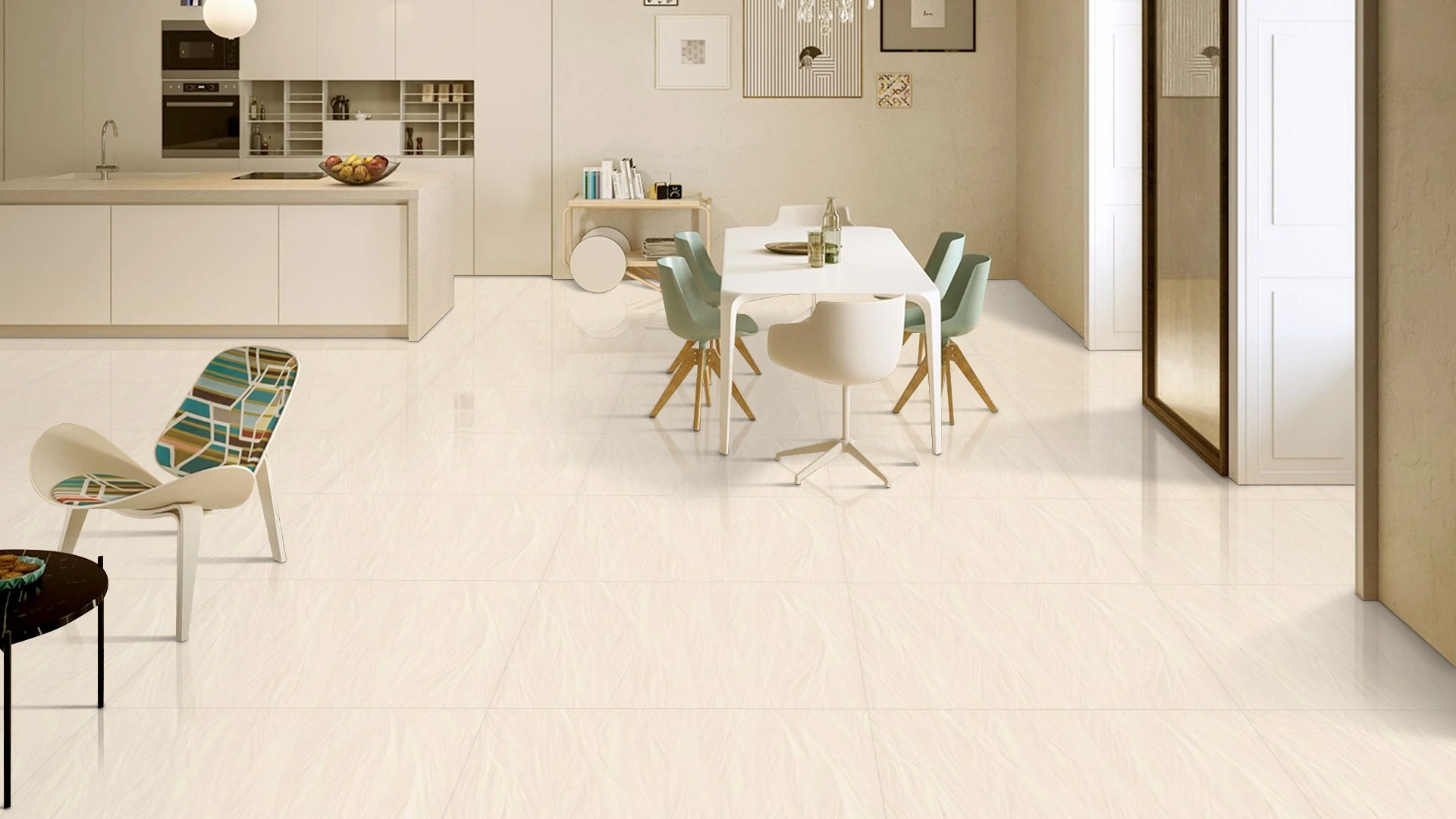
Polished surfaces reflect more light and can create a luxurious appearance. However, kitchen-floor suitability should be assessed based on the actual product's technical characteristics and the conditions in which it will be used.
Textured
Textured tiles introduce additional visual and tactile character. Depending on the product, texture can also influence traction and cleaning.
The key lesson is simple:
Tile material and tile finish are two separate decisions.
A porcelain tile, for example, can be produced with very different visual and surface finishes.
The choice between matte and glossy finishes affects the overall appearance of a kitchen floor. Read our guide to the differences between matt and glossy tiles for a closer look at their visual characteristics and maintenance considerations.
How Tile Size Changes the Look of a Kitchen
Size changes more than just the number of tiles you need.
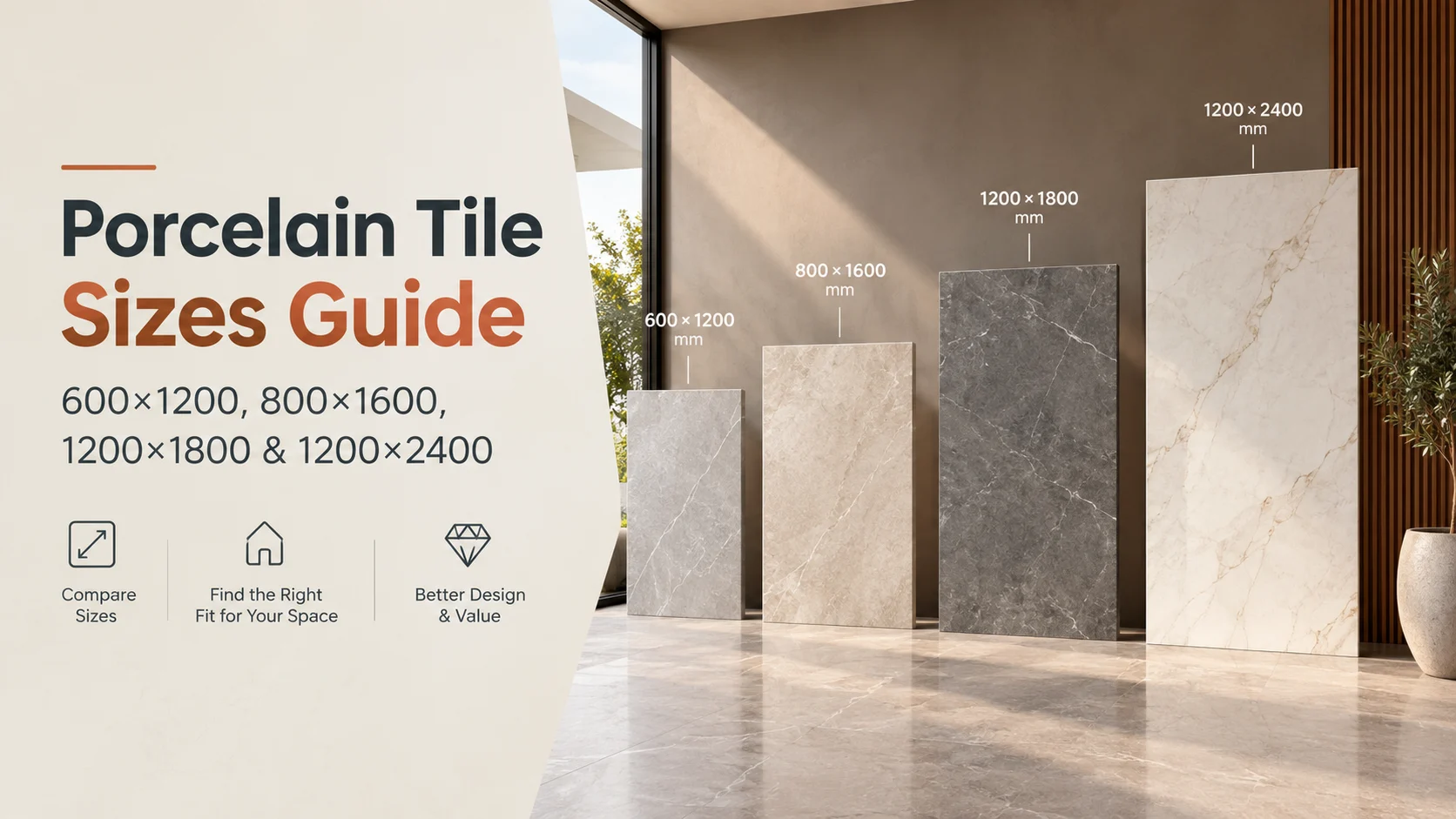
Large-format tiles can create a cleaner visual field with fewer grout joints, while smaller tiles and mosaics can introduce pattern and detail.
For a contemporary kitchen, large-format porcelain can create a calm, continuous appearance.
For a traditional or decorative kitchen, smaller formats can make the floor more visually expressive.
But don't choose a tile size based on a “small room equals large tiles” rule. The room dimensions, layout, tile geometry, installation requirements and desired visual effect all matter.
Popular Kitchen Floor Tile Looks
Material isn't the only way to define the appearance of your kitchen floor.
Marble-look tiles
These can deliver dramatic veining and a luxurious appearance while giving you a manufactured tile option.
Wood-look tiles
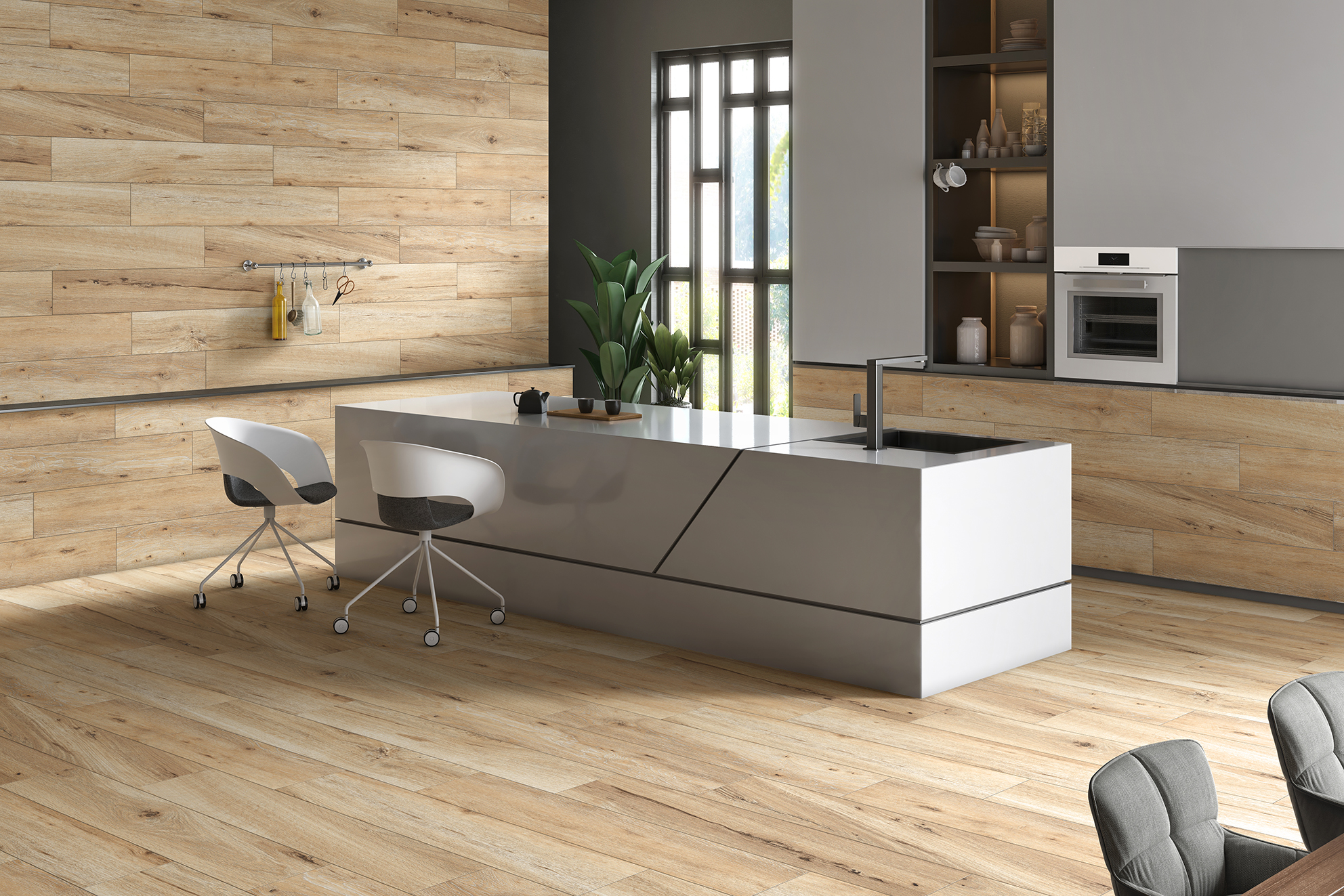
Wood-inspired surfaces bring warmth to kitchens where you want a timber-like aesthetic but prefer a tile flooring solution.
Stone-look tiles
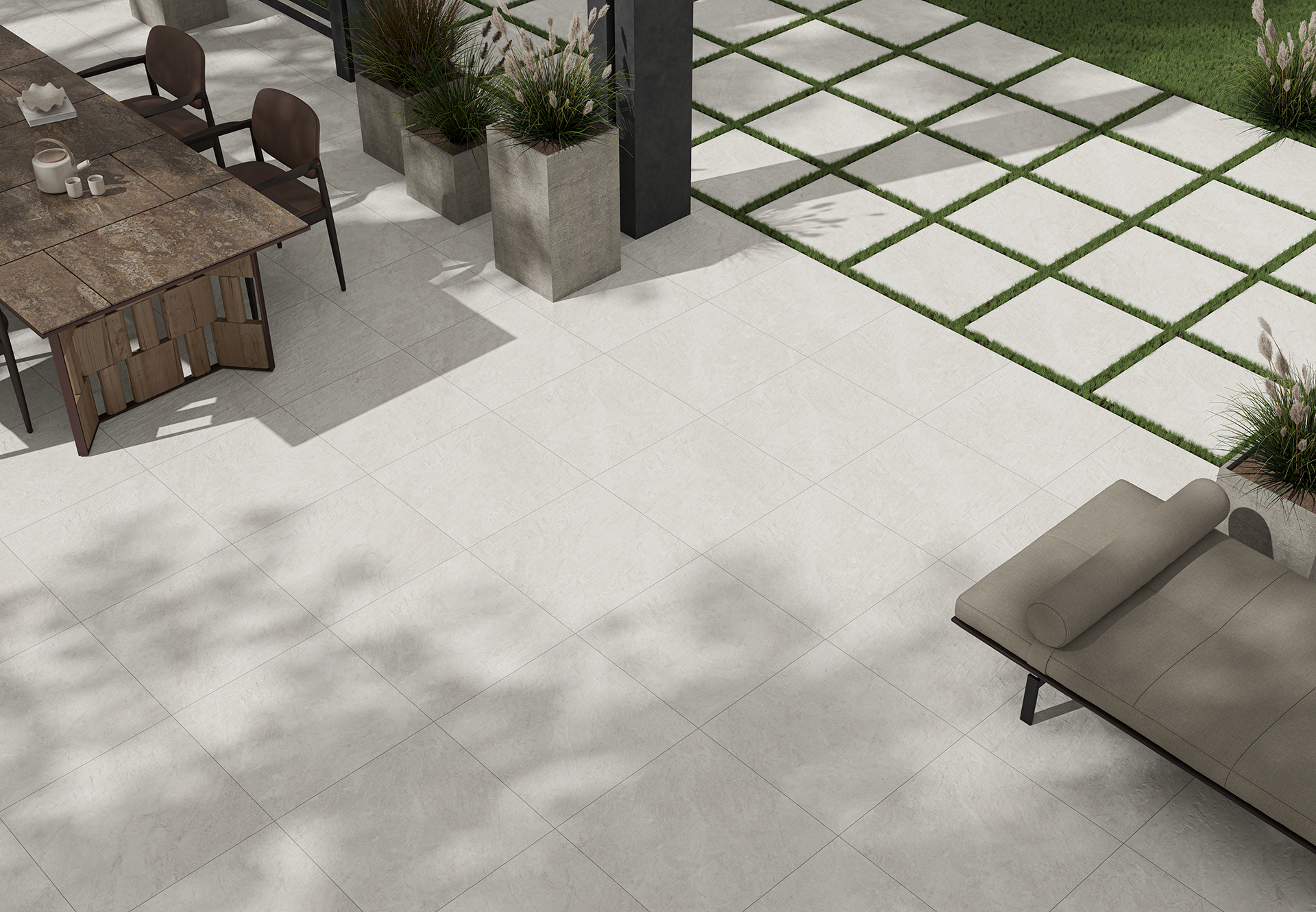
Stone-look porcelain and ceramic tiles can create natural visual variation with a more controlled manufactured surface.
Concrete-look tiles
These work particularly well in minimalist, industrial and contemporary kitchens.
Terrazzo-look tiles
Speckled designs add visual movement without requiring an extremely complex colour palette elsewhere in the room.
How to Choose Kitchen Floor Tiles for Different Styles
Your kitchen design should influence the tile, but it shouldn't completely override performance.
For a modern minimalist kitchen, consider large-format tiles in restrained colours and subtle patterns.
For a luxury kitchen, marble or marble-look porcelain can complement stone worktops and premium cabinetry.
For a rustic kitchen, slate, terracotta or natural stone can introduce texture and warmth.
For a contemporary kitchen, terrazzo-look, concrete-look and architectural porcelain surfaces can work particularly well.
For a traditional kitchen, softer natural tones and classic tile patterns can create a more timeless appearance.
The trick is to make the floor support the room rather than compete with everything else in it.
Porcelain vs Ceramic vs Natural Stone for Kitchen Floors
These three categories cover many kitchen projects, but they behave differently.
Porcelain is often selected when homeowners want a dense manufactured tile with broad design flexibility and relatively low maintenance.
Ceramic offers a wide range of designs and can be a practical option for suitable residential floor applications.
Natural stone brings genuine geological variation and a premium tactile quality, but usually requires more attention to sealing, cleaning and ongoing care.
There isn't one universal winner. The best choice depends on how you use the kitchen, the appearance you want and how much maintenance you're willing to accept.
7 Mistakes to Avoid When Choosing Kitchen Floor Tiles
-
Choosing a tile only because you like its showroom appearance.
-
Assuming all tiles within the same material category perform identically.
-
Ignoring the manufacturer's technical specifications.
-
Treating “matte” as an automatic guarantee of slip resistance.
-
Forgetting how grout joints affect cleaning and the overall appearance.
-
Choosing a natural stone without understanding its maintenance requirements.
-
Buying before checking a larger sample in your actual kitchen lighting.
How to Choose the Right Kitchen Floor Tile
If you're still comparing options, make the decision in this order.
First, assess your kitchen. Think about traffic, spills, cleaning habits and how the space connects to the rest of the home.
Next, choose the performance characteristics you need. Water absorption, surface characteristics, wear resistance, maintenance and intended use should come before colour.
Then choose the material. Porcelain, ceramic, natural stone and other options each bring different advantages and trade-offs.
After that, select the finish and appearance. Decide whether you prefer matte, polished or textured surfaces, then narrow down colours, patterns and stone- or wood-inspired looks.
Finally, check the actual product. Review technical information, installation requirements, recommended cleaning methods and suitability for floor use before purchasing.
A sample viewed under showroom lighting can look completely different under your kitchen's natural and artificial light. Always check the tile in the environment where it will actually be installed.
FAQs About Kitchen Floor Tiles
What is the best type of tile for a kitchen floor?
There isn't one best tile for every kitchen. Porcelain is a popular choice because of its density, design flexibility and relatively low maintenance, while ceramic and natural stone can also work well when the specific product is suitable for flooring and matches the needs of the space.
Are porcelain tiles better than ceramic tiles for kitchen floors?
Porcelain and ceramic are both useful options, but they are not identical. Porcelain is generally denser and has lower water absorption when manufactured to the relevant standard. The right choice depends on the kitchen, product specifications, budget and desired appearance.
Are natural stone tiles good for kitchen floors?
Natural stone can be an excellent choice if you want genuine variation and a premium appearance. However, different stones have different porosity, hardness and maintenance requirements. Sealing and cleaning recommendations should be followed for the specific stone.
What finish is best for kitchen floor tiles?
The answer depends on the product and conditions. Matte and textured finishes are common choices, but you should evaluate the manufacturer's traction information and intended-use rating rather than choosing purely from the word “matte” or “textured.”
Are large tiles good for kitchen floors?
Large tiles can create a clean, contemporary appearance and reduce the number of visible grout joints. They can work particularly well in open-plan and modern kitchens, but the right size depends on the room dimensions, layout and installation conditions.
How do I choose easy-to-clean kitchen floor tiles?
Look for a suitable surface with appropriate stain and maintenance characteristics, and consider how much grout and texture the design introduces. Dense manufactured tiles are often chosen for their relatively straightforward maintenance, but always follow the manufacturer's cleaning guidance.
Are glossy tiles suitable for kitchen floors?
Some glossy tiles may be suitable for flooring, while others may not be appropriate for areas where wet traction is important. Always check the specific product's technical information and intended application rather than assuming all glossy tiles are interchangeable.
Should kitchen floor tiles match the backsplash?
They don't have to. Matching can create a coordinated look, while contrasting the floor and backsplash can create more visual depth. A useful approach is to keep one surface relatively quiet if the other has a strong pattern.
Conclusion
The 16 different types of kitchen floor tiles covered here range from practical manufactured options such as porcelain, ceramic and vitrified tiles to natural stones such as marble, granite, slate and travertine, along with decorative choices such as terrazzo, cement and mosaic. Each has its own balance of appearance, maintenance, durability and application.
Don't choose your kitchen floor by colour alone. Start with how you use the room, then consider water exposure, traffic, cleaning, surface characteristics, maintenance and installation before narrowing down the design. Once performance is right, the fun part, choosing the colour, format and finish, becomes much easier.
Once you have identified the right material, finish and tile size for your kitchen, explore the Antovia Surfaces e-catalogue to review available tile designs and narrow down your options.