 13 Sep, 2026
94Views
13 Sep, 2026
94Views Porcelain tile sizes today range from the practical 600×1200mm format up to full 1200×2400mm mega-slabs. In short: 600×1200 suits budget-conscious rooms and bathrooms, 800×1600 works as a premium middle ground for living areas, and 1200×1800 or 1200×2400 are best for countertops, feature walls, and open-plan flooring where a near-seamless look matters most. Antovia Surfaces manufactures large-format porcelain tiles and slabs across this entire range, with domestic and export supply out of Morbi, Gujarat.
Ever stood in a tile showroom, stared at four boxes that all say "porcelain," and quietly wondered why the numbers on the labels are so different and why it actually matters? You're not alone. If you've started shortlisting tiles for a new home or a renovation, you've probably noticed something strange: the numbers keep getting bigger every year. What used to be a standard 2×2 foot floor tile has now grown into slabs roughly the size of a dining table.
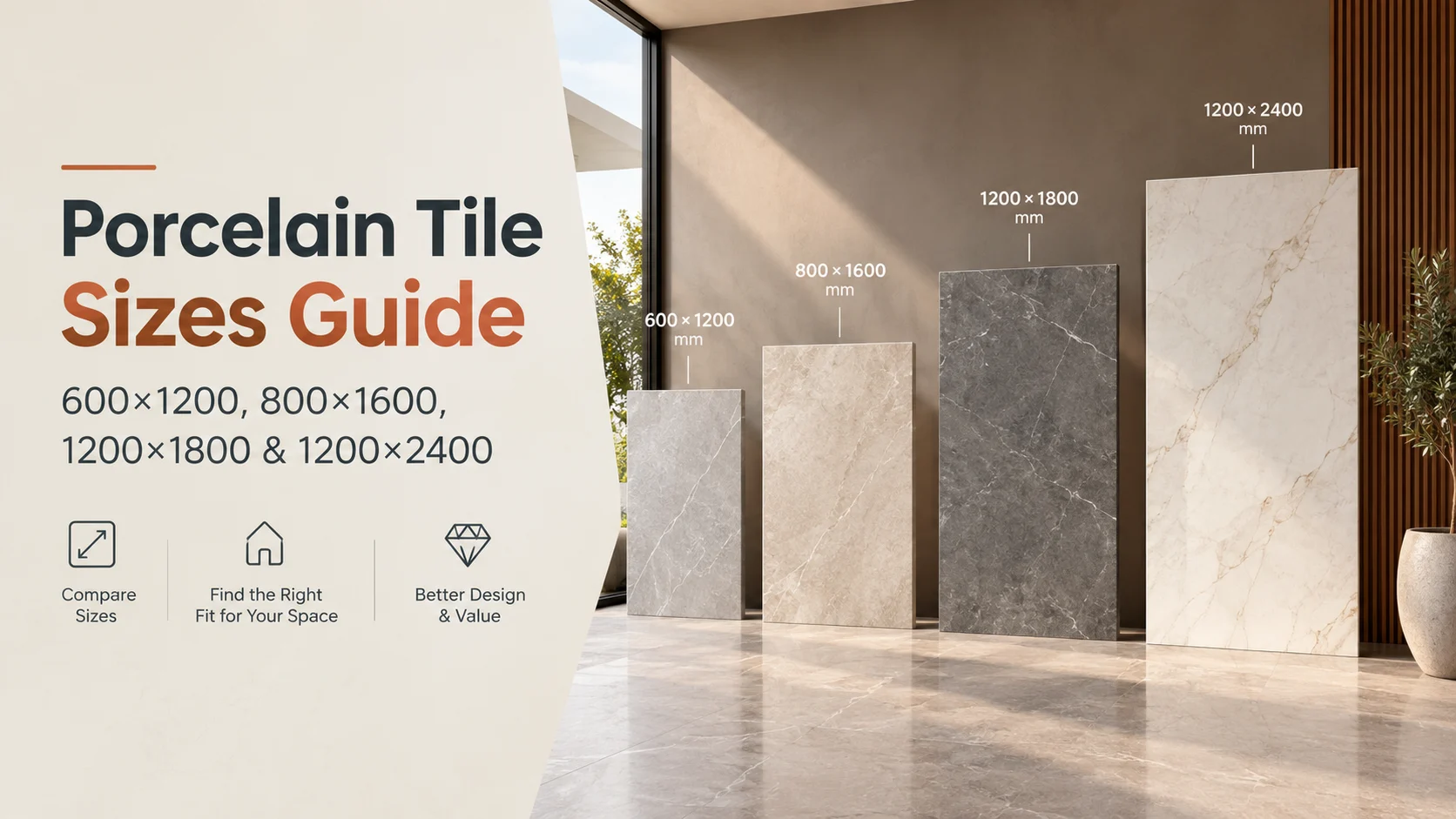
This guide breaks down the four porcelain tile sizes everyone's actually buying right now: 600×1200 mm, 800×1600mm, 1200×1800mm, and 1200×2400mm in plain, human language. No recycled spec sheets. Just a practical walkthrough of what each size looks like on the ground, where it earns its keep, and where it quietly becomes a headache if you pick it for the wrong room.
Key Takeaways
- 600×1200 mm: budget-friendly, forgiving, best for bathrooms and hallways
- 800×1600 mm: the underrated middle ground for living rooms and bedrooms
- 1200×1800 mm: enters "porcelain slab tiles" territory, ideal for countertops
- 1200×2400 mm: full mega-slab, best for feature walls and commercial lobbies
Always request the exact porcelain tile size chart and thickness from your supplier before ordering. Size and thickness don't scale together
Why Tile Size Decisions Feel So Overwhelming Right Now
Here's the thing nobody tells you upfront: tile size isn't just an aesthetic choice anymore. It's become a genuine engineering decision because the industry itself has shifted so fast.
Large-format tiles, anything above the old 600×600mm standard, now make up roughly a third of all newly launched tile products worldwide, according to recent building-materials market research. That's not a niche trend; that's a full-scale industry pivot. Porcelain specifically continues to dominate this shift, commanding just over half of total global tile demand, largely because its water absorption sits below 0.5%, a number that matters enormously once you understand what it prevents (more on that shortly).
So why does this feel overwhelming? Because unlike choosing a paint colour, a tile size decision is hard to reverse once it's grouted into your floor. Get it wrong, and you're not repainting a wall on a Sunday afternoon; you're chipping up flooring.
What Do These Porcelain Tile Sizes Actually Mean?
Let's slow down for a second, because "porcelain tile sizes" as a phrase gets thrown around loosely. In practice, it refers to the length and width of a single fired porcelain piece, measured in millimetres, before any cutting happens on-site.
Porcelain Tile Size Chart at a Glance
| Size (mm) |
Approx. Size (inches) |
Category |
Typical Thickness |
| 600×1200 |
24×48 | Large format |
8–10mm |
| 800×1600 |
32×64 |
Grand format |
9–12mm |
| 1200×1800 |
48×72 |
Jumbo slab |
6–12mm |
| 1200×2400 |
48×94 |
Mega slab |
6–12mm |
Here's something that surprises almost everyone the first time they see it: thickness doesn't climb in step with size. Some of the largest porcelain slab tiles are actually pressed thinner than a standard 600×1200 piece, thanks to newer compaction and firing technology. It's one of the first things worth double-checking on any porcelain tile size chart a supplier sends you, because assuming "bigger equals thicker equals stronger" can lead you toward the wrong product for a load-bearing floor.
The Real Problem: What Happens When You Pick the Wrong Size
Picking the wrong tile size doesn't just look off in photos; it creates real, physical problems that show up months later.
Three Mistakes We See Most Often
- Oversizing a small room. A 1200×2400 slab in a tiny bathroom generates enormous, expensive off-cuts around every fixture, and the room ends up feeling cramped rather than luxurious, because the eye has nothing to measure the space against.
- Skipping subfloor prep. Large format porcelain tiles are unforgiving of an uneven base. Lay a rigid, low-flex slab over a subfloor with even a few millimetres of variance, and hairline cracks can appear within a year.
- Underestimating installation labour. Buyers budget carefully for the tile itself, then get blindsided by the labour bill, because large slabs need more hands, suction lifters, and specialized adhesive, not just a bigger box of tiles.
None of this means large sizes are risky by nature. It just means the size has to match the room, the crew, and the budget, not just the showroom photo.
600×1200 Porcelain Tiles The Practical Starting Point
Let's start with the size most people are actually buying right now. 600×1200 porcelain tiles have become the default "upgrade" pick for anyone moving away from old-fashioned 600×600 flooring. It's roughly double the surface area of a standard square tile, which means close to half the grout lines in a given room, without jumping into slab-scale pricing or slab-scale installation headaches.
Where It Shines
- Forgiving on subfloors that aren't laser-flat
- Manageable for two installers without special lifting gear
- Widely available, so you're not paying a premium for rare expertise
- Elongates narrow spaces like hallways and galley kitchens when laid lengthwise
Where It Struggles
Once a living-dining area stretches past a certain point, 600×1200 tiles start showing their grout lines again, simply because you need so many of them to cover the floor. That's usually the moment people start eyeing the next size up.
800×1600 Porcelain Tiles: The Underrated Middle Ground
800×1600 porcelain tiles don't get talked about nearly as much as their smaller or larger siblings, and honestly, that's a missed opportunity for a lot of buyers. This size sits in a genuinely useful sweet spot—big enough to read as a "slab-style" floor from across the room, but light enough that most experienced installation teams can still handle it without specialized machinery.
Think of it like the difference between a hatchback and a full-size sedan: both get you there, but one feels noticeably more premium without needing a completely different driving skillset. This size shows up constantly in hospitality projects—hotel lobbies, restaurant floors, boutique retail—because it balances visual drama with installation practicality.
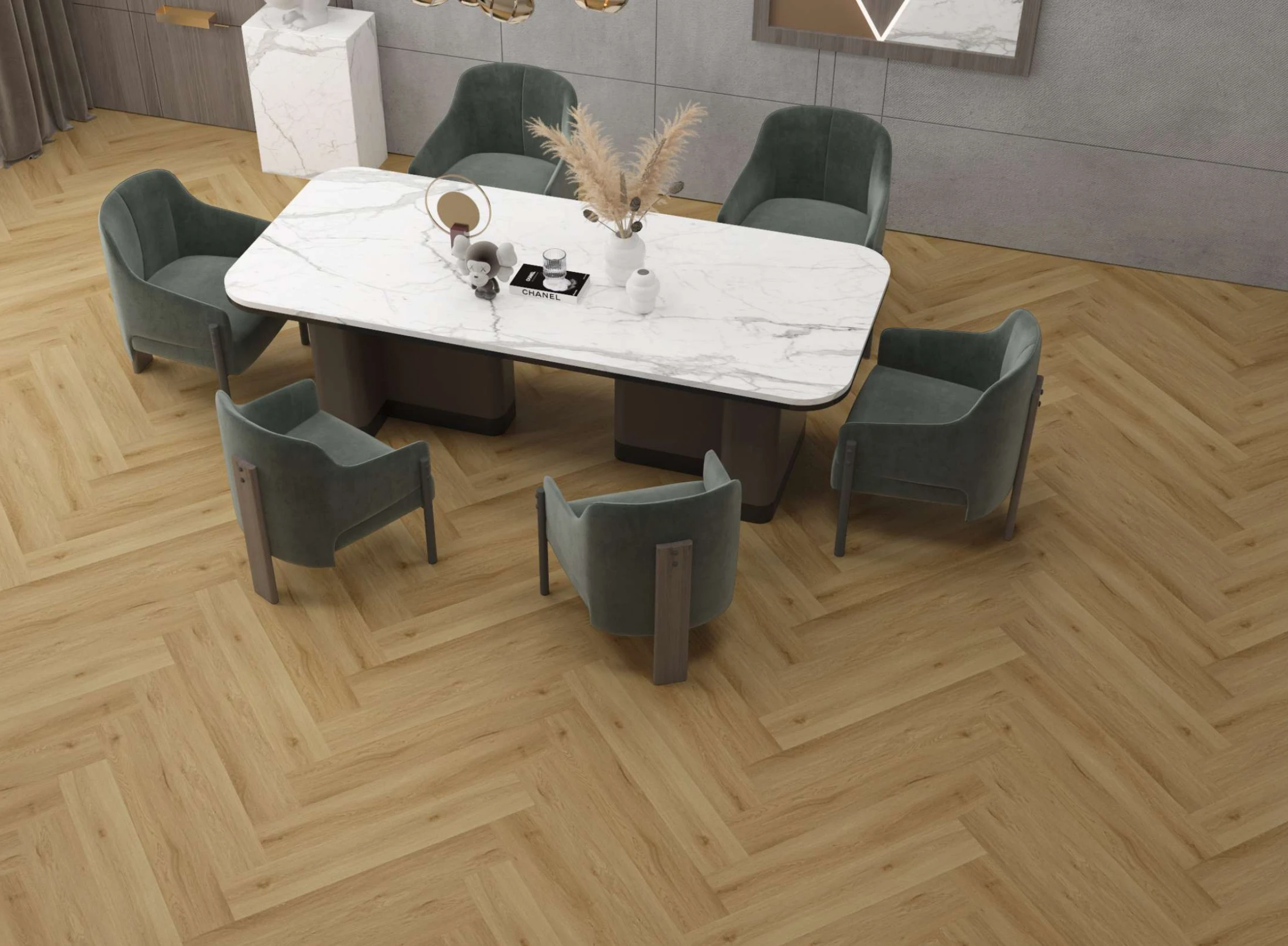
One detail worth knowing: 800×1600 porcelain tiles are frequently offered in both matte stone-look and polished marble-look finishes, and the marble-look versions in this size tend to photograph exceptionally well, since there's enough surface area for the veining pattern to actually feel continuous rather than chopped across multiple pieces.
1200×1800 Porcelain Tiles: Where Slab Territory Begins
Once you cross into 1200×1800 porcelain tiles, you're really talking about porcelain slab tiles rather than conventional floor tiles, even though manufacturers still often list them under the same category. At 48×72 inches, a single piece can cover an entire kitchen countertop or a full bathroom vanity backsplash with barely any joints at all.
This is also where installation starts requiring real specialization. You're no longer talking about two people and a bucket of adhesive — these slabs typically need suction lifters, a dedicated slab-handling crew, and a specific slab adhesive rather than standard tile-fixing cement. If you're sourcing this size, ask your supplier directly whether they also provide, or recommend, an installation team experienced with large format tiles this size specifically.
The payoff is real, though. For countertops, feature walls, and premium flooring in double-height living areas, 1200×1800 porcelain tiles deliver a genuinely high-end, almost stone-slab look, at a fraction of the cost and weight of natural marble of the same dimensions.
1200×2400 Porcelain Tiles: The Full Mega-Slab Experience
At the very top of this range sit 1200×2400 porcelain tiles — close to 4×8 feet, roughly the footprint of a standard plywood sheet. This is genuinely architectural-scale material, and it's mostly specified by architects and interior designers for commercial lobbies, high-end villa projects, and feature walls where the entire visual impact depends on having as few joints as visually possible.
A single slab this size can clad an entire elevator lobby wall or wrap a kitchen island on three sides without a single grout line interrupting the pattern. That's the whole appeal: continuity. For a marble-look or terrazzo-look design, this format lets the pattern read the way it would on actual quarried stone, rather than fragmenting into repeating tile-sized chunks.
The trade-offs are exactly what you'd expect from something this large: higher cost per square foot, specialized transport in dedicated wooden crates rather than standard tile boxes, and installation that absolutely requires a trained slab-handling crew with the right lifting and cutting equipment.
How to Choose the Right Size for Your Space
With four solid options on the table, the decision usually comes down to four practical questions. Ask yourself:
How big is the actual room? As a loose rule, a room needs to be roughly proportional to the tile. Designers often suggest the tile's longer edge shouldn't exceed about a third of the room's shorter wall length, purely so the proportions feel right.
What's your installation budget, separate from material cost? Large format porcelain tiles cost noticeably more to install than to buy. Labour for 1200×2400 slabs can run several times higher per square foot than for 600×1200 tiles, purely because of crew size and equipment.
Is the subfloor actually flat? If your existing floor has dips or humps, budget for self-leveling compound work before the order even goes in.
Do you need to cut around a lot of obstacles? Bathrooms with multiple fixtures generate more waste with larger tiles, since every off-cut from a big slab is an expensive off-cut.
Room-by-Room Cheat Sheet
- Compact bathrooms: 600×1200 porcelain tiles remain the practical default — enough impact to feel upgraded, without wasteful off-cuts.
- Kitchen countertops and backsplashes: 1200×1800 or 1200×2400 porcelain tiles give a genuinely seamless surface, especially for marble-look finishes.
- Open-plan living and dining areas: 800×1600 porcelain tiles hit the sweet spot between premium and practical.
- Hallways: 600×1200, laid lengthwise, visually elongates narrow spaces better than anything bigger.
- Feature walls and lobbies: 1200×2400 porcelain tiles are where designers reach first, purely for pattern continuity.
A Pre-Order Checklist
Before you finalize any porcelain tile size, run through this quickly:
- Confirm exact room dimensions, including any alcoves or awkward corners
- Ask the supplier for the exact thickness, not just the length and width
- Confirm whether the price includes delivery in crates suited to that size
- Get written confirmation your installer has handled that specific size before
- Budget subfloor leveling as a separate line item, not an afterthought
- Order 8–10% extra to cover cutting waste and future repairs
Real-World Scenarios: Sizes in Action
Scenario One—A Compact City Apartment
Picture a roughly 6×8 foot bathroom in a mid-rise apartment. Going with 1200×2400 slabs here would mean cutting away nearly half of every piece just to fit around the basin, shower, and door swing — expensive waste for very little visual gain in a room that small. 600×1200 porcelain tiles, laid with the long edge running toward the door, make the space read longer while keeping wastage close to zero.
Scenario Two—An Open-Plan Villa
Now picture a 900-square-foot open living-dining-kitchen area in a villa, where the client wants a marble-look floor that reads as one continuous surface from the entrance to the far wall. Here, 1200×1800 or 1200×2400 porcelain tiles genuinely earn their premium — fewer joints across that much floor area translate directly into the seamless look the client is after, and the labour cost, while higher, is a smaller percentage of an already large project budget.
Advanced Tips Most Guides Skip
Subfloor Prep Isn't Optional
This is the single most common cause of cracked large-format tiles after installation, and it's almost always preventable. Large format tiles and slab-sized pieces need a base flat to within a few millimetres across the full run of the floor — not just "looks flat to the eye." Insist on a moisture and flatness check before the order is finalized, not after the tiles arrive on site.
Handling and Cutting Large Slabs
Cutting a 1200×2400 slab on-site to fit around plumbing or electrical points demands specific tools — a standard tile cutter simply won't do the job cleanly, and attempting it risks cracking an expensive piece. Ask your supplier or installer about slab-scoring tools and suction-cup transport systems before the delivery date, not during it.
What Does It Cost? Budgeting for Each Size
Material cost per square foot climbs as the dimensions increase, largely because manufacturing larger, defect-free pieces has a lower success rate on the production line, and that cost gets passed on. But the sharper jump is almost always in installation, not material. A 600×1200 floor might cost a modest amount per square foot in labour; the same floor in 1200×2400 porcelain tiles could easily cost two to three times that in labour alone, once you factor in crew size, specialized adhesive, and the slower, more careful pace slab installation demands.
If budget is a genuine constraint, it's often smarter to spend on a mid-range 800×1600 finish than to stretch for a mega-slab and cut corners on the installation crew.
To put rough proportions on it, here's how the four sizes generally stack up against each other on total project cost, assuming the same overall floor area:
| Size | Material Cost |
Installation Cost |
Best For |
| 600×1200 porcelain tiles |
Lowest |
Lowest |
Bathrooms, hallways, budget projects |
| 800×1600 porcelain tiles |
Moderate |
Moderate |
Living rooms, bedrooms, hospitality |
| 1200×1800 porcelain tiles |
High | High | Countertops, feature walls |
| 1200×2400 porcelain tiles |
Highest |
Highest |
Commercial lobbies, statement floors |
These are general patterns rather than fixed numbers, since actual porcelain slab tiles pricing varies by finish, design complexity, and the specific manufacturer's production costs — but the relative gap between sizes tends to hold true across most suppliers.
Why Buyers Choose Antovia Surfaces for Large Format Porcelain Tiles
Antovia Surfaces manufactures and exports porcelain tiles and slabs across this entire size range — from 600×1200mm through to 1600×3200mm slab formats — out of Morbi, Gujarat, India's largest ceramic manufacturing cluster. A few things worth knowing if you're comparing suppliers:
- Full range in one place. Rather than sourcing 600×1200 tiles from one manufacturer and 1200×2400 slabs from another, Antovia Surfaces supplies the entire spectrum, along with SPC flooring and outdoor porcelain pavers, so flooring, walls, and countertops can be matched from a single production run.
- Dedicated domestic and export lines. Separate contact channels for local buyers and international export inquiries mean faster, more relevant responses depending on your order size.
- Transparent technical documentation. Thickness, finish, and size specifications are available directly rather than buried in a generic catalog PDF.
You can browse the current porcelain tile size range directly at antoviasurfaces.com, or reach out via their domestic and export contact lines for a project-specific quote.
A Note on Expertise Behind This Guide
Recommendations in this guide are grounded in real manufacturing practice, not just marketing copy. Antovia Surfaces operates out of Morbi — a manufacturing cluster responsible for a significant share of India's ceramic and porcelain tile output — and works directly with architects, contractors, and homeowners sourcing everything from 600×1200 porcelain tiles for residential bathrooms to 1200×2400 porcelain tiles for commercial feature walls. That hands-on production and export experience, rather than secondhand catalog descriptions, is what shapes the sizing, thickness, and installation guidance shared throughout this article. If you want a supplier-specific porcelain tile size chart with current thickness and finish options, it's worth requesting one directly rather than relying on generic industry averages.
Frequently Asked Questions
Which porcelain tile size is best for a small apartment?
600×1200 is generally the safest choice for smaller homes. It delivers a modern, large-format look without the installation complexity or wastage that bigger slabs bring to compact rooms.
Do larger porcelain tiles cost more to install than to buy?
Often, yes. Labour for large format porcelain tiles can run significantly higher than the material cost itself, since installation demands more workers, specialized adhesives, and slab-handling equipment.
Can 1200×2400 porcelain tiles be used for flooring, not just walls?
Yes, though it's less common in homes simply because of handling and cutting complexity. It's more frequently specified for commercial flooring where large, continuous spans are the goal.
Is 800×1600 a good compromise between 600×1200 and full slab sizes?
For a lot of homeowners, yes. It offers a noticeably more premium, seamless appearance than smaller tiles, without requiring the specialized installation crew that 1200×1800 and 1200×2400 porcelain tiles typically need.
Does porcelain tile size affect how much grout is needed?
Yes, indirectly. Larger pieces mean fewer joints overall, which reduces total grout volume, though each individual joint may still be similar in width depending on the design.
Final Thoughts
There isn't a single "correct" answer among these four porcelain tile sizes. 600×1200, 800×1600, 1200×1800, and 1200×2400 all serve genuinely different purposes, and the right pick depends far more on your room, your budget, and your installer's experience than on which option looks most impressive in a showroom photo.
If you're renovating a modest bathroom or hallway, 600×1200 porcelain tiles will almost always serve you better than a mega-slab you'll end up cutting into small pieces anyway. If you're working with an architect on a statement living space, the visual payoff of large format porcelain tiles in the 1200×2400 range is hard to match with anything smaller.
Ready to compare actual samples before you decide? Antovia Surfaces supplies the full porcelain tile size range with direct domestic and export support — visit antoviasurfaces.com to request specifications and pricing for your specific project.