 11 Oct, 2026
32Views
11 Oct, 2026
32Views Three floors can look surprisingly similar once they are installed. Underneath, however, their construction can be quite different. That hidden structure affects how the floor feels underfoot, how rigid it is, how it responds to everyday use and which type of room it may suit best.
That is why choosing between SPC, WPC and LVT flooring should not start with colour or wood-look design alone. The more useful question is what you need the floor to do. Do you want a firmer rigid surface, a more cushioned feel, or the flexibility associated with conventional luxury vinyl construction? Once you understand the core, the rest of the decision becomes much easier.
SPC vs WPC vs LVT: What Is Actually Different?
SPC, WPC and LVT are often compared as though they are three completely separate flooring families. The reality is more nuanced. SPC and WPC generally describe particular core constructions, while LVT is a broader category of luxury vinyl flooring that can be manufactured in different constructions.
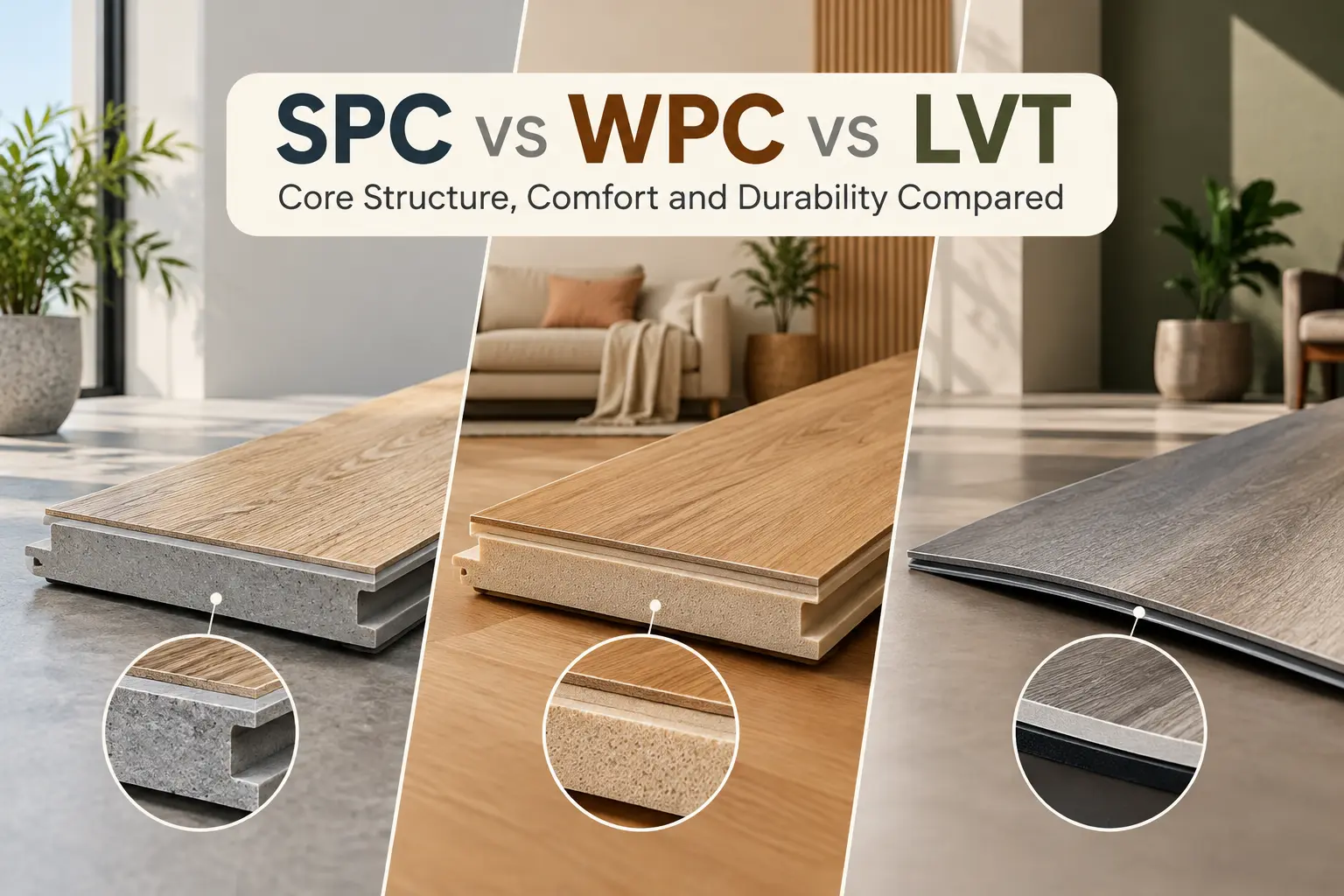
SPC flooring typically uses a rigid composite core, commonly described as stone-plastic or stone-polymer composite. WPC flooring uses a wood-polymer composite core and is commonly associated with a thicker, more cushioned construction. LVT uses a resilient vinyl-based construction and can be available in flexible or more rigid forms depending on the product.
So the useful comparison is not simply “which material is strongest?” It is about how construction affects the complete flooring system.
|
Factor |
SPC |
WPC |
LVT |
|
Core character |
Rigid composite |
Wood-polymer composite |
Resilient vinyl construction |
|
Underfoot response |
Generally firmer |
Generally more cushioned |
Varies by construction |
|
Dimensional behaviour |
Strong rigidity |
Rigid, depending on product |
Product-dependent |
|
Main appeal |
Stability and rigid construction |
Comfort and thickness |
Versatility and resilient construction |
|
Best comparison point |
Core rigidity |
Cushioning and comfort |
Construction, wear layer and installation |
|
Selection priority |
Product specification |
Product specification |
Product specification |
These are broad construction characteristics rather than universal performance guarantees. Actual flooring performance depends on the specific product, thickness, wear layer, backing, installation system and manufacturer's specifications.
SPC, WPC and LVT Core Structure Explained
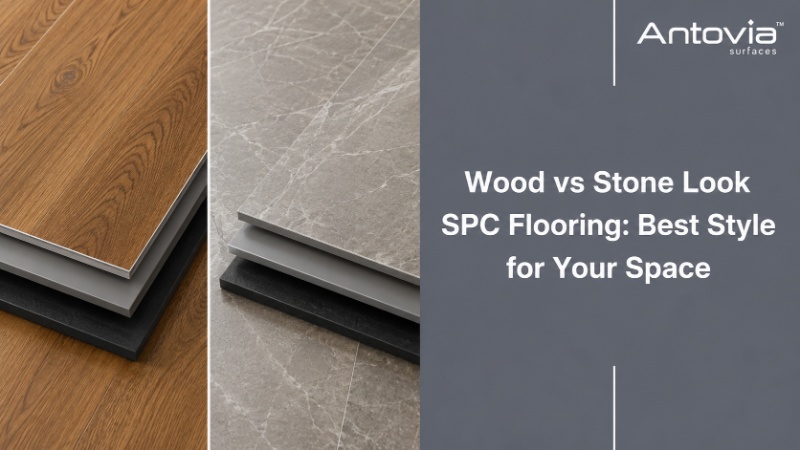
The easiest way to understand the difference is to look below the decorative surface. What you see on top may imitate timber, stone or another material, but the layers underneath determine much of the floor's behaviour.
What Is an SPC Core?
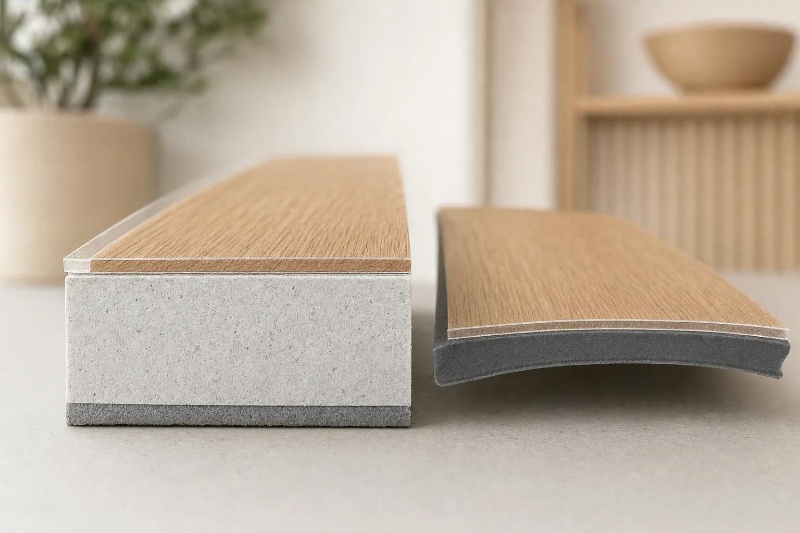
SPC flooring uses a rigid composite core designed to provide structural stability. The rigid construction gives the plank a relatively firm response and helps it maintain its shape when installed correctly under the conditions specified by the manufacturer.
This rigidity is one reason SPC has become popular in projects where dimensional stability and a solid flooring feel are important considerations. But “rigid” does not automatically mean “indestructible.” The surface wear layer, locking system, substrate and installation quality still matter.
What Is a WPC Core?
WPC flooring uses a wood-polymer composite core and is generally associated with thicker constructions that provide a more cushioned feel. When you walk across it, the experience can feel less hard and more forgiving than a very rigid floor.
That makes WPC interesting for rooms where underfoot comfort is a priority. However, thickness and core type should not be treated as guarantees of performance. Two WPC products can have different constructions, backing systems and wear layers, so product specifications remain important.
What Is LVT Construction?
LVT, or luxury vinyl tile/plank flooring, is a broader resilient flooring category rather than one single core formula. Its construction can vary considerably between products.
That distinction is important when comparing LVT with rigid-core products. You should not assume that every LVT product behaves exactly the same way. Thickness, backing, wear layer, installation method and whether the product has a rigid or flexible construction can all affect the finished floor.
How Core Construction Changes Underfoot Comfort
Comfort is one of the areas where the difference between these flooring types becomes noticeable in everyday life. You may not think about the core when walking across the floor, but your feet certainly notice how the surface responds.
SPC generally provides a firmer, more rigid sensation. WPC is commonly associated with a softer and more cushioned response, particularly in thicker constructions. LVT varies because its feel depends heavily on the specific construction, thickness and backing.
Room conditions matter too. A floor installed over a well-prepared, smooth substrate can feel very different from the same product installed over an unsuitable or poorly prepared base. Underlay, attached backing and installation method can also influence acoustic and underfoot comfort.
So if comfort is high on your list, do not judge the flooring from a specification sheet alone. If possible, walk on samples or installed displays. Your feet are surprisingly good flooring critics.
SPC vs WPC vs LVT Durability: What Should You Compare?
“Which is the most durable?” sounds like a simple question, but flooring durability is not one single property. A floor can resist surface wear well while still requiring careful installation, and a rigid core can provide dimensional stability without making the entire product immune to damage.
When comparing SPC vs WPC vs LVT, look at the wear layer, surface finish, core construction, plank thickness, locking system, expected traffic and manufacturer's application rating. These details tell you much more than the category name alone.
For residential use, durability requirements may be very different from those of a busy retail or hospitality environment. A family living room, bedroom, office and commercial corridor all place different demands on the floor.
The better question is therefore not “Which category lasts longest?” but “Which specific product has the construction and performance specification required for this application?”
Water Resistance, Moisture and Dimensional Stability
Moisture is another area where flooring comparisons can become misleading. Rigid-core vinyl products are often selected for their resistance to moisture, but the performance of an installed floor depends on more than the plank itself.
The joints, perimeter, substrate, installation method and surrounding construction all form part of the system. A product may have strong water-resistance characteristics while the installation still requires careful attention to moisture conditions.
SPC's rigid construction can provide useful dimensional stability, while WPC also offers a rigid composite structure. LVT products vary depending on their specific construction. For bathrooms, wet areas or spaces with unusual moisture exposure, always check the manufacturer's written application guidance rather than assuming that a product category is automatically suitable.
This distinction matters because water-resistant flooring and a completely waterproof room installation are not necessarily the same thing.
Surface Wear, Scratching and Long-Term Appearance
The core is only one part of the flooring. The top wear layer is directly exposed to shoes, furniture, dirt and everyday traffic, so it deserves just as much attention.
A strong wear layer can help protect the decorative surface from everyday wear, but performance still depends on the product specification and environment. Chair movement, grit under footwear, pet activity and heavy furniture can all influence how a floor ages.
When comparing SPC, WPC and LVT, therefore, do not stop at the core. Check the wear layer, finish, manufacturer's recommended use and cleaning instructions. If two products look almost identical but have significantly different specifications, the difference may become much more important after years of use than it was on installation day.
Installation and Subfloor Conditions Matter More Than You Think
A high-quality floor can still perform poorly if it is installed over an unsuitable substrate. The condition of the subfloor affects the appearance, stability and long-term behaviour of many flooring systems.
Rigid products can be particularly unforgiving of significant substrate irregularities because the finished surface depends on proper support. Flexible LVT can also require careful substrate preparation because imperfections may telegraph through the finished surface.
Installation method matters as well. Click systems, adhesive installations and products with integrated backing each have different requirements. Before choosing a flooring category, understand the manufacturer's substrate, expansion, temperature, adhesive or locking-system requirements.
In other words, the floor is only as good as the system beneath it. Buying an expensive product and installing it on an unsuitable base is a little like putting premium tyres on a car with a broken suspension.
Correct preparation is essential for flooring performance. Explore our SPC flooring installation guide for practical information about subfloor preparation, installation steps and common mistakes.
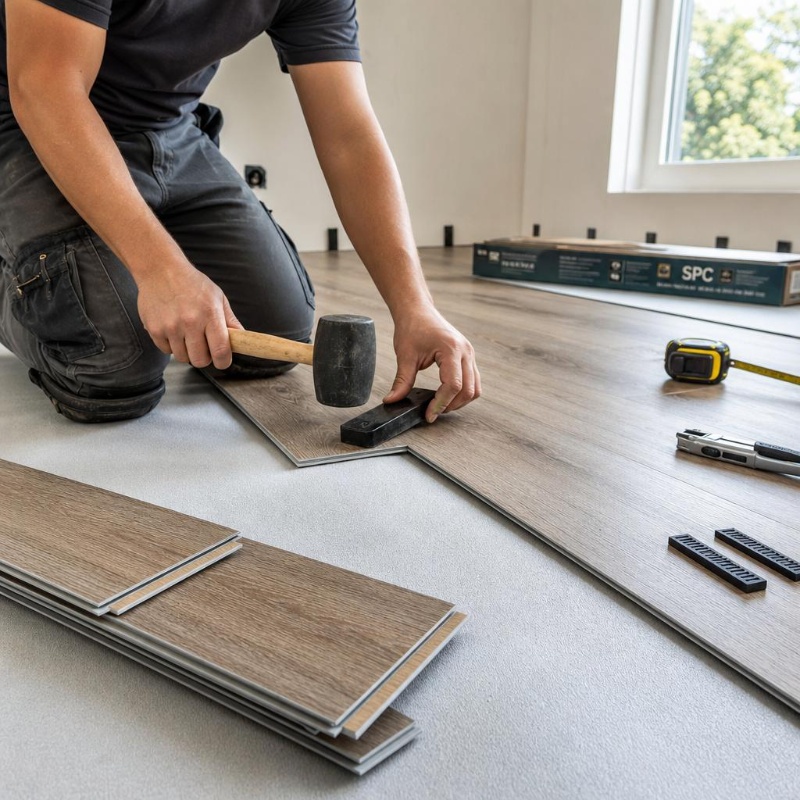
SPC vs WPC vs LVT for Different Rooms
The best flooring choice changes according to how the room is used. There is no universal winner because the priorities of a bedroom are not the same as those of a busy commercial space.
Bedrooms
Bedrooms tend to place greater emphasis on comfort, appearance and a pleasant acoustic environment than extreme traffic resistance. A cushioned WPC construction may appeal if underfoot softness is important, while SPC can suit people who prefer a firmer rigid floor.
LVT can also work well when its specific construction and installation method suit the project. The visual design should be considered alongside comfort because the floor occupies a large percentage of the room's visual field.
Living Rooms
Living rooms need a balance of appearance, everyday durability and comfort. This is where the differences between SPC, WPC and LVT become less about “best” and more about priorities.
If you want a firm rigid feel and a product specified for the expected traffic, SPC may be attractive. If comfort and a more cushioned sensation are particularly important, WPC may deserve closer attention. LVT offers a wide range of constructions and decorative choices, so the specific product specification becomes especially important.
Busy Residential Areas
Hallways, kitchens and family spaces can experience frequent foot traffic, dirt and furniture movement. Here, surface wear performance and installation quality deserve serious attention.
Instead of choosing based on the core label alone, compare the wear layer, application rating, surface finish and manufacturer's recommendations for the expected traffic.
Commercial Spaces
Commercial projects require an even more disciplined approach. Traffic levels, maintenance routines, rolling loads, cleaning chemicals, dimensional requirements and installation conditions can all influence product selection.
A product that works beautifully in a residential bedroom should not automatically be specified for a retail or hospitality environment. Commercial selection should begin with the project's performance requirements and then narrow down suitable products.
Which Flooring Feels Warmer and More Comfortable?
When people ask which flooring feels “warmer,” they often mean two different things: physical temperature and underfoot comfort.
A floor's perceived comfort depends on construction, thickness, backing, room temperature, subfloor and footwear. WPC's thicker, cushioned construction can provide a softer sensation, while SPC generally feels firmer. LVT varies considerably depending on the product.
Actual thermal behaviour is more complicated than simply saying one category is warm and another is cold. Room temperature, insulation and the construction below the flooring can influence what you experience.
For that reason, if comfort is important, compare complete flooring systems rather than relying only on the product name.
SPC vs WPC vs LVT: Key Trade-Offs
Every flooring category involves compromises. The right product is the one whose strengths match the project's priorities.
SPC's main appeal is its rigid composite construction and firm feel. WPC's attraction often comes from its thicker, more cushioned character. LVT offers a broad family of resilient flooring constructions and can provide considerable flexibility in product format, appearance and installation approach.
The mistake is turning these characteristics into absolute rankings. Saying “SPC is always better than WPC” ignores comfort. Saying “WPC is always better because it is softer” ignores application requirements. Saying “LVT is the easiest choice” ignores the huge variation between LVT products.
A useful comparison always asks what the floor needs to accomplish first.
Common Mistakes When Comparing SPC, WPC and LVT
The first mistake is comparing the three categories only by appearance. Modern flooring can reproduce timber and stone effects remarkably well, so visual similarity tells you very little about construction.
The second is comparing thickness without understanding what the layers actually contain. A thicker plank is not automatically a better product. Core, wear layer, backing and installation system all contribute to performance.
The third mistake is treating water resistance as a blanket guarantee for every application. Always check the exact product and installation requirements.
Finally, avoid choosing based solely on the cheapest initial price. A floor is a long-term surface. Installation requirements, maintenance, expected traffic and replacement considerations can make the lowest purchase price less meaningful over the life of the project.
How to Choose Between SPC, WPC and LVT
Start with the room and define what matters most. If you prioritise a firm rigid construction and dimensional stability, investigate suitable SPC products. If a more cushioned underfoot experience is important, compare WPC constructions. If you want the broader flexibility of resilient vinyl flooring, examine LVT products based on their exact construction rather than treating LVT as one uniform specification.
Then compare the wear layer, total thickness, backing, installation method, substrate requirements, moisture guidance and application rating. Ask how the flooring will be used five years from now, not just how it looks on installation day.
Most importantly, compare actual product specifications from the manufacturer. Category names are useful for narrowing the field, but the specification sheet is where the real selection begins.
Frequently Asked Questions About SPC, WPC and LVT Flooring
Is SPC better than WPC flooring?
Neither is universally better. SPC flooring thickness generally appeals to buyers looking for a rigid composite construction and firmer feel, while WPC is often selected for its thicker and more cushioned character. The better option depends on the room, installation conditions and performance priorities.
Is WPC softer than SPC?
WPC flooring is generally associated with a more cushioned underfoot feel, while SPC tends to feel firmer because of its rigid core. However, thickness, backing and the complete construction can influence the actual experience.
Is SPC more durable than LVT?
You cannot determine durability from the category name alone. Compare the specific product's wear layer, construction, application rating, installation system and manufacturer's performance information. A well-specified LVT product can be highly durable for its intended application.
Which is better for high-traffic areas: SPC, WPC or LVT?
The answer depends on the specific product rather than simply the flooring category. For high-traffic spaces, compare wear-layer specifications, application ratings, surface finish, installation requirements and expected maintenance before choosing.
Is SPC flooring waterproof?
Some SPC products are marketed with strong water-resistant or waterproof characteristics, but the complete installation still depends on joints, perimeter conditions, substrate and installation requirements. Always verify the manufacturer's specific guidance for the intended application.
Which flooring is most comfortable underfoot?
WPC is commonly associated with a softer, more cushioned feel, while SPC generally feels firmer. LVT can vary significantly depending on its construction and backing. Comfort should be judged from the complete flooring system rather than the category name alone.
Can SPC, WPC and LVT look the same?
Yes. All three can be manufactured with realistic wood, stone and other decorative visuals. The important differences are often underneath the decorative layer, particularly in the core construction, thickness, backing and installation method.
How should I decide between SPC, WPC and LVT?
Start with the project's priorities: comfort, rigidity, durability, moisture exposure, traffic, installation conditions and maintenance. Then compare actual product specifications within the relevant category. There is no universal winner for every room.
Conclusion
SPC, WPC and LVT can all be excellent flooring choices, but they achieve different balances between construction, rigidity, comfort and application flexibility. SPC is generally associated with a rigid composite core and firm feel, WPC with a more cushioned composite construction, and LVT with a broader family of resilient vinyl flooring constructions. The smartest comparison goes beyond the acronym and examines the actual product layers, wear performance, installation requirements and intended environment.
If you are choosing flooring for a residential or commercial project, compare the complete product specification rather than selecting purely by appearance or category name. Explore suitable
Once you have identified your flooring priorities, explore Antovia Surfaces SPC flooring to review available designs and product information for your project.