 14 Aug, 2026
987Views
14 Aug, 2026
987Views Selecting the right flooring is about more than choosing a beautiful design. One of the most important factors that directly affects durability, comfort, and long-term performance is SPC Flooring Thickness.
Many homeowners assume that thicker flooring automatically means better quality. However, the ideal thickness depends on where the flooring will be installed and how much foot traffic it will experience.
In this guide, we'll help you understand different SPC flooring thickness options and how to choose the best one for your space.
What is SPC Flooring?
SPC Flooring stands for Stone Plastic Composite flooring, a type of rigid core vinyl flooring made from limestone powder, PVC, and stabilizers.
Its multi-layer construction generally includes:
- UV protective coating
- Wear layer
- Decorative layer
- SPC rigid core
- Attached underlayment
This structure makes stone plastic composite flooring highly durable, waterproof, and suitable for both residential and commercial applications.
What Does SPC Flooring Thickness Mean?
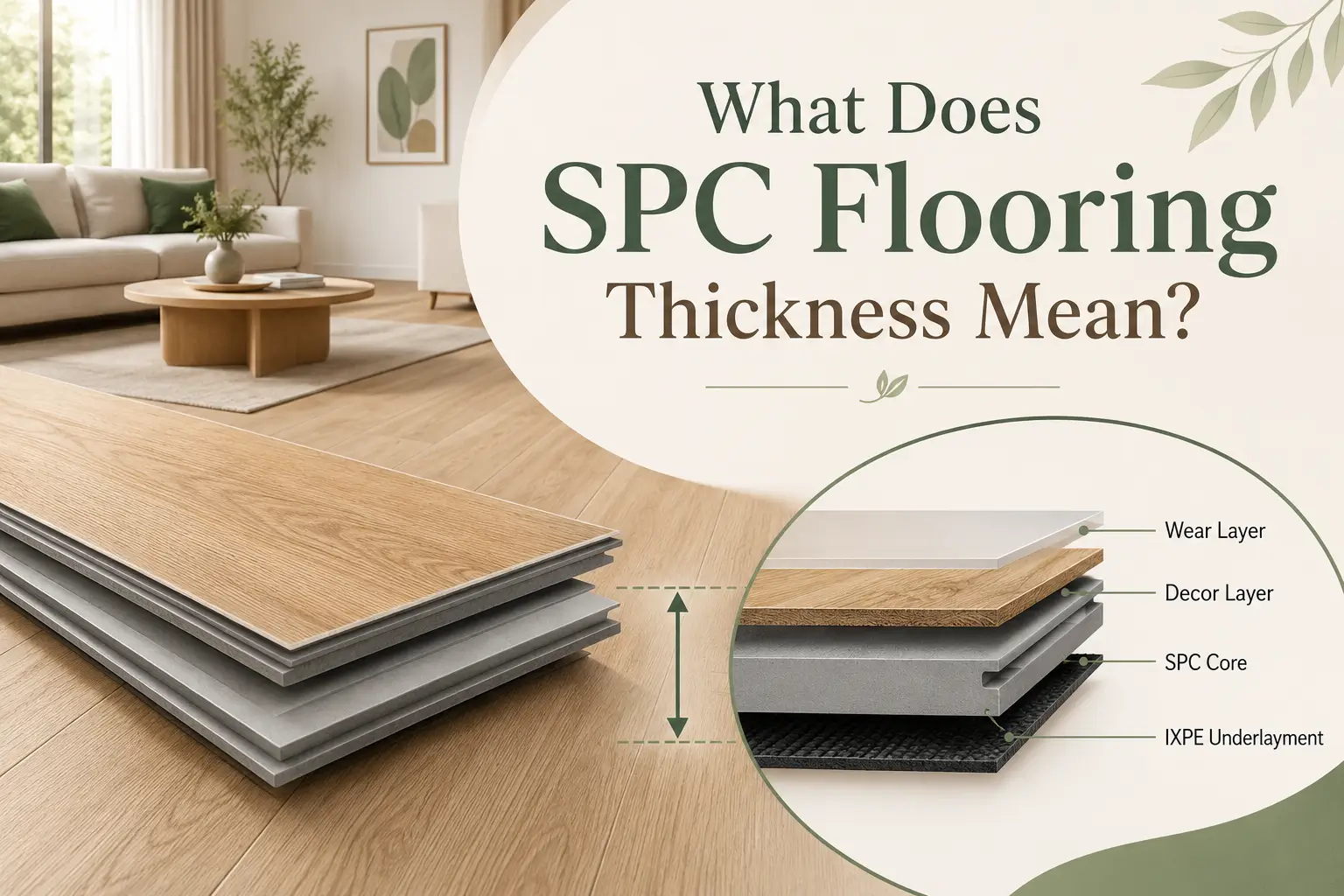
SPC flooring thickness refers to the total thickness of the plank, including the rigid core and backing layer.
Common thickness options available in the market include:
- 4 mm SPC flooring
- 5 mm SPC flooring
- 6 mm SPC flooring
- 7 mm and above for commercial applications
Besides overall thickness, the wear layer also plays a major role in determining durability and lifespan.
Why is SPC Flooring Thickness Important?
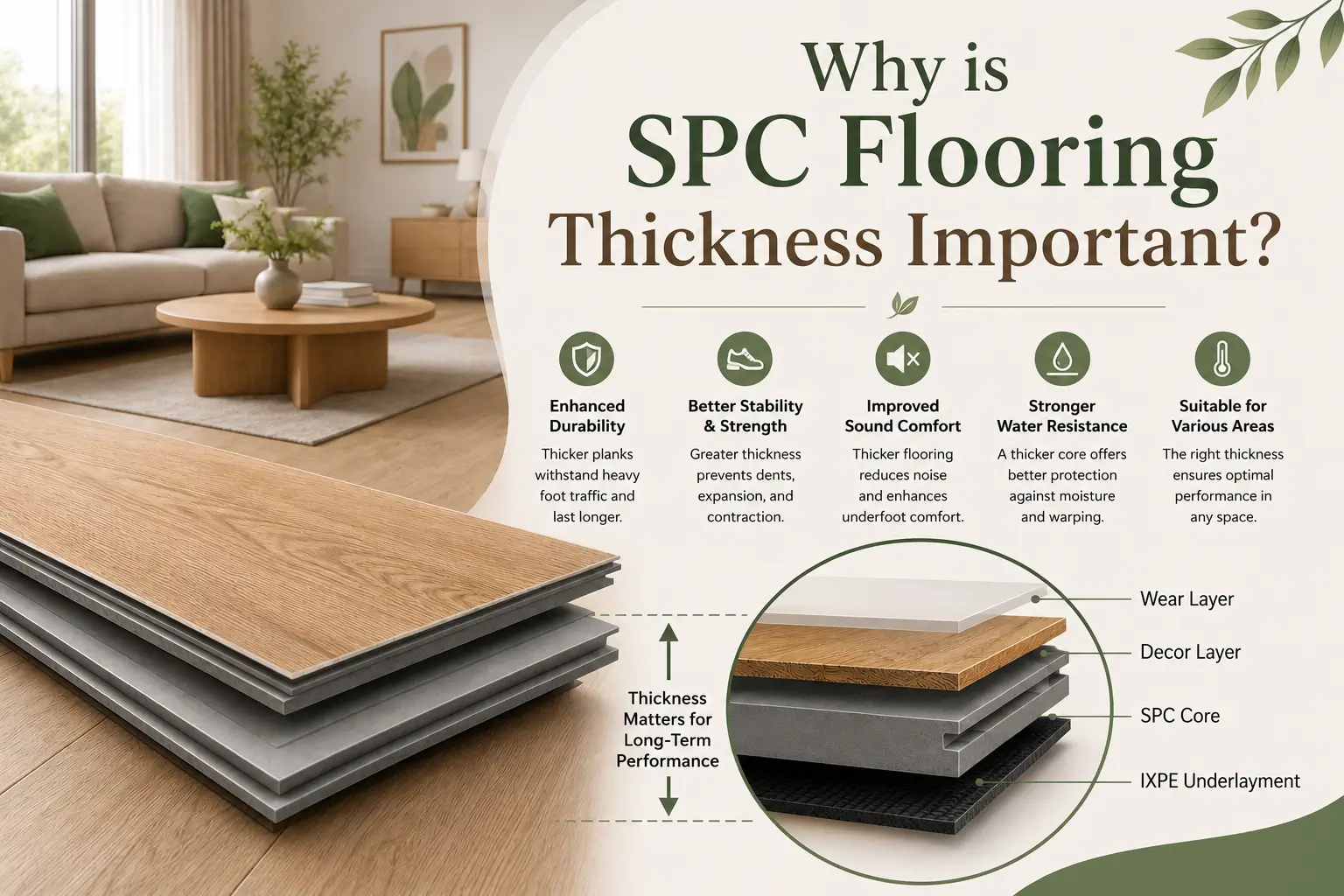
1. Better Durability
Thicker flooring generally provides better resistance against dents and impacts. This becomes particularly important in high-traffic areas or commercial environments.
2. Improved Comfort
A thicker SPC floor often feels more comfortable underfoot and provides a slightly softer walking experience.
3. Better Sound Insulation
Additional thickness can help reduce footstep noise, making it ideal for apartments, offices, and multi-story homes.
4. Enhanced Stability
Thicker SPC rigid core flooring offers improved dimensional stability and better performance under heavy furniture.
Which SPC Flooring Thickness is Best for Different Spaces?
Bedrooms: 4–5 mm
Bedrooms usually experience moderate foot traffic. A 4–5 mm thickness is generally sufficient and provides good comfort and durability.
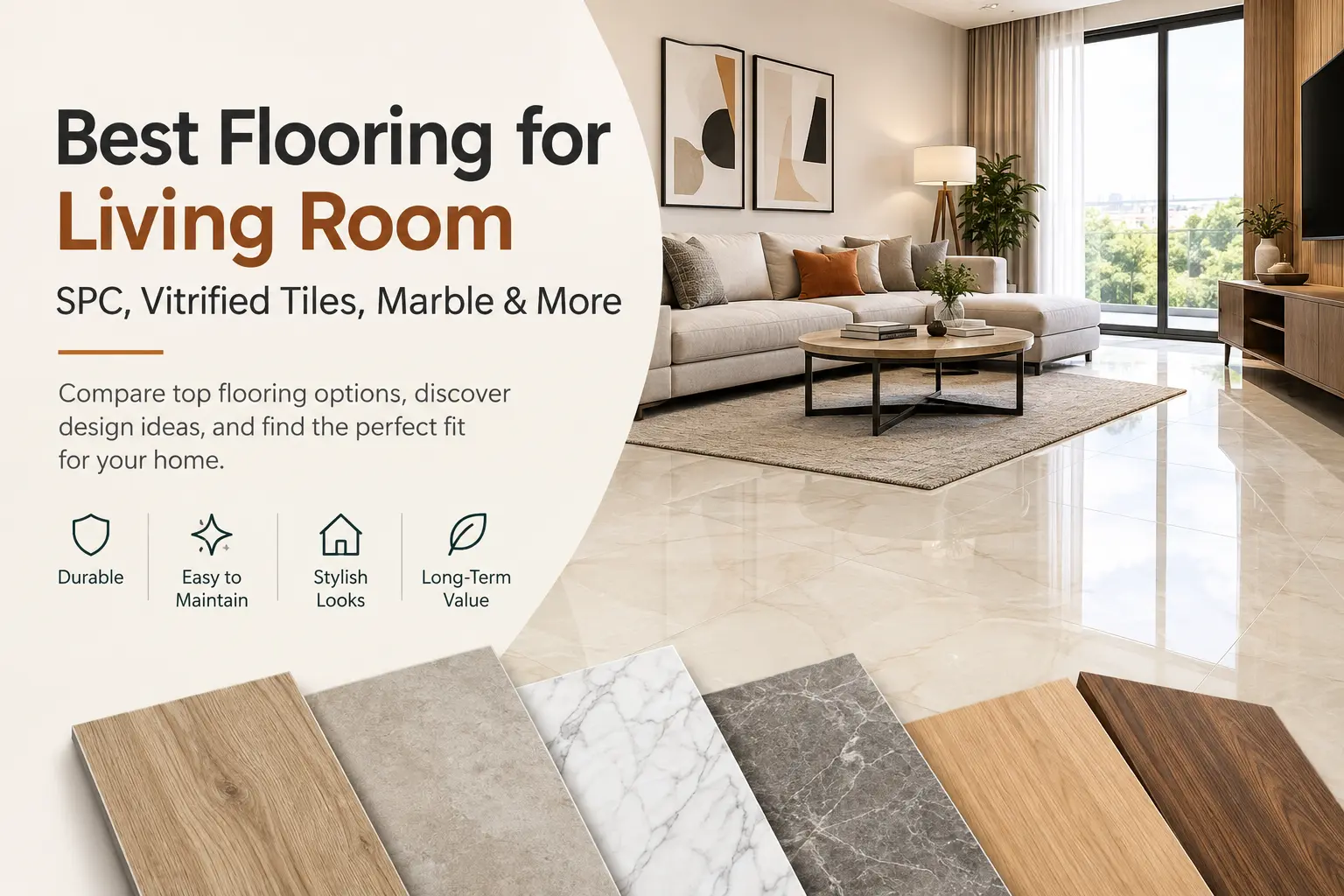
Living Rooms: 5–6 mm
Living rooms are among the busiest areas in most homes. Choosing slightly thicker SPC flooring can improve durability and long-term performance.
Kitchens and Dining Areas: 5–6 mm
Because kitchens are prone to moisture and spills, waterproof SPC flooring with adequate thickness offers better stability and longevity.
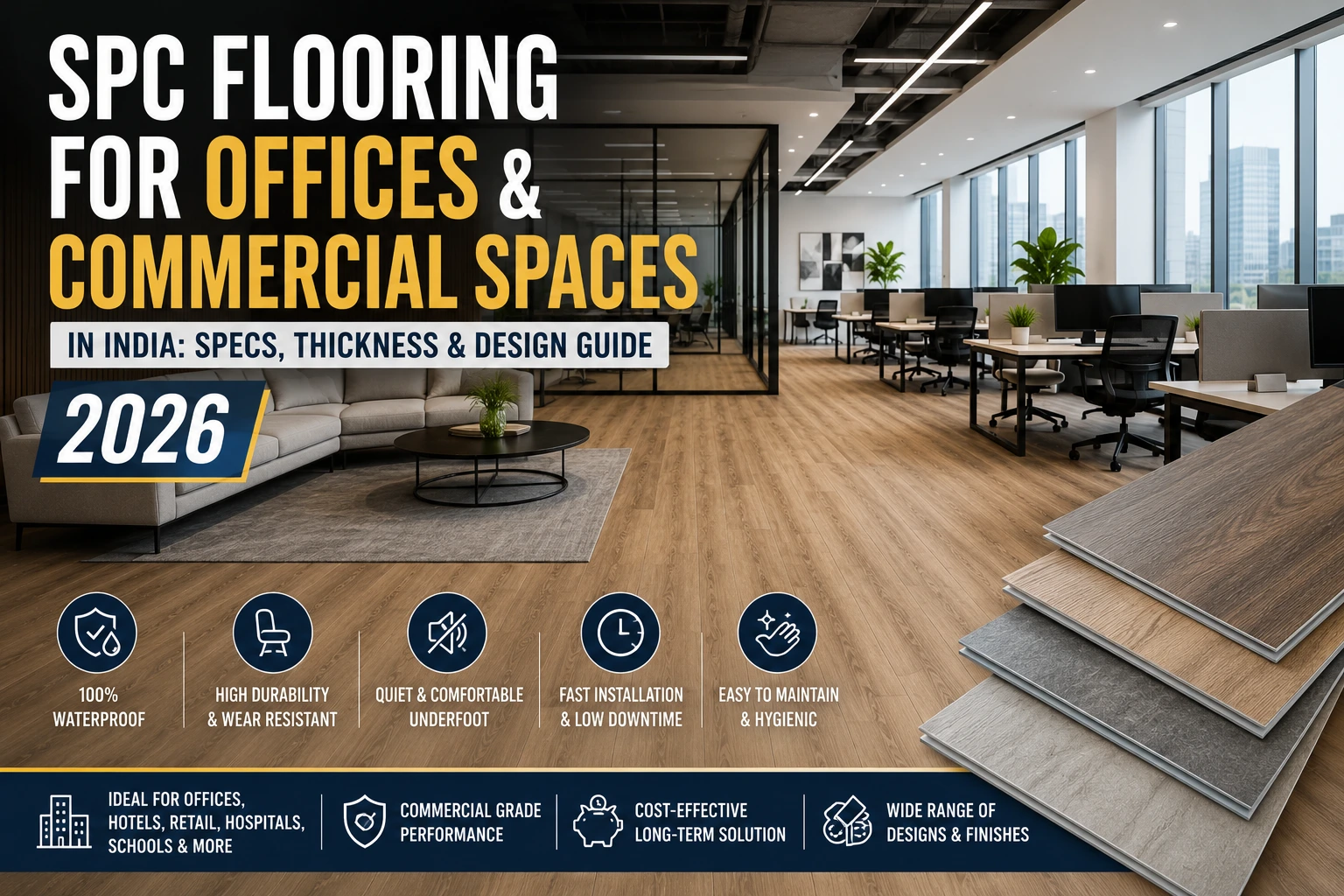
Offices and Commercial Spaces: 6–8 mm
Commercial areas experience heavy daily traffic. Thicker SPC vinyl plank flooring with a durable wear layer is usually recommended.
Retail Stores and Hospitality Projects
Hotels, showrooms, and retail stores require flooring that can withstand continuous usage. In such environments, thicker SPC plank flooring provides better long-term value.
Does Thicker SPC Flooring Always Mean Better Quality?
Not necessarily.
While thickness is important, overall quality also depends on:
- Wear layer thickness
- Raw material quality
- Manufacturing standards
- Installation quality
A high-quality 5 mm flooring product may perform better than a poorly manufactured 7 mm product.
Therefore, it is important to evaluate both thickness and product quality before making a decision.
How Does Thickness Affect SPC Flooring Price?
Generally, thicker flooring products come with slightly higher costs.
However, choosing the right SPC flooring thickness should be viewed as a long-term investment rather than an initial expense.
Higher-quality flooring often provides:
- Longer lifespan
- Lower maintenance costs
- Better resistance to wear and damage
- Improved comfort and stability
Over time, these benefits can offer excellent value for homeowners and businesses.
SPC Flooring Thickness vs Traditional Flooring
Compared to traditional hardwood or laminate flooring, SPC hybrid flooring offers several advantages:
- Better moisture resistance
- Greater dimensional stability
- Easier maintenance
- Faster installation through SPC click lock systems
- Realistic natural wood finishes
These benefits make SPC flooring one of the fastest-growing flooring categories worldwide.
Why Choose Antovia SPC Flooring?
At Antovia Surfaces, we offer premium SPC flooring solutions designed for different residential and commercial needs. Our flooring collections combine durability, waterproof performance, and stylish designs to deliver long-lasting value.
Whether you need flooring for your home, office, or commercial project, Antovia Surfaces provides high-quality solutions that balance performance and aesthetics.
Explore Best SPC Flooring Thicknesses
Final Thoughts
Choosing the right SPC Flooring Thickness depends on your space, foot traffic levels, and long-term expectations.
For bedrooms and light-use areas, thinner options may be sufficient. However, for busy living spaces and commercial environments, thicker SPC flooring can provide better comfort, durability, and performance.
By understanding your requirements and selecting a high-quality product, you can enjoy beautiful, long-lasting flooring that enhances both functionality and aesthetics for years to come.
Frequently Asked Questions
1. What is the ideal SPC flooring thickness for homes?
For most residential applications, 5–6 mm SPC flooring is considered an excellent balance between comfort, durability, and cost.
2. Is 4 mm SPC flooring good enough?
Yes. It works well in low to moderate traffic areas such as bedrooms and guest rooms.
3. Which SPC flooring thickness is best for commercial use?
Commercial spaces generally benefit from 6–8 mm flooring with a stronger wear layer for enhanced durability.
4. Does thicker SPC flooring last longer?
In many cases, thicker flooring can improve durability, but the quality of materials and wear layer thickness are equally important.