 13 Sep, 2026
136Views
13 Sep, 2026
136Views Choosing the right floor can completely change the look, comfort, and functionality of a home. Since the living room is usually one of the most frequently used spaces, the flooring needs to balance appearance with durability, maintenance, comfort, and long-term value. With options ranging from SPC and vitrified tiles to porcelain, marble, laminate, and wood-look surfaces, homeowners often wonder which material is actually the best flooring for living room spaces.
The answer depends on how the room is used, the home's interior style, maintenance expectations, budget, and the type of finish preferred. Some homeowners want a luxurious marble appearance, while others prefer the easy maintenance of tiles or the warmer feel of SPC flooring.
For Indian homes, flooring also needs to work well with everyday foot traffic, dust, cleaning routines, changing humidity, and different interior design styles. This makes choosing the best flooring for living room more of a practical decision than simply selecting the most attractive material.
In this guide, we compare the most popular best flooring options for living room interiors, including SPC flooring, vitrified tiles, porcelain tiles, marble, laminate, and wooden flooring. We will also discuss living room flooring options, design ideas, cost considerations, maintenance, and how to select the right surface for your home.
What Makes the Best Flooring for Living Room?
The best flooring for living room interiors should combine appearance and performance. A beautiful floor may not be the right choice if it requires excessive maintenance, while an extremely durable material may not match the desired interior style.
Before comparing different best flooring options for living room projects, consider these factors.
Durability and Everyday Foot Traffic
The living room generally experiences regular movement throughout the day. Family members, guests, children, and pets can all contribute to floor wear.
Durability should therefore be one of the first factors considered when reviewing living room flooring options. Look for a flooring material that can handle the expected level of traffic without quickly losing its appearance.
Easy Cleaning and Maintenance
A living room floor should ideally be simple to clean. Dust, food particles, spills, and everyday marks are unavoidable.
Low-maintenance surfaces are particularly practical for busy households. This is one reason tiles remain popular among homeowners searching for the best flooring for living room spaces.
Water and Moisture Resistance
Although the living room is not normally a wet area, accidental spills and routine cleaning can expose the flooring to moisture.
Water resistance becomes particularly important when comparing different best flooring options for living room, especially SPC, porcelain, vitrified tiles, and laminate.
Scratch and Stain Resistance
Furniture movement, footwear, toys, and pet activity can create scratches or marks.
When comparing living room flooring options, consider the surface's resistance to scratches, stains, abrasion, and everyday wear.
Design and Aesthetic Appeal
Flooring occupies a large visual area. Its colour, pattern, finish, and size can influence the entire appearance of a room.
Modern living room flooring ideas often include neutral shades, large-format tiles, marble-look surfaces, wood-look flooring, and minimalist finishes.
Long-Term Value
The cheapest flooring is not necessarily the most economical flooring.
A product with good durability, easy maintenance, and a long service life may provide better overall value than a cheaper product that requires frequent replacement or intensive maintenance.
Best Flooring Options for Living Room
There is no single material that is ideal for every home. The best flooring options for living room interiors vary according to budget, design preference, lifestyle, and maintenance requirements.
Let's compare the major choices.
1. SPC Flooring for Living Room
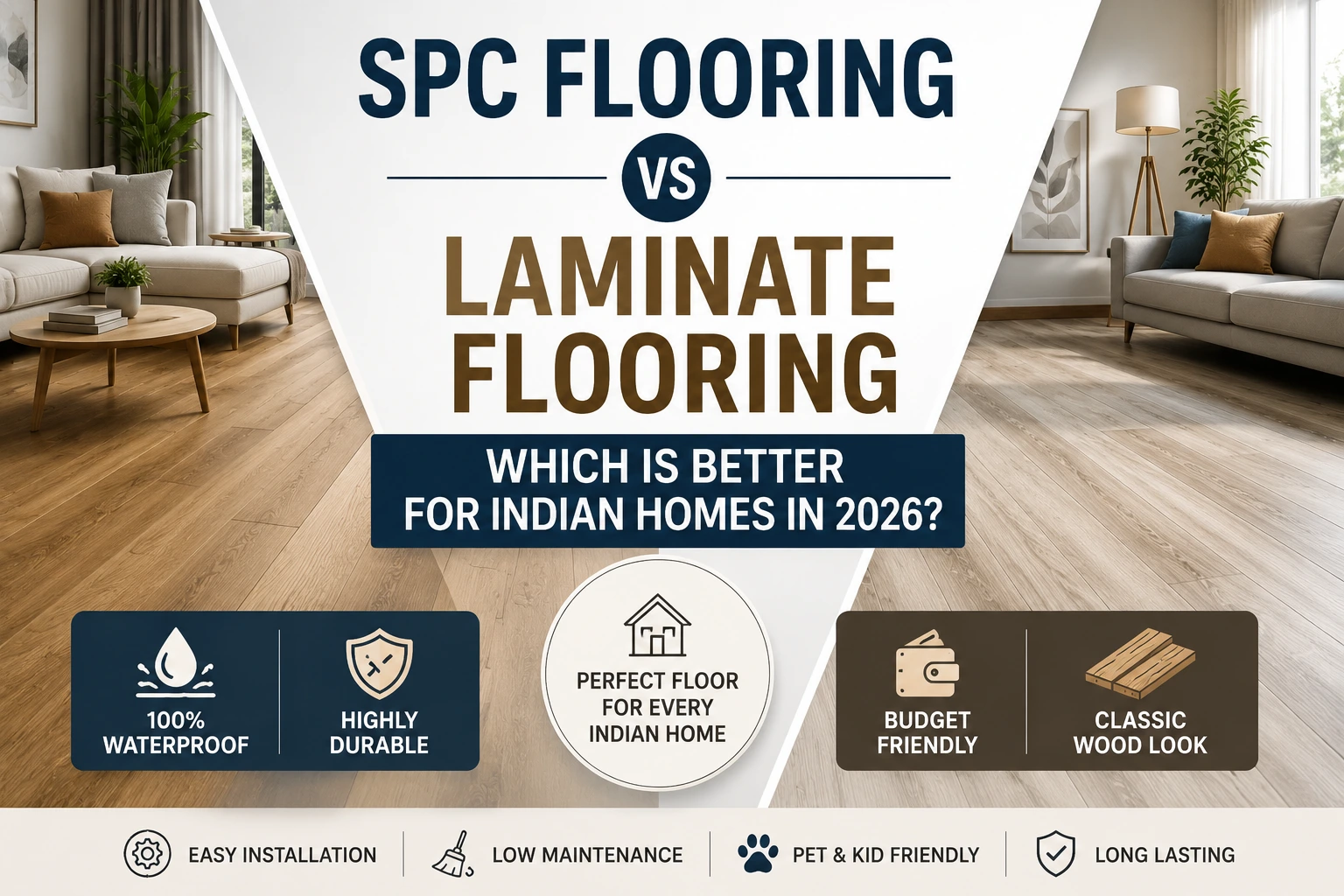
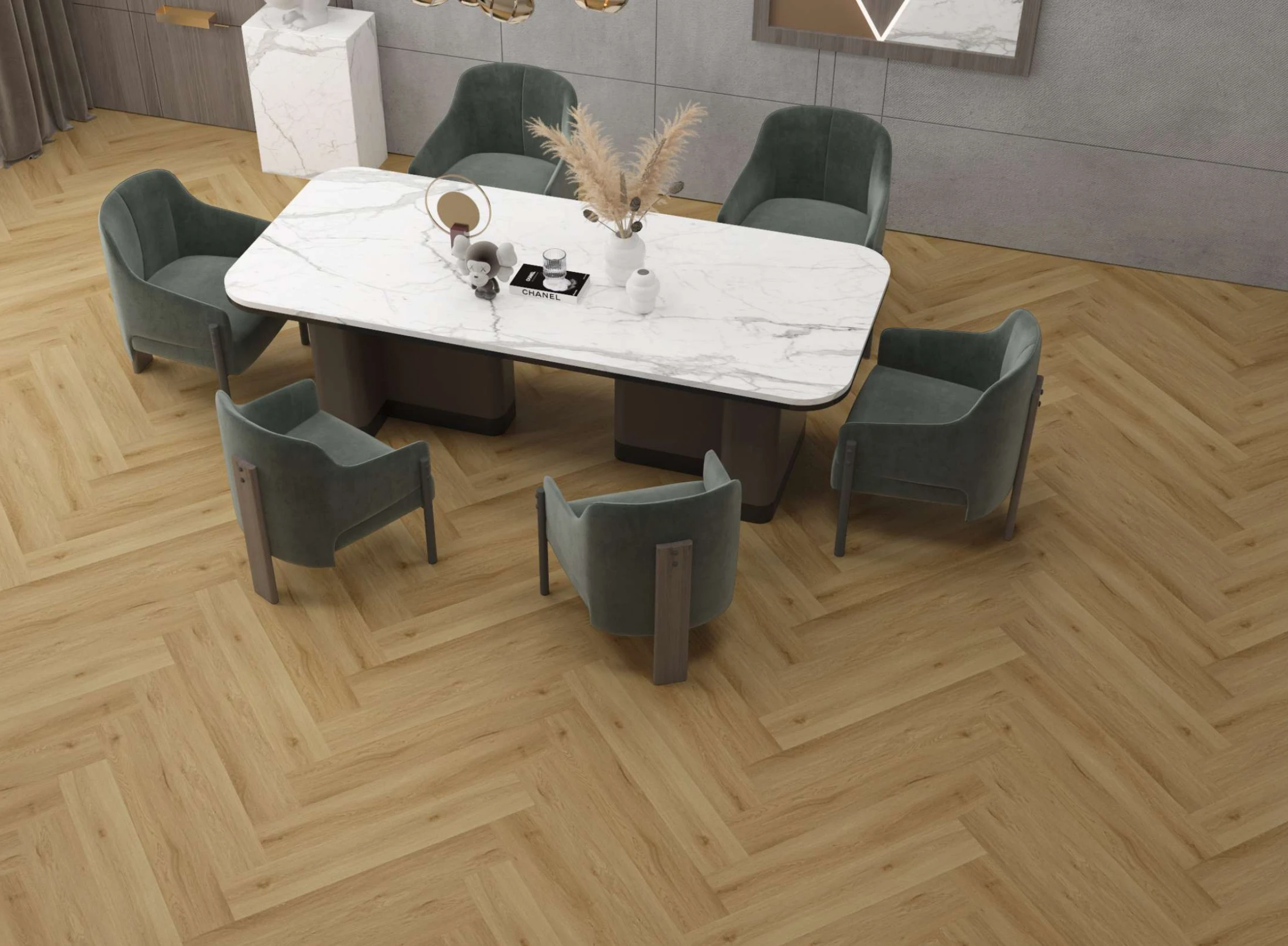
SPC, or Stone Plastic Composite flooring, is a multilayer flooring system built around a rigid core. It has become popular in residential interiors because it combines a contemporary appearance with practical installation and maintenance characteristics.
SPC flooring for living room interiors can be particularly suitable for homeowners who want a wood-inspired or stone-inspired appearance without choosing natural wood or stone.
Advantages of SPC Flooring
- Water-resistant construction
- Easy routine maintenance
- Comfortable underfoot compared with some hard flooring surfaces
- Wide range of colours and patterns
- Wood and stone-inspired designs
- Relatively straightforward installation systems
- Suitable for modern residential interiors
One of the reasons SPC flooring for living room projects attracts attention is design flexibility. It can provide a warm, contemporary appearance that works well with minimalist, Scandinavian, modern, and transitional interiors.
Things to Consider
SPC flooring is not automatically the best choice for every room. The quality of the product, core construction, wear layer, installation method, and subfloor preparation can all influence performance.
Therefore, when comparing best flooring options for living room interiors, consider the complete flooring specification rather than selecting a product based only on appearance or price.
2. Vitrified Tiles for Living Room
Vitrified tiles have long been popular in Indian homes because of their durability, low maintenance, and wide design range.
Vitrified tiles for living room applications are available in numerous colours, patterns, sizes, and surface finishes.
They can create everything from a simple contemporary interior to a highly luxurious living room.
Advantages of Vitrified Tiles
- Durable surface
- Easy to clean
- Wide design selection
- Low routine maintenance
- Available in different sizes
- Suitable for high-use residential spaces
- Available in glossy and matt finishes
For homeowners comparing living room flooring options, vitrified tiles remain a practical choice because they combine functionality with extensive design possibilities.
Large-format vitrified tiles can also visually reduce the number of grout lines, creating a cleaner and more spacious appearance.
What Should You Check?
When selecting vitrified tiles for living room areas, consider tile quality, size, finish, thickness, water absorption, surface characteristics, installation requirements, and the overall design.
The right tile should complement furniture, wall colours, lighting, and the architectural style of the room.
3. Porcelain Tiles for Living Room
Porcelain is another strong option when evaluating the best flooring for living room interiors.
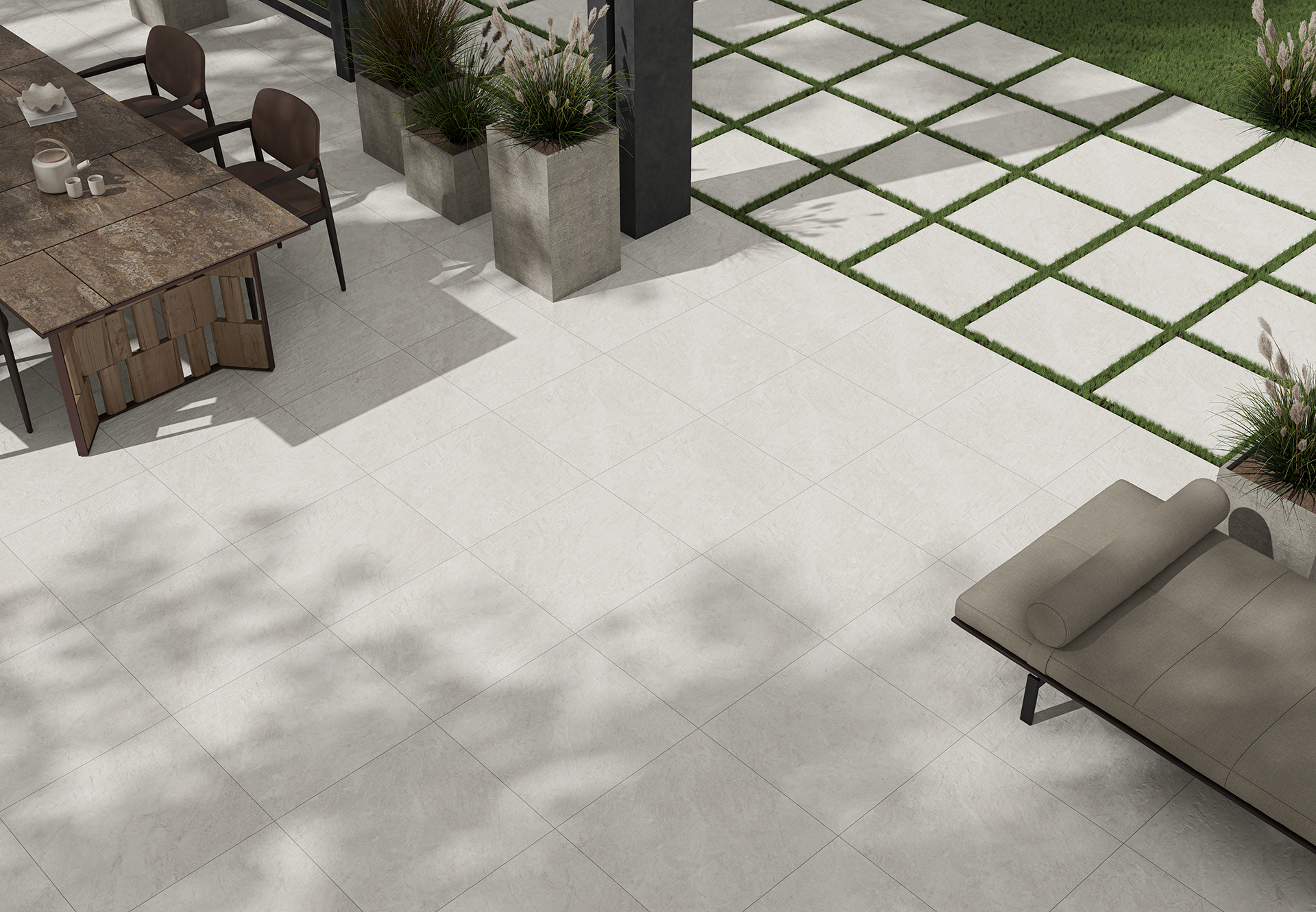
Porcelain tiles are known for their dense construction and can offer excellent design flexibility. They are available in marble-inspired, stone-inspired, concrete-inspired, terrazzo, wood-look, and minimalist designs.
Porcelain tiles for living room applications are particularly attractive for homeowners who want premium aesthetics combined with practical maintenance.
Advantages of Porcelain Tiles
- Strong and durable
- Low water absorption
- Easy to maintain
- Wide range of finishes
- Large-format options
- Marble and stone-look designs
- Suitable for modern and luxury interiors
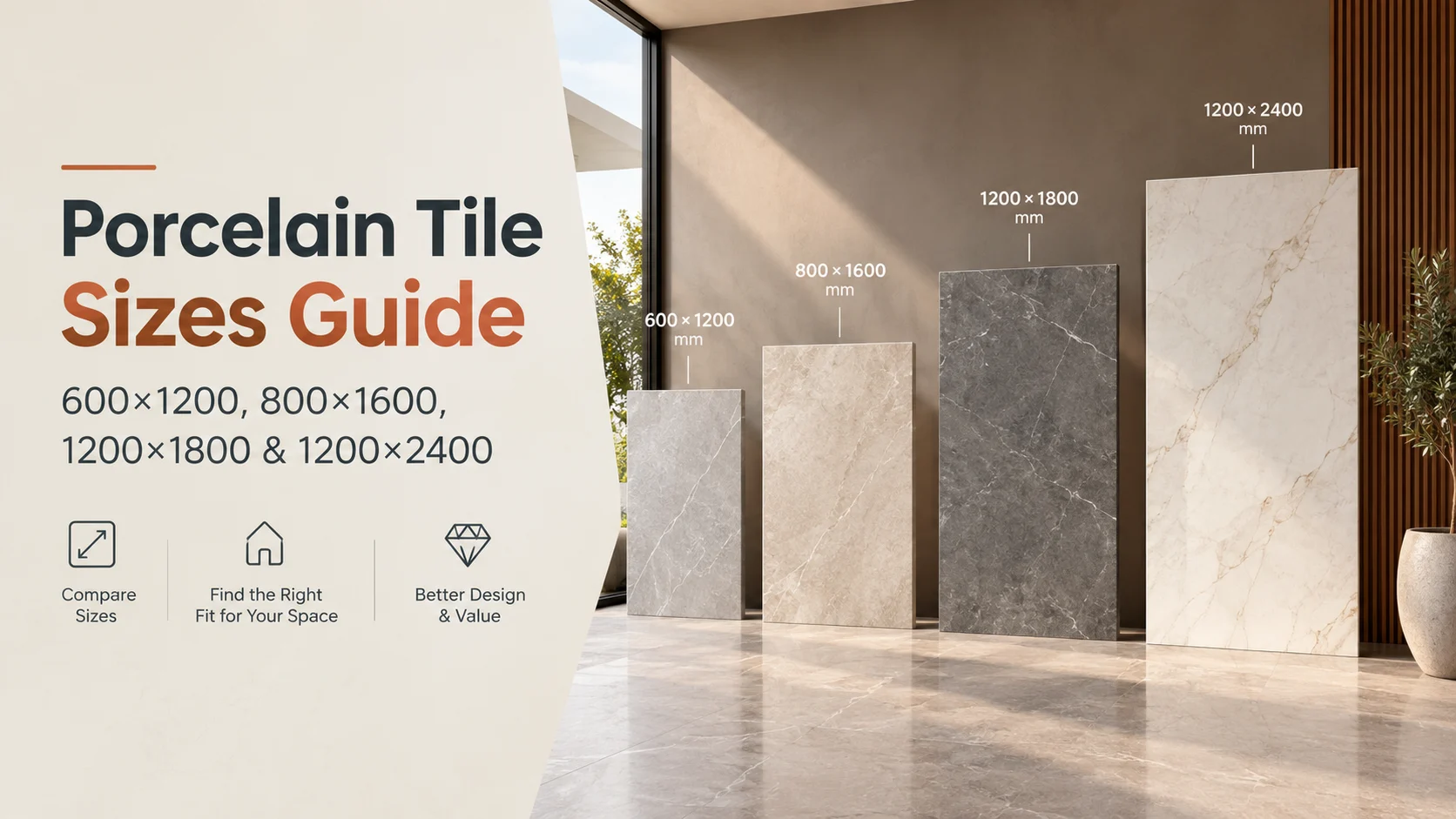
Antovia Surfaces offers porcelain tiles in multiple sizes, including 600×600 mm, 600×1200 mm, 800×800 mm, 800×1600 mm, and 1000×1000 mm, along with a broader porcelain slab collection. Its product range includes matt, glossy, carving, wood, and terrazzo-inspired surfaces.
For homeowners exploring porcelain tiles for living room interiors, large-format 600×1200 mm flooring can create a modern visual effect while offering numerous design possibilities.
Why Porcelain Works Well in Modern Homes
One of the strongest advantages of porcelain is its ability to reproduce the appearance of other materials.
For example, a homeowner can choose:
- Marble-look porcelain
- Concrete-look porcelain
- Wood-look porcelain
- Terrazzo-look porcelain
- Natural-stone-inspired porcelain
This makes porcelain one of the most versatile best flooring options for living room projects.
4. Marble Flooring for Living Room
Marble has traditionally been associated with luxury interiors.
The natural veining and individual character of marble can create an elegant and distinctive living room. No two natural marble surfaces are exactly identical, which is one of the reasons homeowners choose it.
Marble flooring for living room interiors can work particularly well in large luxury spaces where natural materials are a major part of the design concept.
Advantages of Marble
- Premium natural appearance
- Unique veining
- Luxury aesthetic
- Can complement classic and contemporary interiors
- Available in different colours and patterns
Things to Consider
Natural marble generally requires more attention than many manufactured tile surfaces.
Depending on the stone and finish, marble may require sealing, polishing, careful cleaning, and protection from staining.
Therefore, marble flooring for living room projects should be selected by homeowners who are comfortable with the maintenance requirements of natural stone.
When comparing the best flooring for living room, marble can be an excellent choice for luxury but may not be the first choice for homeowners prioritising minimum maintenance.
5. Laminate Flooring
Laminate flooring can provide the appearance of timber or other materials at a generally accessible price point.
It is available in a variety of colours and patterns and can provide a warmer visual character than conventional tile surfaces.
However, moisture resistance varies by product. Buyers should carefully check the manufacturer's specifications before selecting laminate for their home.
For homeowners comparing living room flooring options, laminate can be considered when appearance, installation convenience, and budget are important factors.
6. Wooden Flooring
Natural wood creates warmth and character that is difficult to replicate completely.
It can be a beautiful option for living rooms, particularly in premium homes and interiors designed around natural materials.
However, wood can require more careful maintenance and moisture management than some tile alternatives.
For this reason, homeowners should compare lifestyle requirements carefully before choosing wood as one of their best flooring options for living room interiors.
SPC vs Vitrified Tiles vs Marble vs Porcelain
When comparing the best flooring for living room applications, looking at individual materials is helpful, but a side-by-side comparison makes the decision easier.
|
Feature |
SPC |
Vitrified Tiles |
Porcelain Tiles |
Marble |
|
Durability |
High |
High |
High |
High |
|
Water Resistance |
High |
High |
High |
Depends on stone |
|
Maintenance |
Low |
Low |
Low |
Medium–High |
|
Design Variety |
High |
Very High |
Very High |
Natural variations |
|
Installation |
Relatively straightforward |
Requires tile installation |
Requires tile installation |
Requires specialist installation |
|
Surface Options |
Wood/stone looks |
Glossy/matt |
Glossy/matt/textured |
Polished/honed |
|
Luxury Appeal |
High |
High |
Very High |
Very High |
|
Cleaning |
Easy |
Easy |
Easy |
Requires care |
|
Best For |
Modern interiors |
Practical homes |
Premium interiors |
Luxury interiors |
The table shows why there is no universal answer to which is the best flooring for living room. Each material solves a different homeowner requirement.
SPC can be attractive for modern interiors that prioritise comfort and practical installation.
Vitrified tiles for living room projects are strong candidates for homeowners who want durable, easy-to-maintain flooring with many design options.
Porcelain tiles for living room interiors are particularly attractive for premium designs, large-format layouts, and surfaces inspired by marble, stone, wood, or terrazzo.
Marble flooring for living room spaces remains a strong luxury option for homeowners who appreciate natural stone and are prepared for additional maintenance.
How to Choose the Best Flooring for Living Room
Choosing the best flooring for living room requires looking at your home as a whole rather than choosing a product in isolation.
Consider Your Budget
Start with your overall flooring budget.
Remember that the final cost includes more than the material itself. Installation, adhesives, underlay, labour, subfloor preparation, transportation, wastage, skirting, and maintenance can all influence the final investment.
Among different living room flooring options, the cheapest material upfront may not always provide the best long-term value.
Consider Your Lifestyle
A home with children, pets, frequent visitors, or high foot traffic may require different flooring from a quiet formal living room.
Think about how the room is actually used.
Consider Maintenance
If you prefer a flooring surface that can be cleaned quickly with minimal specialised care, tiles and certain SPC products may be worth considering.
This is an important factor when comparing the best flooring options for living room spaces.
Match the Interior Style
Your floor should complement the rest of the room.
For example:
- Marble-look surfaces suit luxury interiors.
- Concrete-look surfaces suit contemporary interiors.
- Wood-look surfaces create warmth.
- Neutral matt tiles work well with minimalist designs.
- Large-format tiles can create a seamless appearance.
These principles are central to modern living room flooring ideas.
Think About Room Size
Tile size can affect the visual perception of space.
Large-format tiles can create fewer visible joints and a more continuous appearance. Smaller rooms can also benefit from carefully selected large-format designs, provided the installation layout is appropriate.
Consider Long-Term Performance
Ask about technical specifications rather than relying only on marketing descriptions.
Important characteristics can include water absorption, abrasion resistance, breaking strength, scratch resistance, stain resistance, and surface finish.
For example, Antovia Surfaces publishes technical information for its tile products, including water absorption, scratch hardness, abrasion resistance, breaking strength, chemical resistance, thermal shock resistance, stain resistance, and other parameters.
Best Floor Tiles for Living Room Based on Interior Style
Selecting the best floor tiles for living room spaces is often a design decision as much as a technical one.
Modern Minimalist Living Room
Choose clean, neutral surfaces such as light grey, beige, cream, or subtle stone-look tiles.
Large-format porcelain can help create a visually continuous floor.
Luxury Living Room
Marble-look porcelain, polished surfaces, large-format slabs, and sophisticated veining can create a premium appearance.
This approach gives homeowners the visual character associated with luxury stone while allowing them to explore manufactured porcelain alternatives.
Contemporary Living Room
Concrete-look, terrazzo-inspired, matt, and subtle textured surfaces work particularly well in contemporary spaces.
These are among the most versatile living room flooring ideas for modern apartments and houses.
Warm and Natural Interior
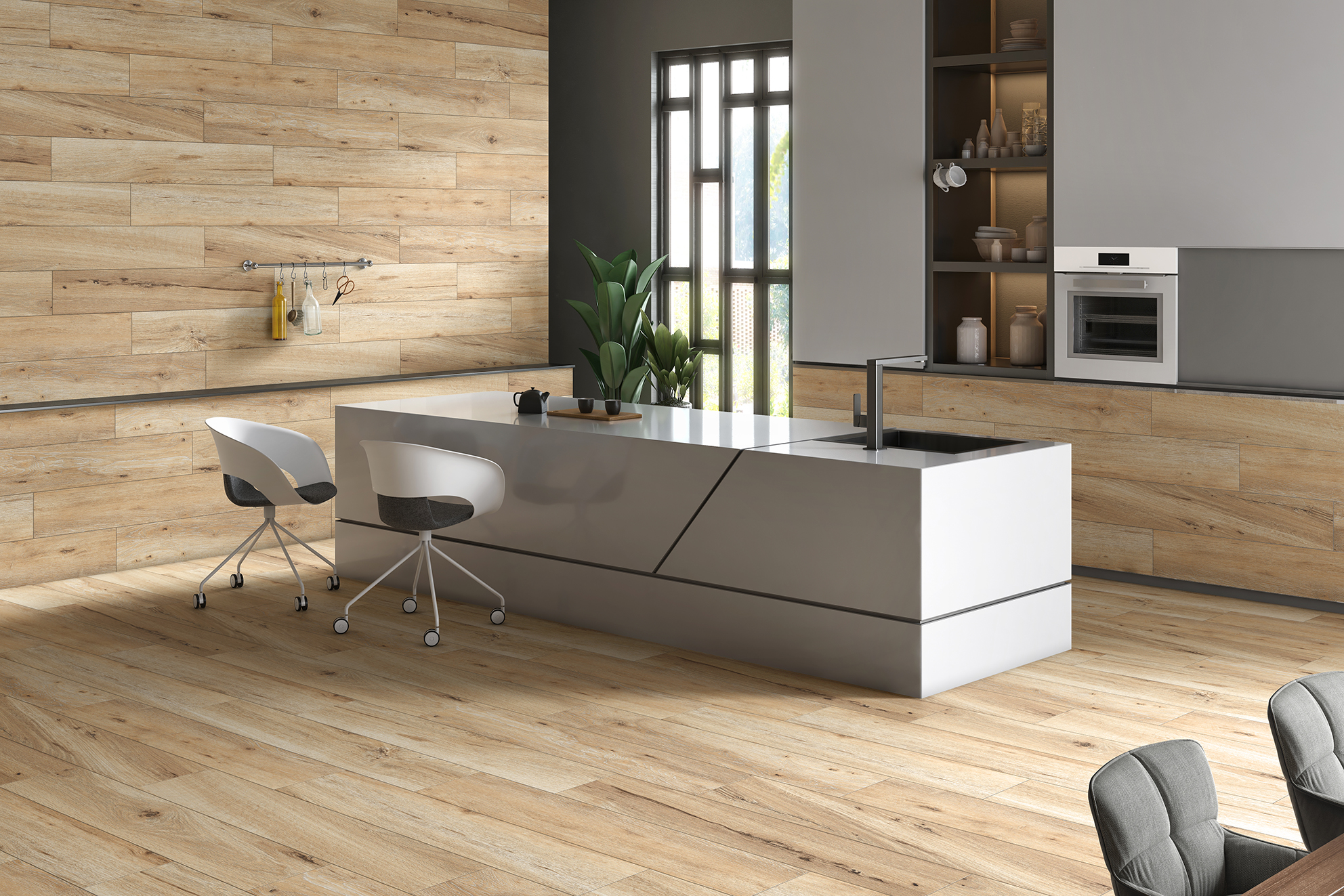
Wood-look porcelain or warm-toned SPC can introduce a softer visual character.
Wood-inspired flooring works particularly well with natural furniture, warm lighting, neutral walls, and earthy décor.
Small Living Room
For smaller rooms, light-coloured flooring and visually continuous layouts can make the room feel more open.
Choosing the best floor tiles for living room areas is therefore not only about the tile itself but also about size, colour, lighting, and installation pattern.
Living Room Flooring Ideas for Indian Homes
Indian homes vary significantly in architecture, size, lifestyle, and interior preferences. Good living room flooring ideas should therefore be adaptable rather than based on one design trend.
Large-Format Tiles
Large-format tiles can create a clean, contemporary appearance with fewer visible grout joints.
Marble-Look Porcelain
Marble-look porcelain is an excellent option for homeowners who want a premium appearance with the practical characteristics of a manufactured tile.
Neutral Beige Flooring
Beige, cream, and warm greige surfaces can complement a wide range of furniture and wall colours.
Grey Contemporary Flooring
Grey flooring can work well with modern furniture, black accents, white walls, and industrial-inspired interiors.
Wood-Look Flooring
Wood-look porcelain or SPC can create a warm appearance without requiring the homeowner to choose natural timber.
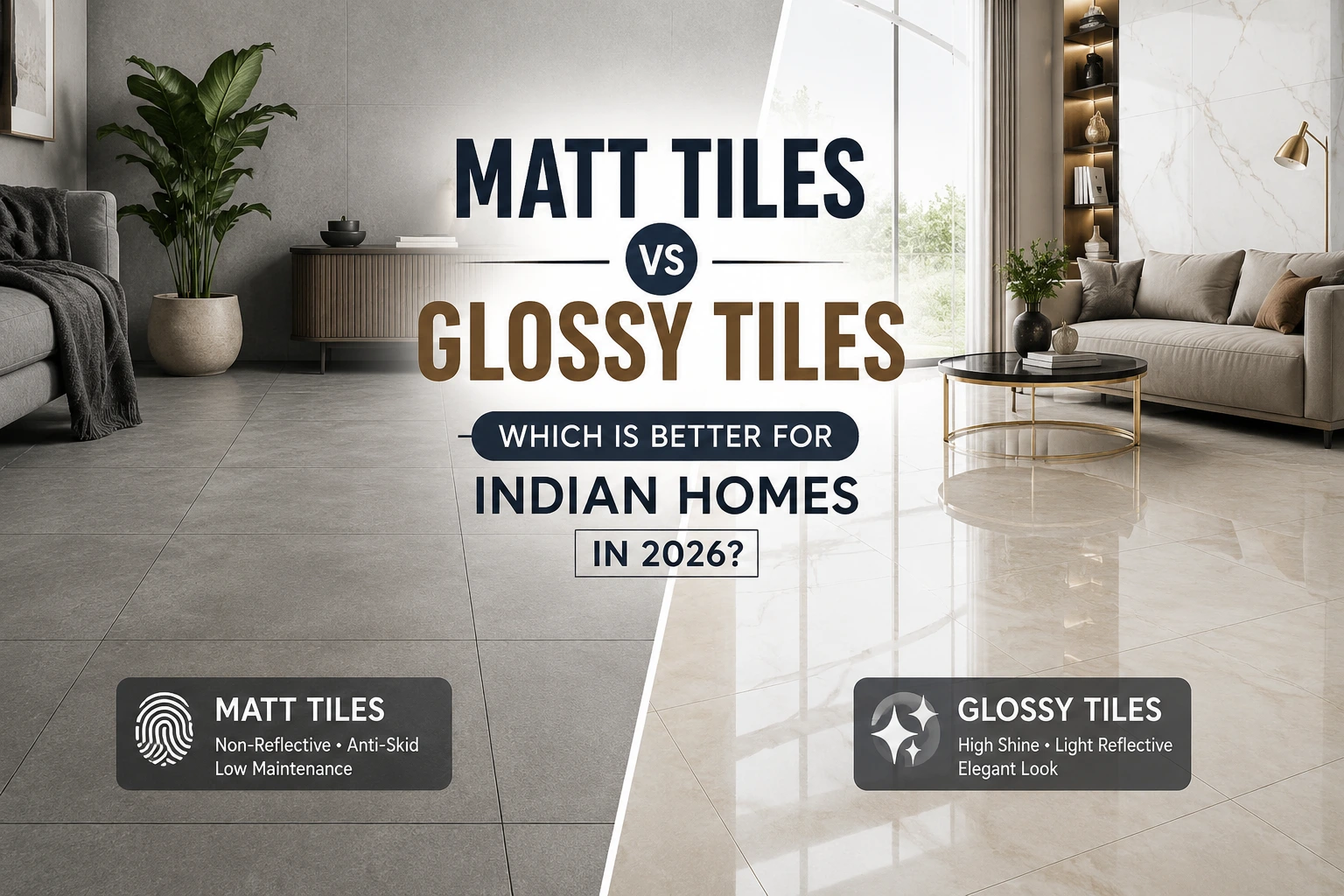
Glossy Flooring
Glossy surfaces can reflect light and create a bright, polished appearance.
Matt Flooring
Matt surfaces offer a more understated contemporary look and can be particularly suitable for minimalist interiors.
These living room flooring ideas can be adapted according to room size, natural light, furniture, wall colour, and overall design theme.
What Is the Best Flooring for Different Living Room Requirements?
The best flooring for living room spaces changes depending on what matters most to the homeowner.
Best for Low Maintenance
Vitrified and porcelain tiles are strong options when easy cleaning and routine maintenance are priorities.
Best for a Luxury Appearance
Marble and premium porcelain can both create sophisticated interiors.
Best for Design Variety
Porcelain and vitrified tiles provide an extensive range of colours, patterns, sizes, and finishes.
Best for Modern Warmth
SPC and wood-look flooring can provide a warmer visual character.
Best for High-Use Residential Spaces
Durable tile surfaces can be practical for homes where the living room experiences regular foot traffic.
Best for a Contemporary Interior
Large-format porcelain, concrete-look tiles, terrazzo-inspired surfaces, and matt finishes are strong choices.
Ultimately, the best flooring for living room interiors should match the actual needs of the household rather than simply following a trend.
Living Room Flooring Cost in India
The cost of living room flooring varies according to the material, brand, size, finish, quality, installation method, labour, transportation, and project requirements.
For example, SPC flooring for living room spaces may have a different overall installation cost from a porcelain tile project.
Likewise, the cost of vitrified tiles for living room applications can vary significantly depending on format, finish, design, and manufacturer.
The same applies to marble flooring for living room projects because natural stone prices vary by variety, origin, grade, finish, thickness, and availability.
When evaluating porcelain tiles for living room, consider not only the price per square foot but also wastage, installation, adhesive, grout, and long-term maintenance.
What Should Your Flooring Budget Include?
A realistic budget should consider:
- Flooring material
- Installation
- Labour
- Adhesive
- Grout
- Underlay where required
- Subfloor preparation
- Transportation
- Wastage
- Skirting
- Finishing work
Comparing the complete installed cost gives a more realistic understanding of which flooring provides the best value.
Why Choose Antovia Surfaces for Living Room Flooring?
Antovia Surfaces is a Morbi, Gujarat-based manufacturer and exporter offering porcelain tiles, porcelain slabs, SPC flooring, wooden planks, outdoor porcelain pavers, and other tile surfaces.
Its product collection includes multiple formats and finishes, giving designers and homeowners several choices for residential interiors.
For living rooms, the company's porcelain collection includes sizes such as 600×600 mm, 600×1200 mm, 800×800 mm, 800×1600 mm, and 1000×1000 mm. Its collection also includes larger porcelain slabs for architectural applications.
Antovia offers finishes including matt, glossy, carving, wood, terrazzo, and other surface treatments.
This variety is useful when homeowners are comparing best flooring options for living room interiors because the flooring can be selected according to the desired design language rather than being limited to one appearance.
Porcelain Collection
The porcelain tile range provides options for contemporary, classic, minimalist, luxury, and natural-inspired interiors.
Large-Format Options
Large-format flooring can help create a clean visual appearance with fewer grout lines.
Multiple Surface Finishes
Glossy, matt, carving, terrazzo, and wood-inspired surfaces allow designers to coordinate flooring with different interior styles.
Technical Information
Antovia publishes technical specifications for its products, allowing buyers and professionals to review performance characteristics before selecting a product.
For homeowners looking for porcelain tiles for living room applications, reviewing product specifications alongside design is an important part of the purchasing process.
Antovia Surfaces is located at 8A – National Highway, Morbi 363642, Gujarat, India, and serves domestic and international markets.
Installation and Maintenance Tips
Even the best flooring for living room will not perform properly if it is installed incorrectly.
Prepare the Subfloor
The base should be clean, stable, level, and suitable for the selected flooring system.
Uneven substrates can cause installation problems and affect long-term performance.
Choose the Correct Installation Method
Installation requirements differ between SPC, vitrified tiles, porcelain, marble, laminate, and wood.
Follow the manufacturer's installation instructions.
Use Suitable Materials
Tiles require suitable adhesives, grout, spacers, and installation techniques. SPC systems may require appropriate underlay or locking systems depending on the product.
Allow Proper Movement
Large flooring areas may require appropriate movement or expansion provisions depending on the installation system and building conditions.
Clean the Floor Correctly
Routine cleaning should match the flooring material.
For tile flooring, sweep or vacuum loose dust before damp cleaning. Avoid aggressive chemicals unless they are confirmed to be suitable for the particular surface.
Protect the Surface
Use furniture pads where appropriate and avoid dragging heavy furniture directly across the floor.
These simple measures can help maintain the appearance of your chosen living room flooring options over time.
FAQs About the Best Flooring for Living Room
What is the best flooring for living room?
The best flooring for living room depends on your priorities. Porcelain and vitrified tiles are practical choices for durability, design variety, and easy maintenance. SPC can suit homeowners looking for a modern, comfortable flooring system, while marble is appropriate for those prioritising natural luxury.
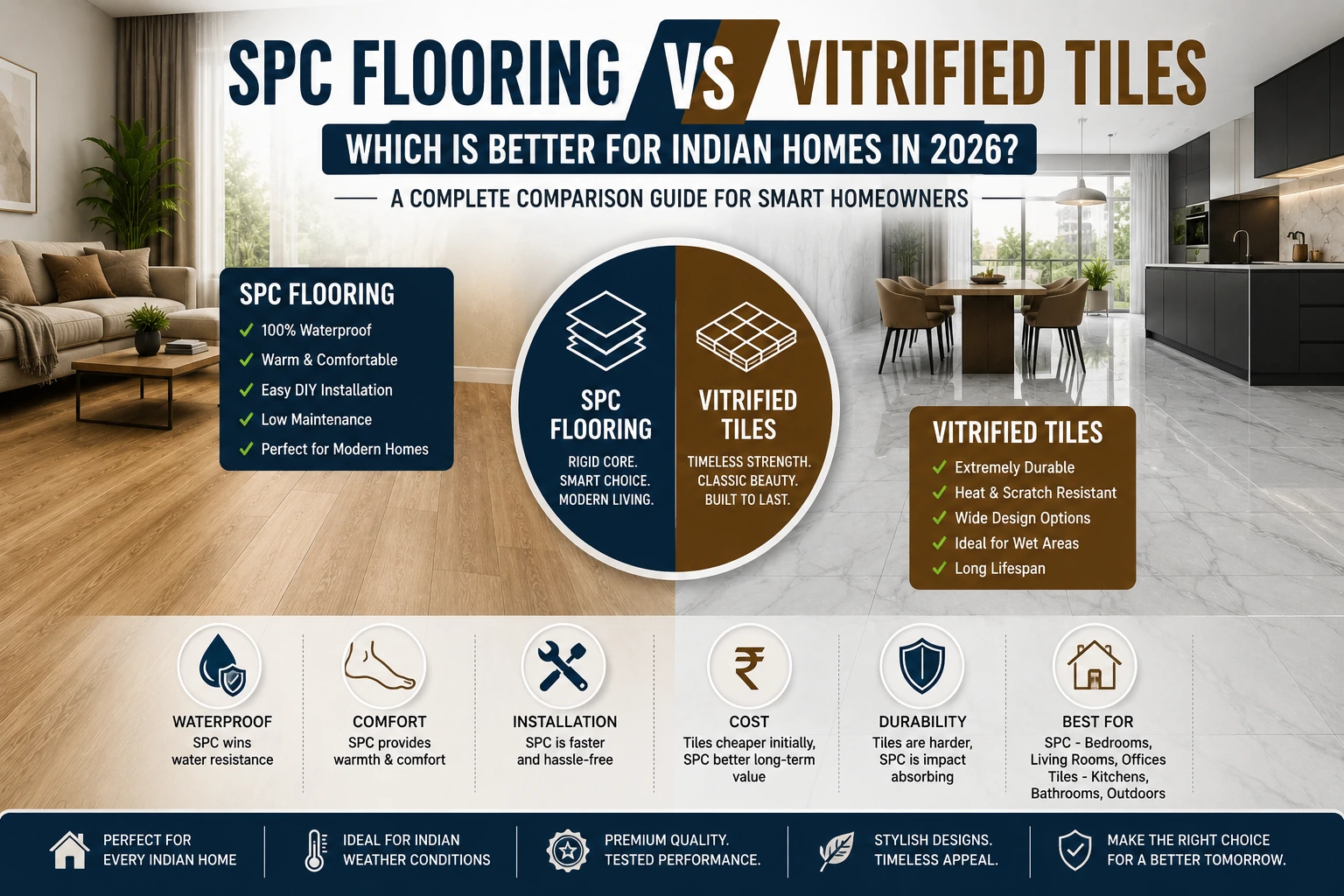
Which is better for a living room, SPC or vitrified tiles?
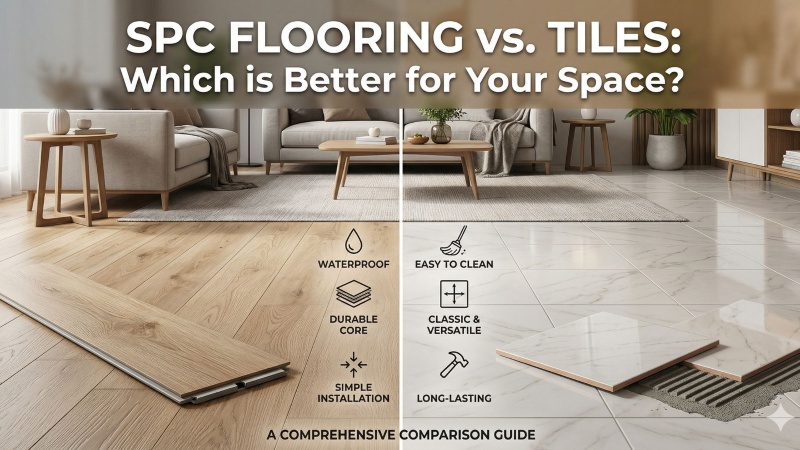
Both have advantages. SPC flooring for living room interiors can offer a warm appearance, practical installation, and water-resistant characteristics depending on the product. Vitrified tiles provide a hard, durable surface with extensive design and finish options. The better choice depends on the room, lifestyle, installation requirements, and personal preference.
Are vitrified tiles good for living rooms?
Yes. Vitrified tiles for living room spaces are popular because they can provide durability, easy cleaning, and a broad selection of colours, patterns, sizes, and finishes.
Is SPC flooring suitable for living rooms?
Yes, suitable SPC products can work well in living rooms. SPC flooring for living room applications is particularly attractive for homeowners looking for contemporary designs, easy maintenance, and a flooring system with a warmer feel.
Are porcelain tiles good for living room flooring?
Yes. Porcelain tiles for living room interiors can provide durability, low water absorption, easy maintenance, and extensive design flexibility. They are available in marble-look, stone-look, wood-look, terrazzo, matt, and glossy designs.
Is marble a good choice for a living room?
Marble flooring for living room spaces can create a highly luxurious natural appearance. However, marble generally requires more care than many manufactured tile surfaces, so homeowners should consider sealing, cleaning, polishing, and stain protection requirements.
Which flooring is easiest to maintain?
Porcelain and vitrified tiles are generally among the easier hard-flooring materials to maintain with regular cleaning. Certain SPC products can also be relatively easy to maintain.
Which flooring is most durable for a living room?
Durability depends on the specific product, quality, installation, and usage conditions. High-quality porcelain and vitrified tiles can provide excellent durability, while properly specified SPC and natural stone can also perform well.
What are the best floor tiles for living room?
The best floor tiles for living room interiors depend on the design and performance requirements. Large-format porcelain and vitrified tiles are popular choices for modern homes because they combine extensive design options with practical maintenance.
What is the most popular living room flooring in India?
Tiles remain widely used in Indian homes because of their availability, design variety, durability, and maintenance characteristics. However, SPC, marble, laminate, and wooden flooring are also used depending on the interior style and homeowner requirements.
Conclusion
Finding the best flooring for living room interiors is ultimately about balancing design, performance, maintenance, budget, and lifestyle.
SPC flooring can be a practical choice for modern homes that want a warm, contemporary appearance and convenient installation. Vitrified tiles remain a popular option for homeowners seeking durability, easy maintenance, and extensive design choices.
Porcelain offers another highly versatile solution. With marble-look, stone-look, wood-look, terrazzo, matt, glossy, and large-format options, it can support a wide range of interior styles.
Marble continues to have a strong place in luxury interiors because of its natural veining and distinctive appearance, although it generally requires more maintenance.
When comparing the best flooring options for living room spaces, there is therefore no universal winner. The right flooring depends on how the room is used, the desired appearance, maintenance expectations, budget, and long-term performance requirements.
For homeowners exploring living room flooring options, Antovia Surfaces provides a broad collection of porcelain tiles and other surfaces in multiple sizes and finishes. Its range allows designers and homeowners to explore contemporary, luxury, minimalist, natural, and architectural flooring concepts.
Whether you prefer the practical character of vitrified tiles for living room, the warmth of SPC flooring for living room, the natural luxury of marble flooring for living room, or the versatility of porcelain tiles for living room, selecting the right product specification is more important than simply choosing a trend.
The best approach is to compare samples, technical specifications, installation requirements, maintenance needs, and total project cost before making the final decision.