 11 Oct, 2026
6Views
11 Oct, 2026
6Views A well-designed marble floor can transform an ordinary interior into a space that feels refined, spacious and visually distinctive. The attraction is not only the marble appearance itself. Colour, veining, tile size, pattern, border, orientation and the way the floor interacts with furniture and walls all contribute to the final result.
That is why choosing a marble floor design should go beyond selecting a beautiful tile from a catalogue. Two rooms can use similar marble-inspired surfaces and still look completely different because the tiles have been arranged differently. A straight layout creates a clean architectural appearance, while a border can frame the room. A dramatic vein can become a statement feature, while a softer pattern can provide a quiet background for furniture and lighting.
Today, marble look porcelain tiles give homeowners, architects and interior designers another way to create marble-inspired interiors. Available in different colours, patterns and formats, these surfaces can be used for simple floors, large-format installations, decorative borders and coordinated interior schemes.
In this guide, we explore 25 marble floor design ideas, popular patterns, border concepts, colour combinations, room-specific applications, large-format ideas, mosaic options and practical planning tips to help you create a floor that looks intentional from edge to edge.
Why Marble Is a Popular Choice for Floor Design
Marble-inspired flooring has remained popular because its visual character can work across many interior styles.
The most recognisable feature is usually the combination of a base colour and contrasting veins. A white surface with subtle grey movement creates a very different impression from a dark surface with bold contrasting lines.
A successful marble floor can provide:
-
Visual depth – Veining prevents a large floor from appearing completely flat.
-
A strong focal point – Dramatic patterns can become an architectural feature.
-
Design flexibility – Marble-inspired colours can work with modern, classic and transitional interiors.
-
A premium appearance – Large, coordinated surfaces can create a sophisticated visual effect.
-
Colour coordination – Marble patterns can connect floor colours with walls, cabinetry, furniture and accents.
-
Pattern opportunities – Borders, frames, geometric layouts and directional arrangements can add another layer of design.
However, a good floor does not necessarily require the strongest pattern available. Sometimes the most effective simple marble floor design uses subtle veins and allows the architecture of the room to provide the drama.
Popular Marble Floor Looks and Styles
When selecting a marble-inspired floor, begin by identifying the visual character you want.
1. White Marble-Look Floor
White marble-inspired flooring with grey or soft contrasting veins creates a clean and versatile appearance.
Best for: Living rooms, bedrooms, foyers, kitchens and contemporary interiors.
Why choose it: Light surfaces can create an open and bright visual character.
Pairs well with: Natural wood, black accents, metallic details and neutral furniture.
2. Calacatta-Inspired Marble Look
A white background with bold, expressive veins creates a more dramatic luxury appearance.
Best for: Grand living rooms, entrance areas, hotels and statement interiors.
Why choose it: Strong veining allows the floor itself to become a focal point.
Pairs well with: Brass, gold, dark furniture and minimalist surroundings.
3. Carrara-Inspired Marble Look
Carrara-Inspired Marble Look : Soft grey veining against a lighter background creates a quieter and more understated appearance.
Best for: Bedrooms, bathrooms, living rooms and minimalist interiors.
Why choose it: The restrained pattern works well when the room already contains decorative elements.
Pairs well with: White cabinetry, light wood, matte black and soft neutral tones.
Variants: Carrara Gold, Carrara Silver
4. Grey Marble Floor
Grey marble-style flooring provides a contemporary alternative to traditional white surfaces.
Best for: Modern homes, offices, retail spaces and hospitality interiors.
Why choose it: Grey can connect easily with black, white, metallic and wood finishes.
Pairs well with: Charcoal furniture, white walls and natural timber.
Variants: Verdin Grey, Harvest Grey, Maldova Grey
5. Beige and Cream Marble Floor
Warm beige and cream tones can create a softer and more welcoming interior.
Best for: Living rooms, bedrooms, villas and traditional interiors.
Why choose it: Warm neutral colours can complement wood and earthy materials.
Pairs well with: Walnut, oak, beige upholstery, bronze and warm lighting.
Variants: Pallas Beige, Breccia Aurora Beige
6. Dark Marble Floor
Dark marble-inspired surfaces can create a dramatic and sophisticated atmosphere.
Best for: Luxury living rooms, restaurants, boutiques, entrances and statement spaces.
Why choose it: Dark backgrounds create strong contrast with lighter furniture and walls.
Pairs well with: White, brass, gold, glass and light wood.
Variants: Dark Rock
7. Green Marble-Inspired Floor
Green marble-style surfaces provide an alternative to conventional white, cream and grey flooring.
Best for: Feature areas, luxury interiors, wellness-inspired spaces and selected living rooms.
Why choose it: Green introduces a distinctive natural colour.
Pairs well with: Wood, warm metallic accents and neutral walls.
Variants: Forest Aqua
25 Marble Floor Design Ideas to Inspire Your Interior
The following designs cover different colours, patterns, layouts, room types and decorative approaches.
1. Classic White Marble Floor Design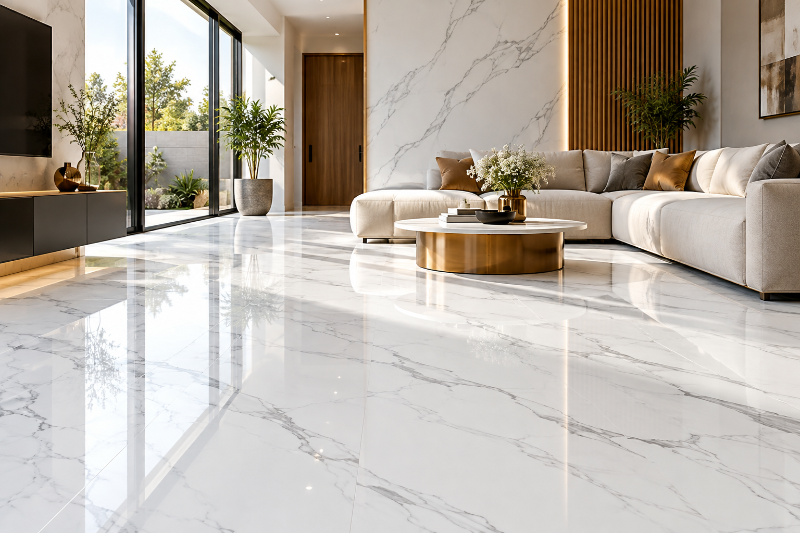
A classic white marble floor with subtle grey veins is one of the e
asiest styles to coordinate with different interiors.
The floor can act as a neutral foundation while furniture, artwork and lighting provide additional colour.
Best for: Living rooms, foyers and bedrooms.
Design tip: Use a relatively simple layout when the marble pattern itself is expressive.
2. Modern Grey-and-White Marble Floor
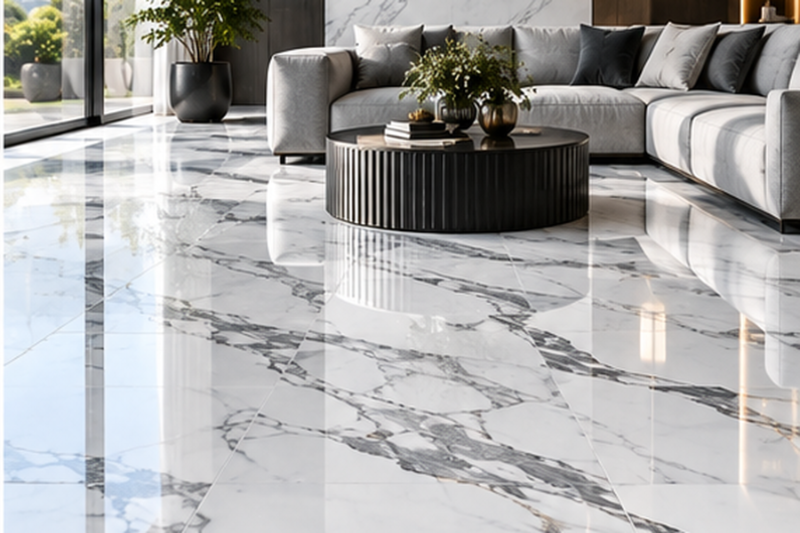
Combine a light background with controlled grey movement for a contemporary appearance.
This approach works especially well in interiors that already use black, grey or white architectural elements.
Best for: Modern apartments, offices and living rooms.
3. Simple Cream Marble Floor Design
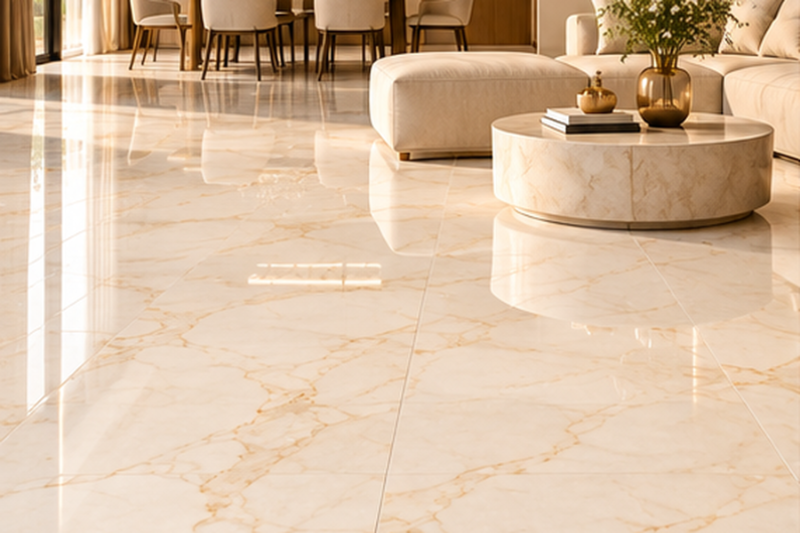
A cream background with delicate veining can create a warm and understated appearance.
This is particularly useful when the interior includes wooden furniture or warm neutral colours.
Best for: Bedrooms, living rooms and dining spaces.
4. Dramatic Veined Marble Floor
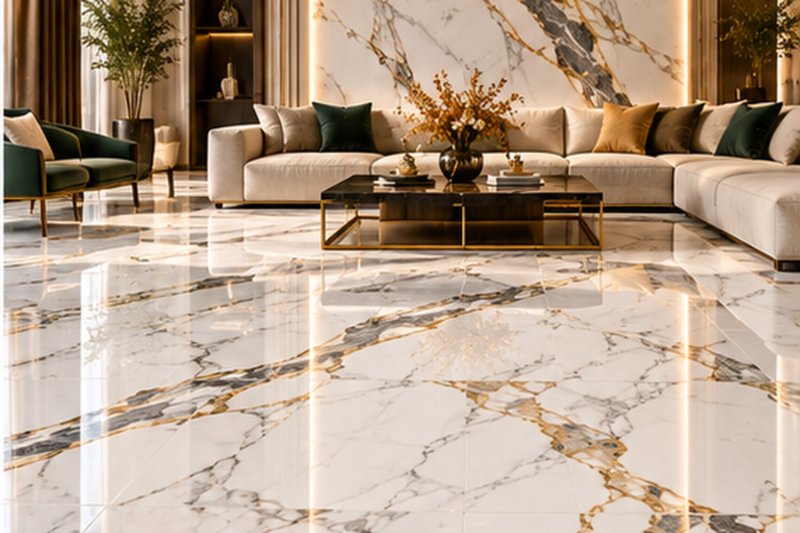
Instead of relying on a decorative installation pattern, let the veins create the drama.
Strong veins can form visual pathways across the floor and create a statement without additional borders.
Best for: Large living rooms, luxury interiors and feature areas.
5. Straight-Lay Marble Floor Design
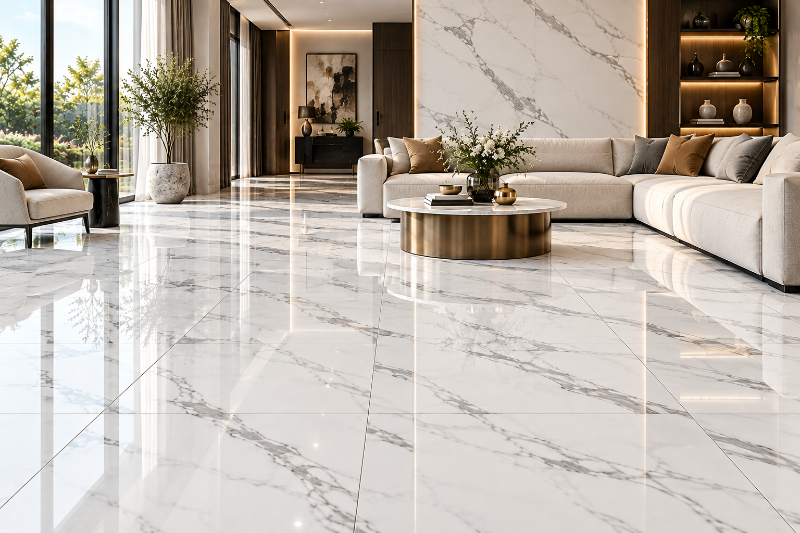
Straight laying places tiles in aligned rows and allows the surface design to remain the main feature.
It is one of the most versatile marble floor design patterns because it works with both subtle and dramatic surfaces.
Best for: Living rooms, kitchens, bedrooms and offices.
Pairs well with: Minimalist furniture and neutral colour palettes.
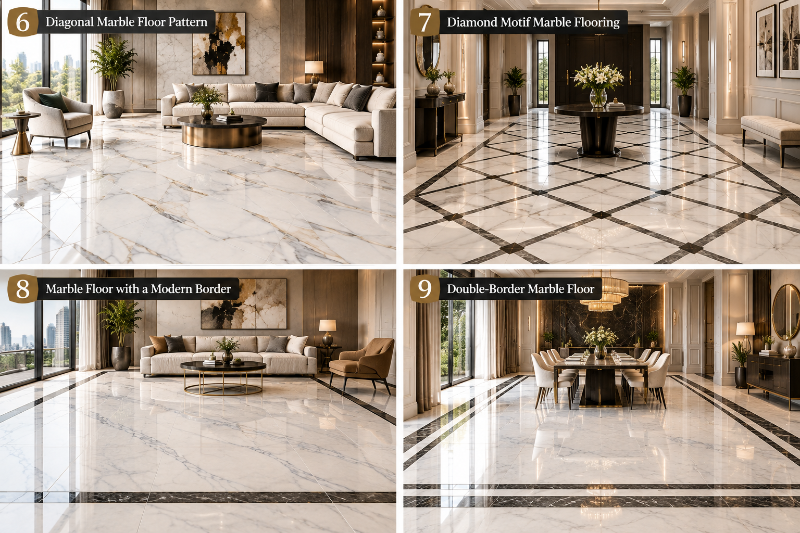
6. Diagonal Marble Floor Pattern
A diagonal layout changes the direction of the floor relative to the room walls.
It can make a conventional rectangular space feel more dynamic.
Best for: Living rooms, halls and larger spaces.
Design tip: Keep the marble pattern relatively controlled so the layout and veining do not compete.
7. Diamond Motif Marble Flooring
Diamond patterns create a geometric visual rhythm.
A contrasting tile colour can emphasise the geometry, while similar tones create a more subtle effect.
Best for: Entrance areas, dining rooms and formal interiors.
Pairs well with: Contemporary furniture and restrained wall finishes.
8. Marble Floor with a Modern Border
A perimeter border can frame the central floor and create a more architectural appearance.
For a modern marble floor border design, consider a narrow contrasting strip rather than an overly elaborate frame.
Best for: Living rooms, dining rooms, entrance halls and hotel interiors.
9. Double-Border Marble Floor
A double border creates two layers of framing around the main floor area.
The outer border can define the room while the inner border establishes a stronger relationship with the central design.
Best for: Large rooms and formal interiors.
10. Marble Carpet Floor Design
A marble carpet design creates a decorative central area surrounded by a simpler field.
The central section can use a different colour, pattern, orientation or border.
Best for: Grand living rooms, foyers and formal spaces.
Design tip: Align the feature with the furniture arrangement rather than automatically placing it at the exact centre of the room.
11. Black-and-White Marble Floor
Black and white marble floors create one of the strongest visual contrasts available in floor design.
The combination can be used in a checkerboard, border or geometric arrangement.
Best for: Entrance areas, kitchens, boutiques and statement interiors.
Pairs well with: Monochrome furniture, brass and minimalist walls.
12. Grey-and-Gold Marble Floor
A grey marble-inspired surface combined with controlled gold accents can create a luxury-oriented interior.
The gold does not necessarily need to appear in the floor itself; it can come through lighting, furniture, hardware or decorative details.
Best for: Luxury residential and hospitality interiors.
13. Beige-and-Brown Marble Floor
Warm beige and brown tones create an earthy, comfortable appearance.
This style can work particularly well with wood and leather.
Best for: Living rooms, home offices and traditional interiors.
14. Herringbone Marble Floor Design
Herringbone introduces a strong geometric rhythm into the flooring.
Because the installation pattern is already decorative, a quieter marble surface often produces a more balanced result.
Best for: Bedrooms, boutique interiors and feature zones.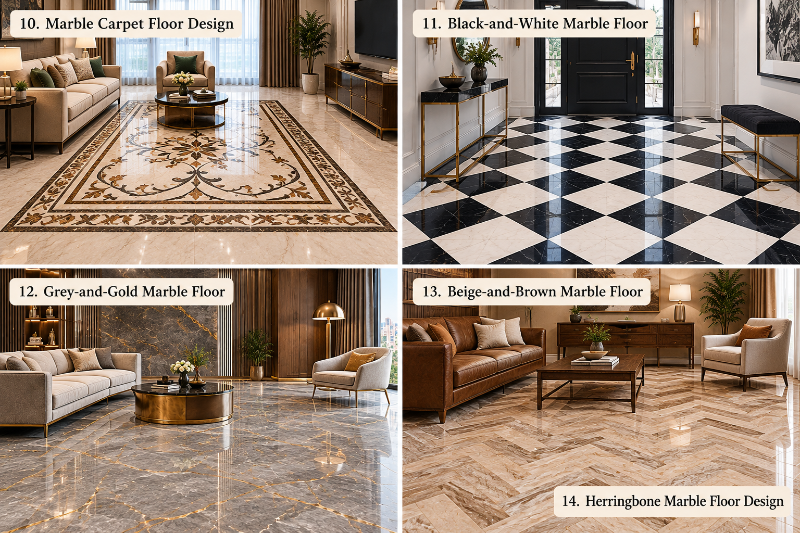
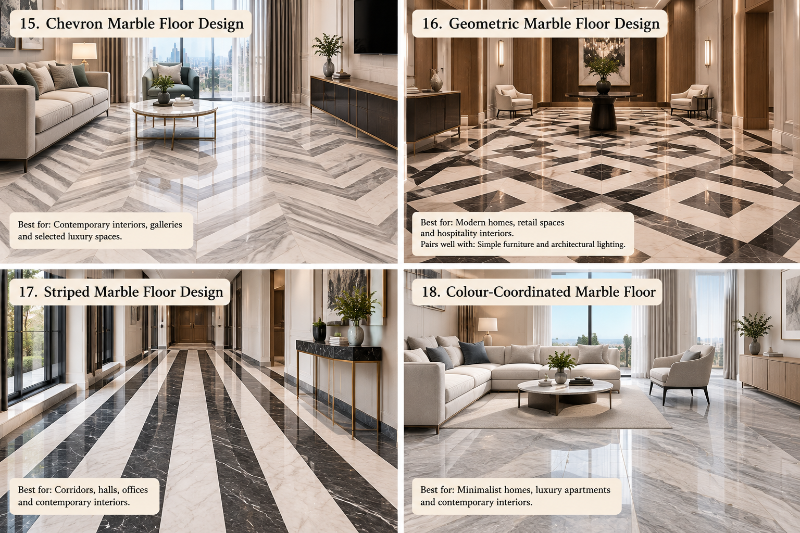
15. Chevron Marble Floor Design
Chevron creates a continuous V-shaped visual pattern.
It is more directional than a conventional straight layout and can make the floor itself a design statement.
Best for: Contemporary interiors, galleries and selected luxury spaces.
16. Geometric Marble Floor Design
Squares, diamonds, rectangles and other geometric forms can be combined with marble-inspired surfaces.
This approach works particularly well when the room already has architectural geometry.
Best for: Modern homes, retail spaces and hospitality interiors.
Pairs well with: Simple furniture and architectural lighting.
17. Striped Marble Floor Design
Alternating light and dark bands can create a striped effect.
The direction of the stripes can be used intentionally to reinforce the geometry of a hallway or open space.
Best for: Corridors, halls, offices and contemporary interiors.
18. Colour-Coordinated Marble Floor
Instead of using high contrast, select surfaces from a closely related colour family.
For example, different shades of white and grey can create subtle depth without introducing an obvious pattern break.
Best for: Minimalist homes, luxury apartments and contemporary interiors.
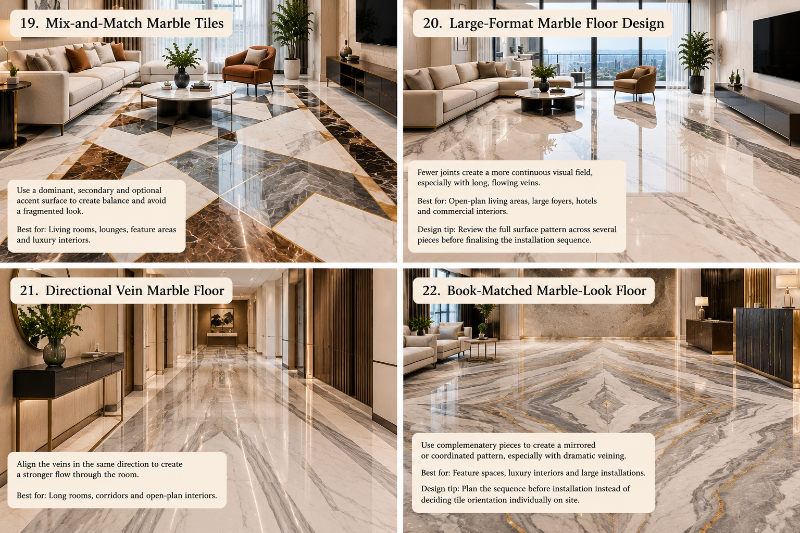
19. Mix-and-Match Marble Tiles
Different marble colours or patterns can be combined to create a more artistic floor.
However, successful mixing requires a clear visual hierarchy.
A useful approach is to select:
-
One dominant surface
-
One secondary surface
-
One optional accent
Using too many equally strong patterns can make the floor look fragmented.
20. Large-Format Marble Floor Design
Large format marble look tiles can create a more continuous visual field because fewer joints interrupt the overall composition.
This is particularly useful when the surface has long, flowing veins.
Best for: Open-plan living areas, large foyers, hotels and commercial interiors.
Design tip: Review the full surface pattern across several pieces before finalising the installation sequence.
21. Directional Vein Marble Floor
Instead of placing every tile randomly, align the visual direction of the veins.
This can create a stronger flow through the room.
Best for: Long rooms, corridors and open-plan interiors.
22. Book-Matched Marble-Look Floor
Book matching uses complementary pieces to create a mirrored or coordinated relationship between the surface patterns.
It is especially effective with dramatic veining.
Best for: Feature spaces, luxury interiors and large installations.
Design tip: Plan the sequence before installation instead of deciding tile orientation individually on site.
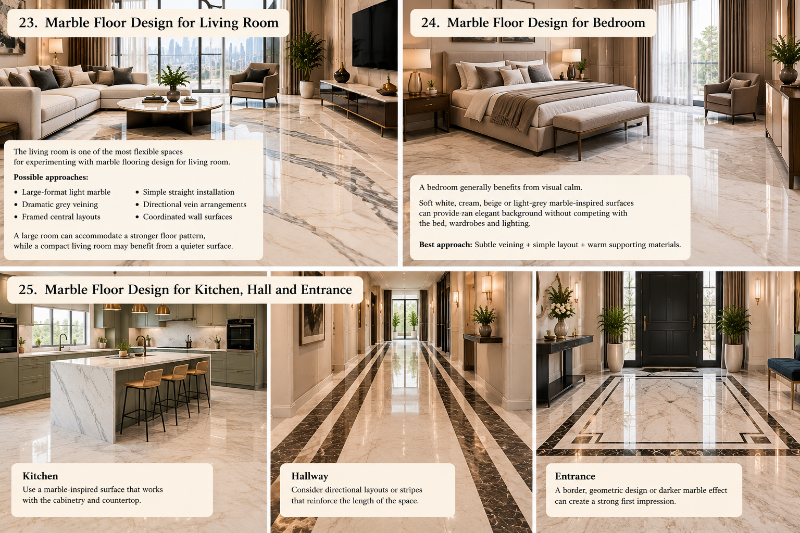
23. Marble Floor Design for Living Room
The living room is one of the most flexible spaces for experimenting with marble flooring design for living room.
Possible approaches include:
-
Large-format light marble
-
Dramatic grey veining
-
Framed central layouts
-
Simple straight installation
-
Directional vein arrangements
-
Coordinated wall surfaces
A large room can accommodate a stronger floor pattern, while a compact living room may benefit from a quieter surface.
24. Marble Floor Design for Bedroom
A bedroom generally benefits from visual calm.
Soft white, cream, beige or light-grey marble-inspired surfaces can provide an elegant background without competing with the bed, wardrobes and lighting.
Best approach: Subtle veining + simple layout + warm supporting materials.
25. Marble Floor Design for Kitchen, Hall and Entrance
Kitchens, hallways and entrances each create different design opportunities.
Kitchen
Use a marble-inspired surface that works with the cabinetry and countertop.
Hallway
Consider directional layouts or stripes that reinforce the length of the space.
Entrance
A border, geometric design or darker marble effect can create a strong first impression.
Customising Marble Floor Design With Mosaics
Mosaics can add another layer of personalisation to a marble-inspired floor.
Instead of covering the entire floor with a complex pattern, use mosaic elements selectively.
Popular approaches include:
-
Hexagonal patterns
-
Small geometric pieces
-
Decorative borders
-
Centre motifs
-
Contrasting colour inserts
-
Mosaic frames around a large-format central field
A useful strategy is to let the mosaic act as an accent rather than the entire floor.
For example, a large-format marble-look floor can remain visually calm while a small geometric mosaic defines the entrance or centre of a room.
This approach provides decorative interest without making every part of the floor equally busy.
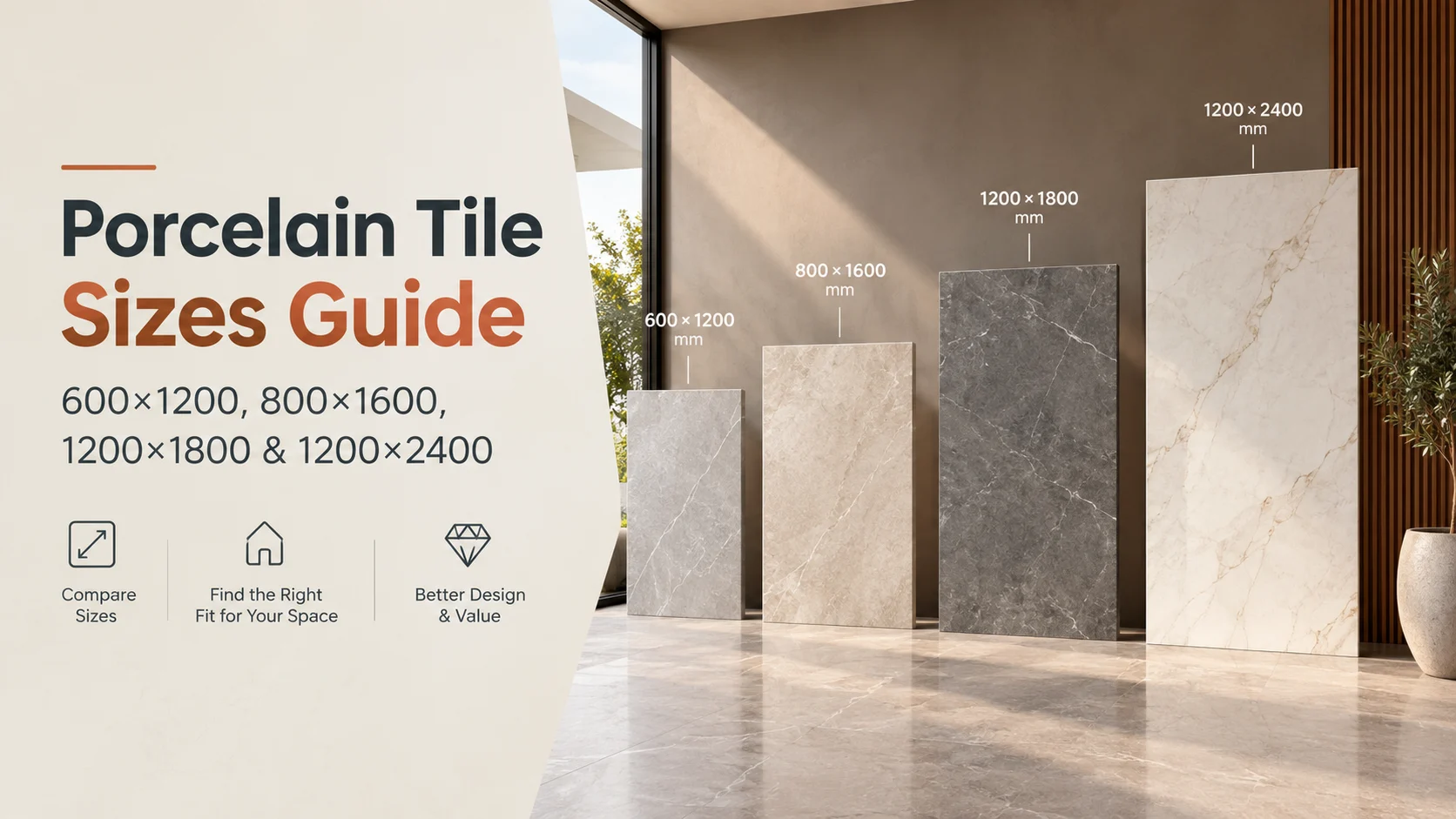
How to Choose the Right Tile Size for Marble Floor Design
Tile size has a major effect on the appearance of marble-inspired flooring.
|
Tile Format |
Visual Character |
Suitable Design Direction |
|
600 × 600 mm |
Structured |
Grid, border and classic layouts |
|
600 × 1200 mm |
Elongated |
Contemporary straight layouts |
|
800 × 1600 mm |
Large-format |
Luxury and modern interiors |
|
1200 × 2400 mm |
Strong continuity |
Large rooms and statement spaces |
|
Large slabs |
Minimal visual interruption |
Feature surfaces and coordinated designs |
The correct size depends on the room, installation requirements, handling conditions, desired appearance and the scale of the marble pattern.
Antovia Surfaces already has dedicated content addressing porcelain tile sizes and large-format porcelain slabs, so those subjects should be linked rather than duplicated extensively here.
How Vein Direction Changes Your Marble Floor Design
Vein direction is one of the most important details when working with expressive marble-look surfaces.
Random Direction
Tiles are installed without a strong directional sequence.
Effect: Natural and varied.
Consistent Direction
The veins generally follow one visual direction.
Effect: More architectural and organised.
Cross-Veining
Adjacent pieces are intentionally rotated.
Effect: More movement and visual contrast.
Book Matching
Complementary surfaces are positioned to create a mirrored relationship.
Effect: Dramatic and highly decorative.
Directional Installation
The veins are arranged to reinforce the length or width of the room.
Effect: Strong visual flow.
For porcelain tiles that look like marble, always review several pieces together rather than judging the design from a single tile sample.
Marble Floor Design by Colour
Colour selection should consider both the floor itself and the materials surrounding it.
White & Grey
Clean, contemporary and highly versatile.
White & Black
High contrast and dramatic.
Beige & Brown
Warm and traditional.
Grey & Gold
Luxury-oriented and sophisticated.
Cream & Taupe
Soft and understated.
Green & White
Fresh and distinctive.
Black & Gold
Bold and premium.
Quick Colour Selection Guide
|
If You Want... |
Consider... |
|
Bright appearance |
White or light cream |
|
Contemporary look |
Grey and white |
|
Warm atmosphere |
Beige and brown |
|
Strong contrast |
Black and white |
|
Luxury feel |
Grey with controlled metallic accents |
|
Dramatic statement |
Dark marble-inspired surfaces |
|
Natural character |
Green or earthy tones |
Marble Floor Design for Different Rooms
Living Room
The living room provides the greatest flexibility.
Large-format marble-inspired surfaces, dramatic veins, borders and directional layouts can all work depending on the room size.
Bedroom
Choose quieter patterns and warmer colours when creating a relaxing environment.
Kitchen
Coordinate the floor with cabinetry, worktops and backsplash materials.
Dining Room
A framed or geometric floor can visually define the dining area.
Entrance
Use a stronger border, darker contrast or central motif to create a focal point.
Hallway
Directional patterns can reinforce the natural movement through the corridor.
Commercial Spaces
Hotels, retail stores, restaurants and offices may use marble-inspired surfaces to establish a particular brand or interior character.
Marble Look Porcelain Tiles vs Natural Marble: A Design Perspective
Natural marble and marble look porcelain tiles are different materials, but both can be considered when the desired interior direction is marble-inspired.
|
Design Factor |
Natural Marble |
Marble-Look Porcelain |
|
Visual variation |
Naturally occurring |
Manufactured/design controlled |
|
Pattern consistency |
Naturally variable |
Depends on collection |
|
Colour options |
Depends on stone |
Depends on product range |
|
Format options |
Vary by material |
Vary by product range |
|
Design planning |
Stone selection + layout |
Tile selection + layout |
|
Visual objective |
Natural stone character |
Marble-inspired tile appearance |
The key point is to choose according to the project's actual requirements rather than assuming that one material is automatically better for every situation.
Planning and Preparation for a Marble Floor
Before installation, the design should be translated into a practical layout.
Step 1: Measure the Space
Record the room's length, width, openings, columns and permanent fixtures.
Step 2: Identify the Main Viewpoint
Determine where people are most likely to see the floor from.
Step 3: Choose Tile Orientation
Decide whether the tiles should run parallel, perpendicular or diagonally relative to the room.
Step 4: Plan the Starting Point
The starting point affects where cuts appear around the room.
Step 5: Plan Borders
If a border is included, determine its width and position before installation.
Step 6: Review Vein Direction
Place several tiles together to understand the overall pattern.
Step 7: Plan Transitions
Consider how the floor connects to adjoining rooms or other materials.
Step 8: Confirm Installation Requirements
The substrate, adhesive, jointing system, cutting requirements and installation method should be checked against the selected product and project conditions.
Marble Floor Planning Checklist
|
Check |
Why It Matters |
|
Room dimensions |
Determines pattern scale |
|
Tile format |
Influences visual rhythm |
|
Vein direction |
Controls surface flow |
|
Border size |
Affects room proportions |
|
Starting point |
Determines edge cuts |
|
Transitions |
Creates a coordinated overall floor |
|
Lighting |
Influences perceived colour |
|
Furniture layout |
Determines focal areas |
Common Marble Floor Design Mistakes
Choosing a Tile Without Viewing Multiple Pieces
A single sample cannot always show how the design will behave across a complete floor.
Ignoring the Room's Proportions
A decorative pattern that looks excellent in a large room may overwhelm a small space.
Using Too Many Contrasting Colours
Multiple strong colours can make the floor visually fragmented.
Ignoring Vein Direction
Randomly rotating highly expressive pieces can disrupt the intended pattern.
Adding Borders Everywhere
Borders should support the room's architecture, not simply add decoration.
Choosing a Trend Without Considering the Interior
A design that looks excellent in a photograph may not suit the room's architecture, lighting or furniture.
Forgetting the Installation Sequence
A good visual concept can be compromised if the installation sequence is not planned in advance.
Tips for Maintaining Marble-Style Floors
Maintenance depends on the actual material and product specification.
For natural marble, cleaning and care requirements differ from those of manufactured porcelain surfaces. Natural stone may require specific sealing and maintenance practices, while porcelain products should be maintained according to the manufacturer's recommendations.
For any floor:
-
Clean spills promptly.
-
Avoid unsuitable cleaning chemicals.
-
Follow the product manufacturer's cleaning instructions.
-
Use appropriate cleaning equipment.
-
Protect the surface during construction or renovation.
-
Follow application-specific maintenance guidance.
Do not assume that maintenance instructions for natural marble automatically apply to marble effect floor tiles or porcelain products.
Combining Marble Flooring With Other Materials
Marble-inspired flooring can become more interesting when combined with complementary materials.
|
Material |
Best Used With |
Design Effect |
|
Wood |
Warm marble tones |
Adds warmth and contrast |
|
Metal |
Grey or dark marble |
Creates contemporary luxury |
|
Glass |
Light marble |
Creates an airy appearance |
|
Stone |
Neutral marble |
Adds natural texture |
|
Terrazzo |
Subtle marble |
Introduces pattern and colour |
|
Dark cabinetry |
White marble |
Creates strong contrast |
|
Brass accents |
White/grey marble |
Adds a luxury detail |
The strongest combinations usually have a clear hierarchy: one material acts as the dominant surface while the others provide supporting contrast.
Popular Marble Colour Combinations
Colour combinations can be used in the main floor, border, furniture or surrounding surfaces.
-
White & Black
-
White & Grey
-
Beige & Brown
-
Cream & Taupe
-
Grey & Gold
-
Black & Gold
-
Green & White
-
White & Beige
-
Grey & Charcoal
-
Cream & Walnut
How to Choose a Combination
Use the 60-30-10 principle as a design starting point, not a rigid rule:
-
Dominant colour: approximately 60%
-
Secondary colour: approximately 30%
-
Accent: approximately 10%
The exact proportions should be adapted to the room, architecture and furniture.
Create a Marble Feature Wall or Pathway
Marble-inspired surfaces do not have to stop at the main floor.
A coordinated surface can be used to create:
-
Entrance pathways
-
Feature wall sections
-
Fireplace surrounds
-
Decorative niches
-
Staircase accents
-
Dining-area features
-
Reception-area focal points
For a more sophisticated appearance, the feature should relate visually to the floor rather than simply repeating the exact same pattern everywhere.
A dramatic marble-look floor can, for example, be paired with a quieter wall surface from the same colour family.
How to Make a Marble Floor Look More Luxurious
Luxury does not necessarily require the most expensive-looking pattern.
Instead, focus on:
1. Scale
Large-format surfaces can create a more expansive visual field where appropriate.
2. Vein Selection
Choose a vein pattern that suits the scale of the room.
3. Layout
Straight, framed, directional or book-matched layouts can create different levels of visual sophistication.
4. Colour Coordination
Connect the floor with cabinetry, furniture, walls and lighting.
5. Restraint
Avoid combining too many competing patterns.
6. Detailing
Carefully planned borders, transitions and focal areas can make the installation feel more intentional.
How to Choose the Best Marble Floor Design for Your Space
Use this sequence:
Room → Style → Colour → Veining → Format → Layout → Border → Supporting Materials
For example:
Large contemporary living room → luxury style → white/grey → dramatic veins → large format → straight or directional layout → minimal border → black and wood accents
Another example:
Small warm bedroom → soft contemporary style → cream → subtle veins → suitable medium/large format → simple straight layout → no heavy border → wood furniture
This approach prevents the common mistake of choosing a floor only because an individual tile looks attractive.
Marble Floor Design Quick Selection Matrix
|
Your Goal |
Recommended Direction |
|
Simple and timeless |
White marble + straight layout |
|
Modern luxury |
Large format + expressive veins |
|
Small room |
Light colour + controlled pattern |
|
Classic interior |
Framed border + restrained marble |
|
Statement entrance |
Dark marble + geometric/border detail |
|
Warm interior |
Cream/beige + wood |
|
Contemporary room |
Grey/white + large format |
|
Artistic interior |
Geometric/mosaic design |
|
Luxury feature |
Dramatic veins + book matching |
|
Minimalist interior |
Subtle veins + simple layout |
Frequently Asked Questions About Marble Floor Design
What is the most popular marble floor design?
Light marble-inspired floors with white, cream or grey backgrounds remain versatile because they work with a wide range of interior styles. Straight layouts are particularly adaptable, while dramatic veins and borders can be introduced when a stronger statement is required.
Which marble floor design is best for a living room?
A large-format light marble-look surface with controlled veining is a versatile option for many living rooms. Larger spaces can also accommodate dramatic veins, framed layouts or directional installations.
Which marble floor design is best for a small room?
A light marble surface with restrained veining and a simple layout can create a visually calm result. Excessive borders and multiple contrasting patterns may make a compact room feel busier.
What are the best marble floor design patterns?
Popular options include straight lay, grid, diagonal, herringbone, chevron, geometric, framed border, marble carpet and book-matched arrangements.
Are marble look porcelain tiles suitable for flooring?
Marble-look porcelain products can be used to create a wide range of marble-inspired floor designs. The appropriate product should be selected according to its intended application, technical specifications, finish and installation requirements.
What are large format marble look tiles?
Large-format marble-look tiles are manufactured tiles with larger dimensions and marble-inspired surface designs. Their scale can reduce the visual interruption created by frequent joints and can emphasise larger vein patterns.
How do I choose a modern marble floor border design?
Start with the room's proportions. A narrow, coordinated border generally creates a subtle modern effect, while contrasting or multi-layer borders produce a more decorative appearance.
How do I make marble floor tiles look more modern?
Use restrained veining, large formats, clean layouts and coordinated surrounding materials. Modernity often comes from simplicity and proportion rather than adding more decoration.
Which marble floor design is best for a luxury home?
Large-format surfaces with expressive but controlled veining, carefully planned layouts, coordinated wall surfaces and restrained decorative detailing can create a luxury-oriented appearance.
What is the difference between marble floor design and marble-look porcelain design?
Marble floor design describes the overall visual concept, including colour, pattern, layout and borders. Marble-look porcelain describes a manufactured tile surface designed to create a marble-inspired appearance. A marble floor design can therefore be created using porcelain tiles as well as other materials.
Final Thoughts
A successful marble floor design is created through the combination of surface, scale, colour, pattern and installation rather than through the tile alone. White marble-inspired floors can provide a timeless foundation, while grey, beige, black and green surfaces offer different visual directions. Straight layouts keep the design clean, borders provide definition, geometric patterns add character, and large-format surfaces can create a more continuous visual field. The best choice depends on the room, its architecture, lighting, furniture and the atmosphere you want to create.
For homeowners, architects and interior designers, marble look porcelain tiles provide a versatile way to explore these design possibilities. From a simple marble floor design to a dramatic book-matched feature, from a framed entrance to a calm bedroom floor, the possibilities extend far beyond simply choosing a marble colour. By reviewing multiple pieces together, planning the vein direction, selecting an appropriate format and coordinating the floor with the rest of the interior, you can create a marble-style floor that feels intentional, balanced and visually refined.