 05 Apr, 2026
5491Views
05 Apr, 2026
5491Views You are at a flooring showroom, and your eyes are shifting between two beautiful choices. One has the warm, natural grain of real wood, and the other one promises you a totally different thing. This is one of the choices that thousands of Indian homeowners have to make each year: SPC flooring vs. wooden flooring. Both look stunning. Each of them has its supporters. However, which of them is really the right one in your house, your budget, and your way of life?
This blog breaks down everything you need to know, from durability and water resistance to cost, installation, and long-term maintenance, so you can make a confident, well-informed choice.
What Is SPC Flooring?

Stone Plastic Composite, or SPC, is a type of rigid core flooring made from a mix of natural limestone powder, polyvinyl chloride (PVC), and stabilisers. The end result is a core that is very dense and tough, and it can handle heavy foot traffic, moisture, and dents.
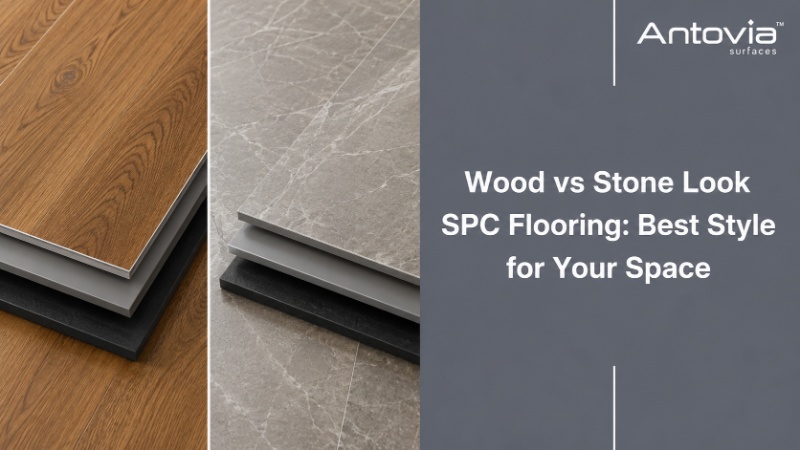
A standard SPC floor is made up of layers. The top layer is a tough wear layer, the middle layer is a high-definition design layer, the stone-plastic composite core is in the middle, and the bottom layer is an underlayment that adds soundproofing and comfort underfoot. SPC vinyl flooring is completely waterproof, dimensionally stable, and free of VOCs because of how it is made. This makes it one of the safest and most useful options on the market today.
SPC flooring for homes has become very popular in India in the last few years, and for good reason. It doesn't mind the heat, humidity, monsoons, or dust that Indian climates throw at it.
What Is Wooden Flooring?
One of the oldest and most popular types of floors in the world is the wooden floor. It comes in two major forms: solid hardwood flooring, consisting of a single thick plank of natural wood, and engineered wood flooring, which is a real wood veneer on top of multiple layers of plywood to add additional strength.
You can hardly find anything that is as warm and real as these two types. Wooden floors are naturally grained, deep-coloured, and slightly textured underfoot to provide any room with a classic organic appearance. This is why it is popular among high-end homes, boutique hotels, and luxury offices.
However, wooden floors have certain issues that are famous. It is moisture-sensitive; it warps in the presence of humid air and requires frequent cleaning and care to retain its beauty. These limits are very important when it comes to finding the best flooring for Indian homes.
SPC Flooring vs. Wooden Flooring: Head-to-Head Comparison
Durability and Scratch Resistance
In terms of comparison of floor durability, SPC flooring has an obvious advantage. It is very resistant to scratches, dents, stains, and impact damage due to its rigid core structure. You may have children, pets, or guests walking around; SPC takes care of it. It is designed as a scratch-resistant flooring that can withstand the busiest areas.
Solid hardwood flooring is durable in its own right, but it shows signs of wear over time, especially in flooring for high-traffic areas like living rooms, hallways, and kitchens. Engineered wood flooring is superior to solid wood in high-traffic areas, but none can be compared to the impact resistance of a stone composite core.
Water and Moisture Resistance
This is where the difference between the two is the most important to the Indian homeowners. SPC flooring is completely waterproof. Its core is made of stone composite, which does not absorb water at all; thus, it is the best waterproof flooring for kitchen areas, bathrooms, laundry areas, and balconies. The SPC floors are not affected at all even in the monsoon season.
Wooden flooring, however, is very vulnerable to moisture. Wood is solid, and it swells and even cracks when it comes in contact with water or high humidity. Engineered wood flooring is a little bit better because it is layered, but it is not suitable in wet areas. In Indian homes, SPC is just the better choice when it comes to moisture-resistant flooring.
Comfort and Underfoot Feel
In this case, wooden flooring has a natural advantage. Wood is warm and cushy, and it is truly luxurious to walk on, particularly on cold winter mornings. The natural smell and organic feel of hardwood are also valued by many.
Being a synthetic product, SPC flooring is a little firmer. But when a high-quality underlayment for flooring is attached, which most modern SPC products have, the comfort gap is reduced to a much smaller amount. Foam or cork underlay on thicker SPC planks (6 mm-7 mm) can be very comfortable, even to bare feet.
Aesthetics and Design Options
One thing that real wood has that the fake wood lacks is authenticity. However sophisticated the printing technology is, the organic warmth of real hardwood grain cannot be replaced. Wooden flooring provides the royal, classic appearance in case aesthetics are the most important factor to you and you desire that royal appearance.
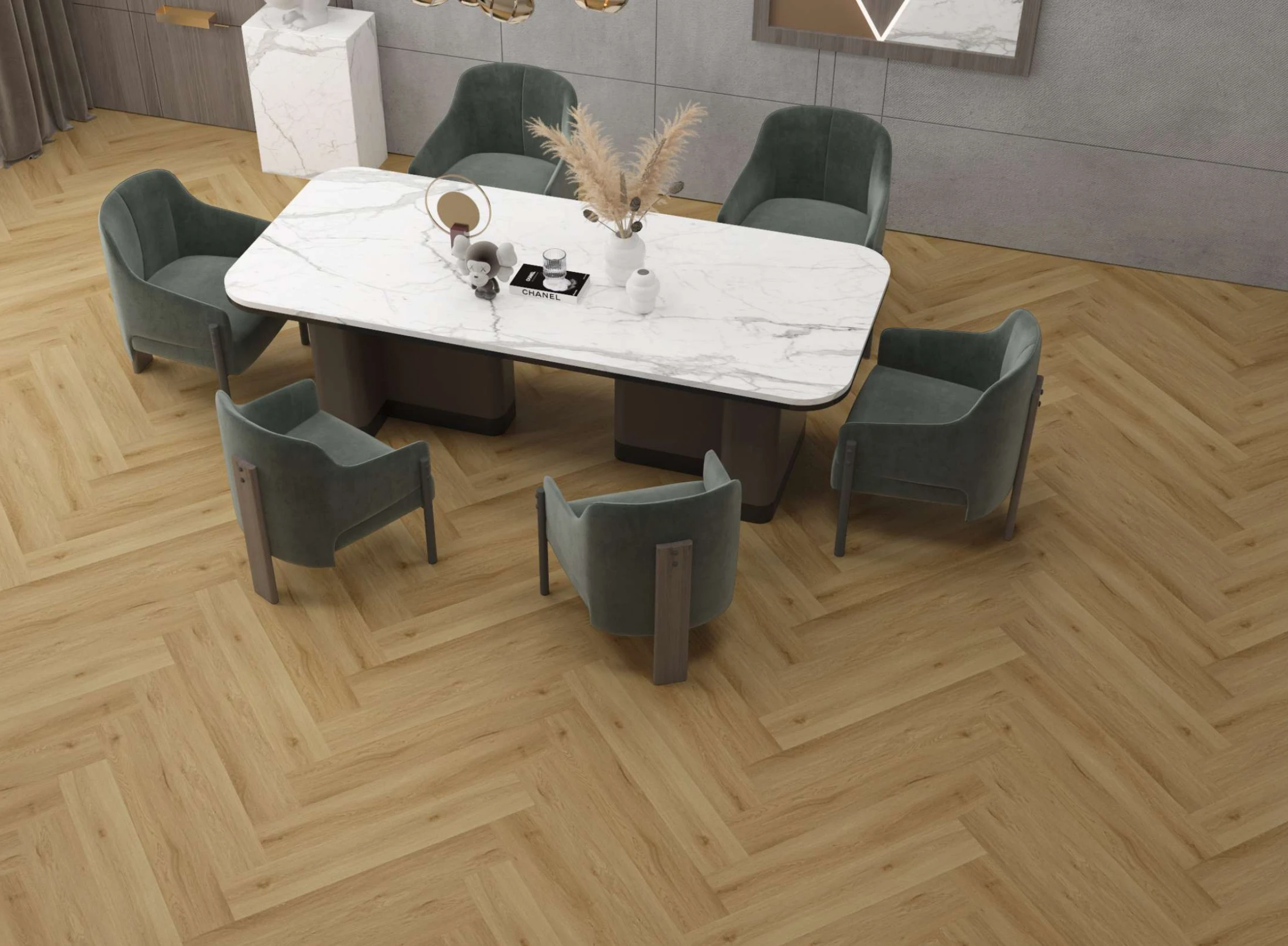
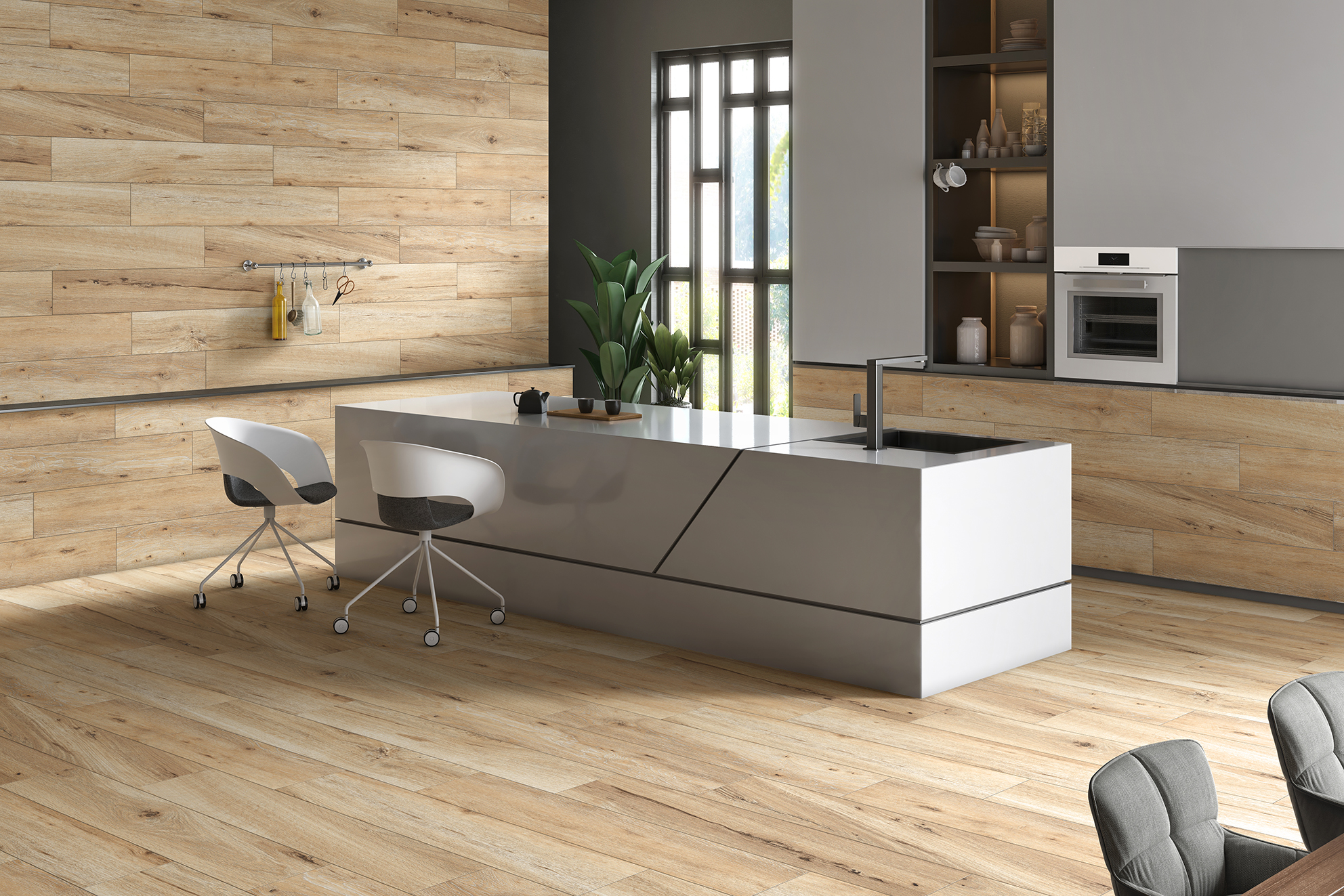
With that said, SPC flooring has achieved gigantic leaps in the versatility of design. The contemporary SPC collections are realistic wood grain textures, herringbone SPC flooring designs, wide plank designs, stone-inspired finishes, and matte designs. The range is incredible, and at Antovia Surfaces, you can find collections that unite the appearance of wood, marble, and natural stone in a single durable product.

Maintenance Requirements
In case you desire low maintenance flooring options, SPC flooring would win this category by a wide margin. The cleaning process is as easy as sweeping dust and performing a wet mop every now and then. Waxing, sealing, and polishing are never required.
Flooring made of wood requires much more attention. It should be polished on a regular basis, resealed after every few years and cleaned using products that do not damage the wood. Deep scratches are normally refinished by a professional. In busy families and workplaces, this constant work is time and money wasted.
Installation Process
SPC flooring uses a click-lock installation system that allows planks to snap together without any adhesive. It is a quick, clean, and DIY-friendly floating floor technique. It is set up by many homeowners on a weekend.
Wooden flooring, especially solid hardwood, needs professional installation. It usually has to be nailed or glued in place, allowed to acclimatise to room temperature over a few days, and completed on-site. The labour cost is much more expensive, and it is more time-consuming.
Compared to SPC, engineered wood flooring is slightly easier to install than solid wood, although more complicated and expensive.
Cost Comparison
SPC flooring price in India typically ranges from ?120 to ?300 per sq. ft., depending on brand, thickness, and design. It is also among the cheapest flooring solutions available in the market, considering the fact that the maintenance costs are almost zero throughout its life.
Wooden floors, especially solid hardwood, may range between 250 and 700+ per sq. ft. without considering professional installation and maintenance. The engineered wood flooring is also in the mid-to-high price range. In the long run, it is much more expensive to maintain wooden floors.
Eco-Friendliness
The current homeowners are becoming more concerned with sustainability. The fact that it is produced with recycled materials, it does not emit VOCs when it is used, and it is rated as eco-friendly flooring by the leading international standards organisations puts SPC flooring in a good position in this category. It is also durable and therefore requires less replacement and wastage.
Flooring made of wood that is obtained in certified forests (FSC-certified) can be sustainable as well. Nevertheless, wood sourcing by uncertified people leads to deforestation. Also, the fact that wooden flooring requires chemical sealants and polishes throughout its life contributes to its environmental impact.
Which Is Better SPC or Wooden Flooring for Indian Homes?
The Indian climate is uniquely demanding. High humidity, extreme temperature swings between seasons, monsoon rains, and dusty environments create conditions that many flooring types simply cannot handle gracefully. When evaluating the best flooring for Indian homes, these realities must drive the decision.
SPC flooring for home use is recommended across most zones: living rooms, kitchens, bathrooms, balconies, offices, and retail spaces. It is moisture-resistant flooring that performs consistently year-round, regardless of the season. It also stands up to Indian households with children, pets, and frequent guests – situations that demand durability more than anything else.
Wooden flooring vs vinyl flooring or SPC comes down to this: if you want natural authenticity and have the budget and patience for maintenance, wood has a charm that nothing else matches. Choose it for bedrooms or private studies where traffic is low and the aesthetic experience is the priority.
For all other rooms and applications, stone-plastic composite flooring in the form of SPC is the smarter, more practical, and more economical choice.
Why Choose Antovia Surfaces for Your Flooring?
When it comes to SPC flooring vs. wooden flooring, the quality of the product matters as much as the type you choose. At Antovia Surfaces, you get access to a carefully curated range of premium SPC flooring solutions designed for Indian homes, Indian climates, and Indian sensibilities.
Antovia Surfaces combines global design trends with robust manufacturing standards to deliver flooring that is durable, stylish, and genuinely long-lasting. Whether you are looking for wood grain textures, herringbone patterns, stone finishes, or contemporary matte designs, there is a collection suited to your vision and budget. Their expert team is ready to guide you through every step, from selection to installation.
Conclusion
Both SPC flooring and wooden flooring possess actual advantages, and both of them have their role in the contemporary interior. Wooden flooring is the only way to experience the beauty of nature and the classic high-quality touch. Compared to other flooring options, SPC flooring is better in terms of waterproofing, durability, low maintenance, and cost-effectiveness, which makes it the practical choice in most areas of Indian homes.
The correct decision will always be based on your room, your way of life, and what you consider most important. However, when it comes to a floor that is hard-working, good-looking, and requires minimum in return, then the SPC flooring vs wooden flooring is no match for the modern Indian home.
Ready to upgrade your floors? Visit Antovia Surfaces today and explore India's finest collection of SPC flooring and surface solutions.
People Also Ask
Is SPC flooring better than wooden flooring?
For most practical purposes yes. The SPC flooring is superior to the wooden flooring in terms of waterproofing, scratch resistance, maintenance, ease of installation, and cost. But when natural beauty and cosiness are the two most important qualities to you, then the wooden flooring retains a certain charm that can only be estimated by SPC.
What are the disadvantages of SPC flooring?
SPC flooring is heavier than laminate, not as warm underfoot as real wood, and is a synthetic material that is not biodegradable. It also cannot be refinished like solid hardwood. However, these trade-offs are minor for most users, given its exceptional durability and low floor durability compared to costs over time.
Does wooden flooring increase home resale value?
Yes, real wood floors are considered a premium feature in the real estate market and can increase the resale value of flooring significantly. That said, modern buyers are increasingly attracted to the durability and low-maintenance appeal of SPC, especially in rental properties and commercial spaces.
Which flooring is best for kitchens and bathrooms in India?
SPC flooring is the best choice for wet and semi-wet areas. It is fully waterproof flooring for kitchen zones, bathrooms, and laundry areas. It is also anti-slip and moisture-resistant, critical features in spaces where water contact is frequent.
Is SPC flooring safe for children and pets?
Absolutely. SPC is VOC-free flooring, hypoallergenic, and features anti-slip surfaces, making it excellent flooring for pets and kids. It does not harbour dust mites or mould, and it does not emit harmful fumes that could affect indoor air quality.