 05 Apr, 2026
4009Views
05 Apr, 2026
4009Views You are in the middle of a partially renovated kitchen or bathroom, and you see samples, and one question keeps reoccurring: should I use porcelain slabs or tiles? It is the choice that can determine the way your whole space will appear, feel, and sustain in the long run. The two choices are made of the same material, porcelain, but they act very differently after being installed.
In the case of porcelain slabs and tiles, there is no correct answer. The more appropriate option will be based on your budget and your design objectives, as well as the purpose of the space. We deal with homeowners, architects, and interior designers on a daily basis at Antovia Surfaces, and this is the question they pose. This guide dissects it in a way that you can go into your next renovation with a lot of confidence.
What Are Porcelain Slabs and How Are They Made?

Porcelain slabs are very large-format panels manufactured using refined clay and minerals that are pressed under high pressure and subjected to very high temperatures of firing. The result of this manufacturing process is a surface that is extremely dense, practically non-porous, and decades-long-lasting.
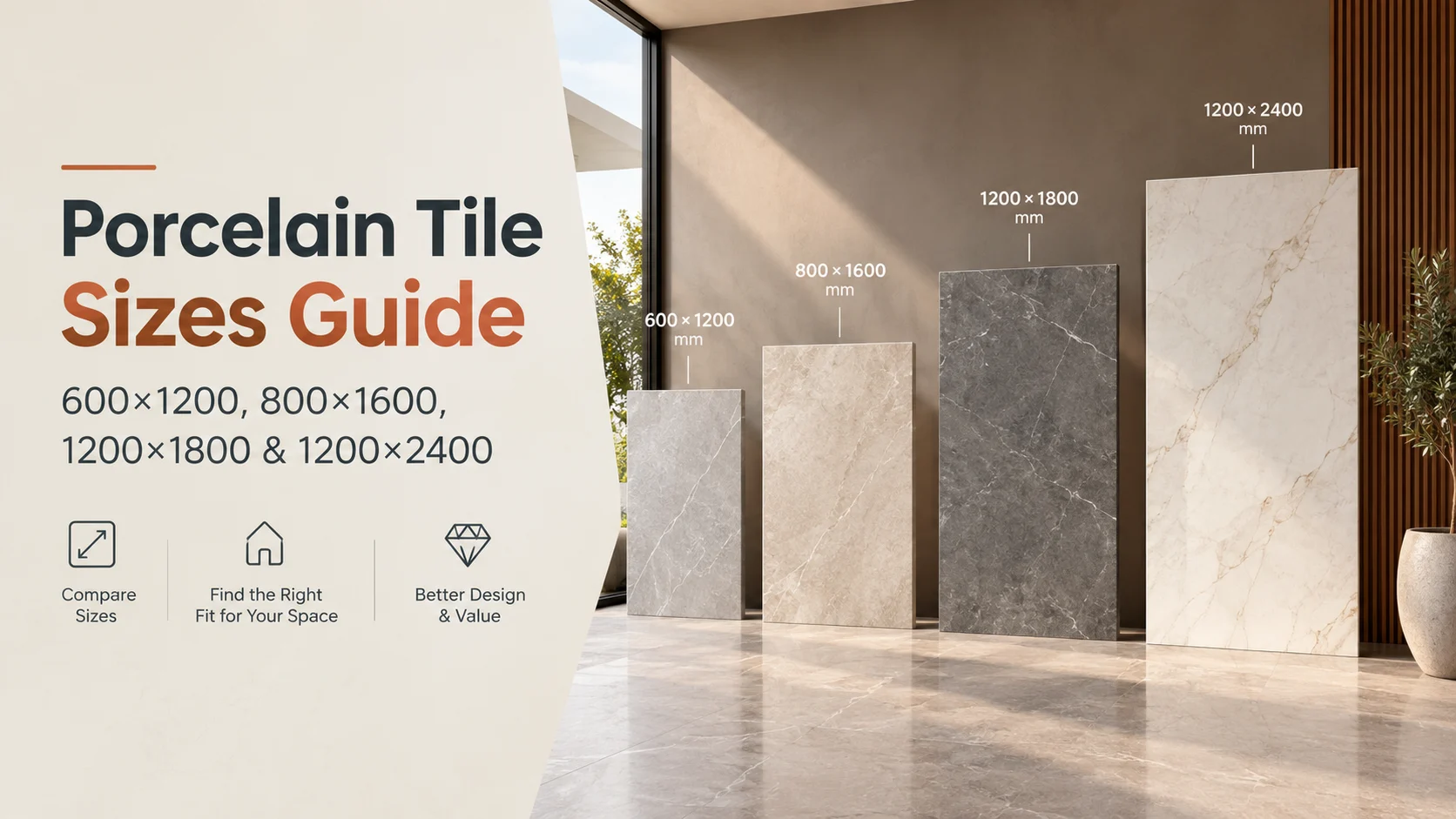
The common size of slabs is usually 800x1600mm and may extend to 1200x2400mm and above. Slabs are able to span whole walls, countertops or even large floor areas with minimal seams or grout lines due to their size. What comes out is a smooth surface design that is more architectural than decorative.
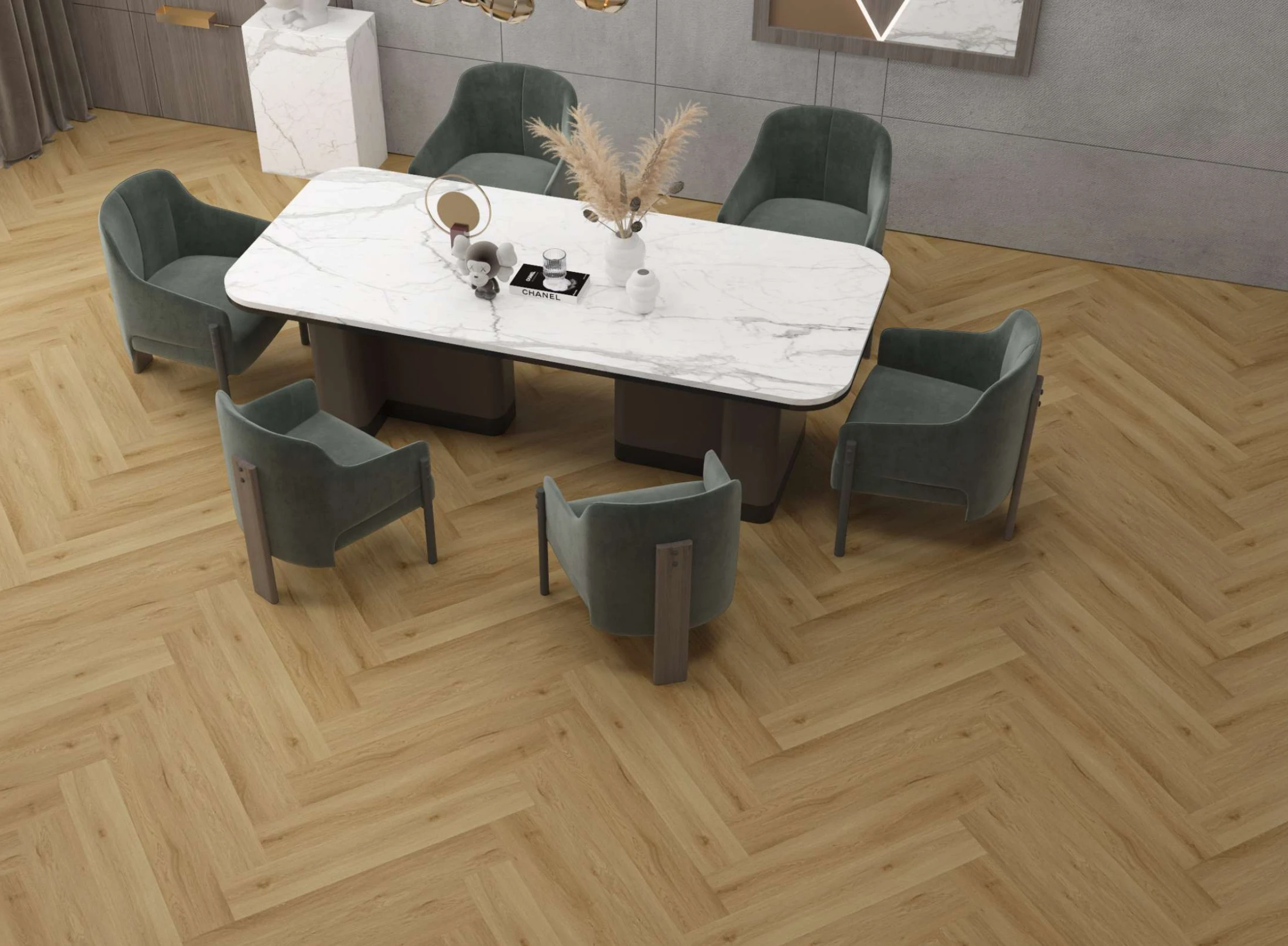
Contemporary porcelain slabs come in finishes that imitate marble-effect porcelain, natural stone-look tiles, concrete and even wood in a realistic manner. This has seen them being a favourite in high-end residential developments, upscale kitchens, spa-like bathrooms, and commercial environments where both looks and functionality count.
Understanding Porcelain Tiles The Classic Interior Choice
The more traditional form of the same material is the porcelain tiles. They are smaller in size, with dimensions of 300x300 mm to 800x800 mm, though large format tiles of 600x1200 mm are becoming more popular in the last few years.
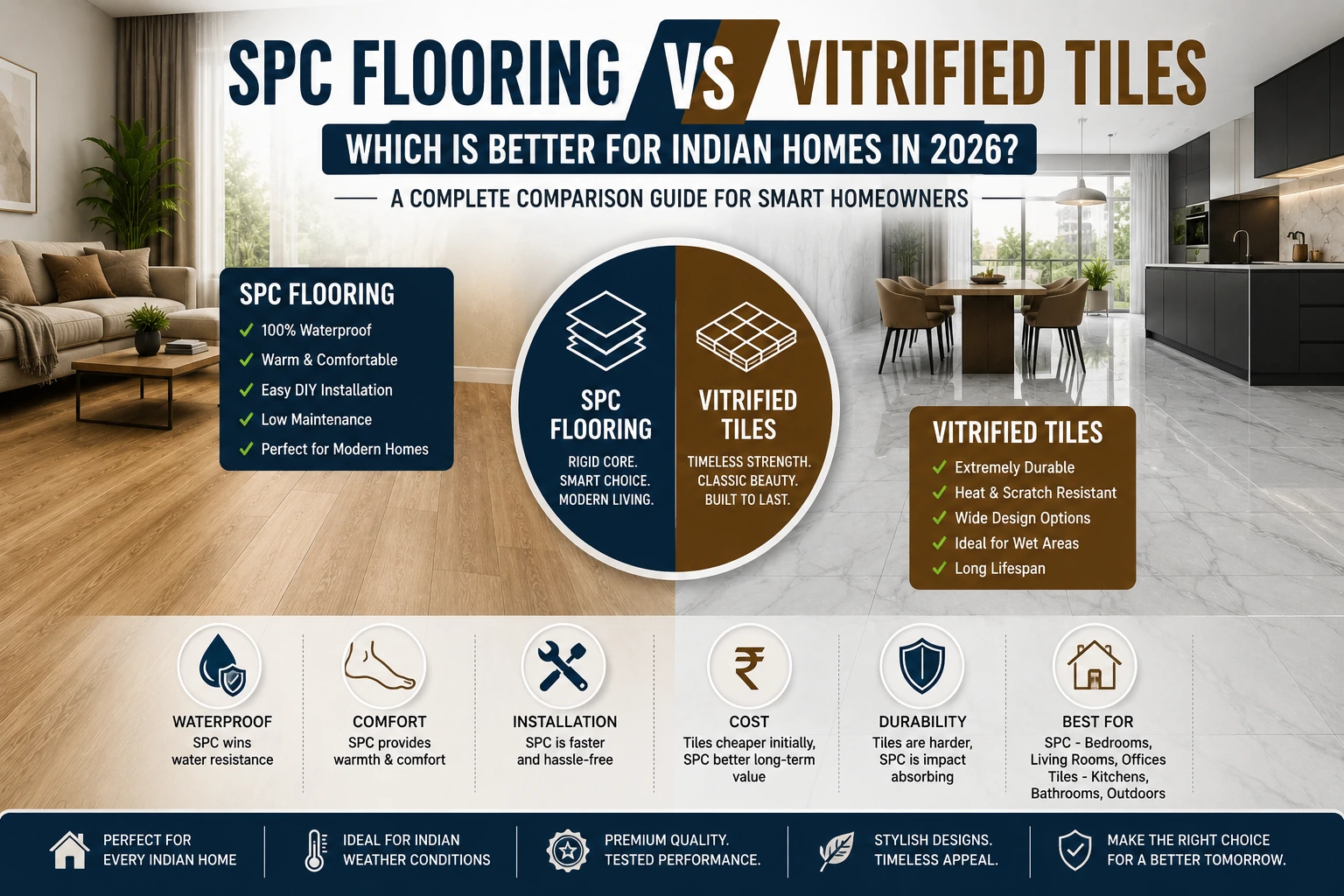
Porcelain tiles are also known as 'vitrified tiles' in the Indian market, which are fired at high temperatures to give them a glassy, dense body. They are popularly applied as floor and wall tiles in residential, office, hotel and commercial areas throughout the nation.
They are also less bulky and can be handled, cut and installed easily, and this is one of the reasons why they are still the preferred option when it comes to renovation projects of any budget. The selection of tile finishes is enormous: matte, gloss, textured, anti-slip, polished, etc., which allows designers and homeowners to customise a space.
Porcelain Slabs vs Tiles: A Direct Comparison
Now we will enter into the details. This is the way these two surfaces compare in the factors that are most important in selecting interior surface materials.
Aesthetics and Design
Porcelain slabs prevail on the eye. Their massive size enables veining, texture and colour to flow continuously over a surface, something that cannot be done with individual tiles. A smooth surface design with slabs is difficult to resist for anyone who wants to have a minimalistic interior with a gallery-like look.
Tiles, however, have much greater options in terms of designs, patterns, and layouts. Herringbone, chevron, checkerboard, mosaic – these appearances demand tiles. Tiles allow you a greater level of creativity in case you like bold, eclectic, or detailed interiors.
Durability and Strength
The two materials are very durable. Porcelain is a non-porous material, and therefore it is resistant to moisture, stains and bacteria, hence it is suitable for kitchens and bathrooms. It is not easily scratched and can be worn day-in day-out without losing its look.
Due to their size, slabs have to be handled with care during transportation and installation. A poorly done installation may lead to cracking. Nevertheless, when installed correctly on a reinforced base, slabs are very strong and can serve several decades with very little maintenance. Tiles are also more forgiving when it comes to installation and can also be replaced individually in case of damage.
Maintenance
Here the porcelain slabs really shine. The lesser the number of grout lines, the lesser the areas where dirt, mould and grime can accumulate. Sometimes a quick wipe-down is all that is needed to maintain a slab surface looking clean. This renders slabs particularly appealing to kitchen countertops and bathroom walls.
Tiles do not need much care, but the grout lines need to be taken care of periodically. Grout sealing may be effective, but it will increase maintenance. Slabs have a definite advantage to anyone who seeks low maintenance flooring or wall coverage.
Installation
Tiles are much easier to set. They are lighter and more manageable, can be cut with normal instruments and installed by experienced employees within a relatively short period of time. Tiles are effective and efficient in small areas such as bathrooms or backsplashes.
Porcelain slabs are to be installed by a professional. Their size and weight require accuracy, specialised equipment and a stable, well-prepared substrate. Any installation shortcuts may affect the integrity of the surface. Plan the slab project budget on skilled labour.
Cost
Tiles are nearly always cheaper. The cost of the material is reduced, and the cost of installation of tiles is usually lower than the cost of installation of slabs because of the ease of the process. Porcelain slabs are priced higher on both material and labour, yet their durability, reduced maintenance and the dramatic effect they create on the spaces make them a long-term investment worth the premium price in the right spaces.
Where Should You Use Porcelain Slabs vs. Tiles in Your Home?

Both materials work beautifully in a variety of settings, but there are spaces where each truly shines.
Best Applications for Porcelain Slabs
• Kitchen countertop and island slabs provide a seamless, hygienic surface that handles heat and spills with ease. Porcelain slab countertops have become one of the most popular alternatives to granite and quartz in modern kitchens.
• Bathroom feature walls and shower enclosures – a single slab or two large panels can transform a bathroom into a spa-like retreat with no grout lines to worry about.
• Living room and dining room accent wall slabs create a dramatic, gallery-quality backdrop that works beautifully behind TV units, fireplaces, or dining tables.
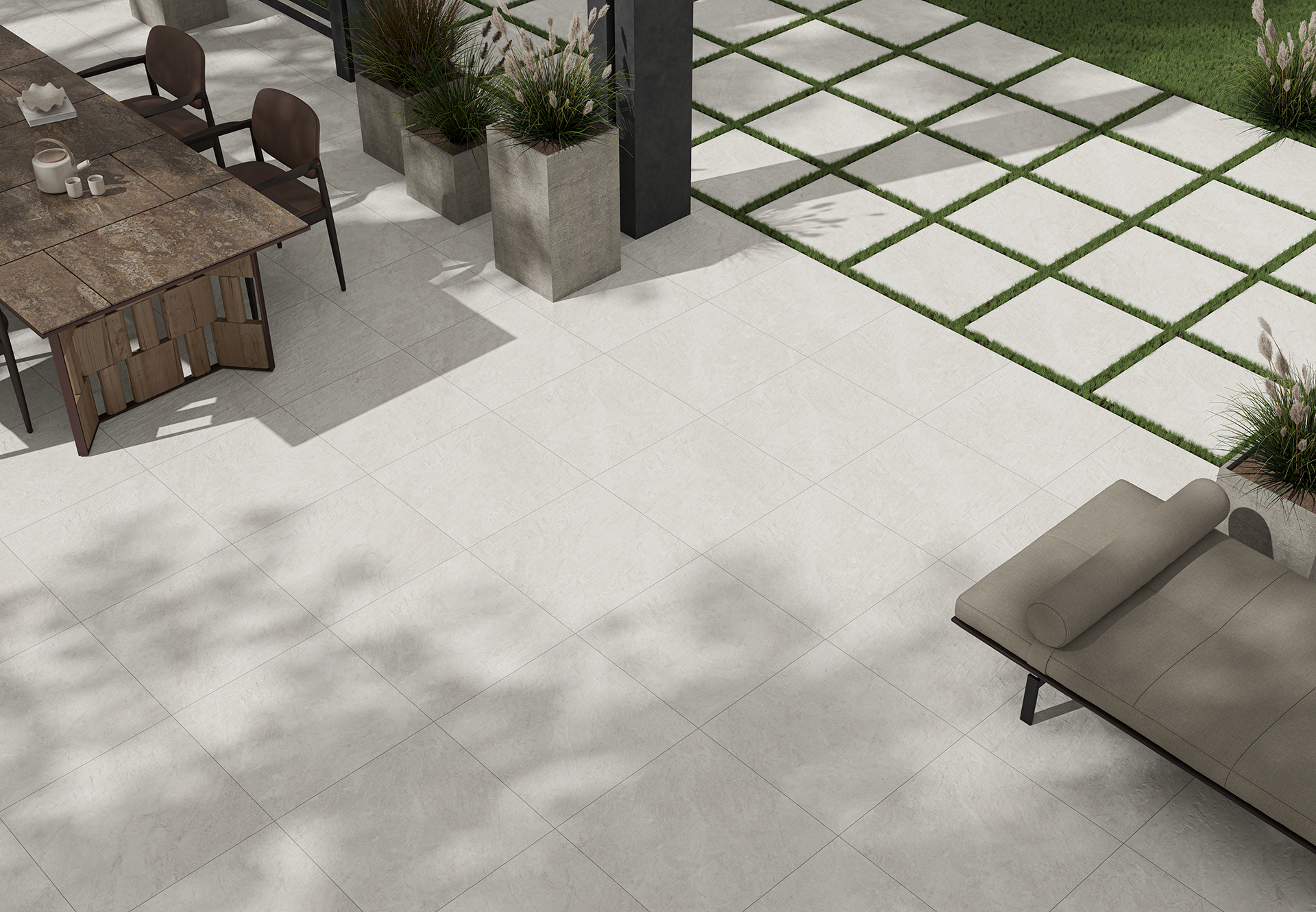
• Large open floor areas in expansive living spaces or commercial lobbies, slabs create a seamless, uninterrupted flow that tiles simply cannot replicate.
Best Applications for Porcelain Tiles
• Bathroom floor tiles in anti-slip finishes are ideal for wet bathroom floors, offering safety alongside style.
• Kitchen backsplashes: the smaller format makes it easy to create detailed patterns or integrate colour into a kitchen's design.
• High-traffic hallway and entryway tiles handle foot traffic well and are easier to replace if individual pieces are damaged.
• Balconies and semi-outdoor spaces' weight and manageability make tiles a better fit for outdoor-adjacent areas.
It should be mentioned that they are both great options when installed as floor and wall tiles in the kitchen and bathroom areas; the decision actually depends on the size, the price, and the purpose of the design.
How to Decide Between Porcelain Slabs and Tiles for Your Interior
Here is a simple way to think about the decision. Consider your priorities:
• Choose porcelain slabs if you want a luxury, seamless aesthetic; you have a generous budget; you are renovating a kitchen countertop, master bathroom, or living room feature wall; or you value low-maintenance upkeep over the long term.
• Choose porcelain tiles if you want more design variety and pattern options; you are working within a tighter budget; you need anti-slip surfaces for bathroom floors or outdoor-adjacent areas; or your project involves smaller spaces where installation flexibility matters.
A lot of good homes are constructed with both. Slabs on the kitchen counter and the walls of the bathroom, tiles on the floor and the balconies. The trick is to align the material with the requirements and size of the particular space. We stock a select collection of high-end porcelain slabs and quality porcelain tiles at Antovia Surfaces in a variety of finishes, including marble-effect porcelain and natural stone-look tiles, concrete, and more. You may require porcelain slab countertops in your smooth kitchen or vitrified tiles in your strong and beautiful floor in the bathroom, we have the correct solution for every interior.
Final Verdict: Porcelain Slabs vs Tiles
Comparing porcelain slabs and tiles, the truth of the matter is that they are not all-around superior. Slabs provide a dramatically smooth appearance that is ideal in countertops, big walls and high-end interiors. Tiles are flexible and cost-effective and can be designed to suit floors, backsplashes, and spaces that require details.
The best option is based on where you are going to use the material, your budget and the type of interior you would like to stay in. Both of these materials are durable, moisture-resistant, and low-maintenance; the difference is actually about scale, aesthetics, and installation.
Visit the entire line-up of porcelain slabs and tiles at antoviasurfaces.com, and allow the surface experts to assist you in finding the right fit for your next interior project.
Frequently Asked Questions About Porcelain Slabs vs Tiles
Are porcelain slabs better than tiles for kitchens?
Yes, porcelain slabs provide a smooth, hygienic surface that is more convenient to clean on countertops and large feature walls. Tiles can be a superior creative option to use on the kitchen floor with patterned designs or elaborate backsplashes. The combination of both is used in most high-end kitchens today.
What is the main difference between a porcelain slab and a porcelain tile?
The major distinction is the size and format. Porcelain slabs are significantly larger, often covering an entire wall or countertop with a single piece. Porcelain tiles are smaller, more flexible with regard to pattern and layout and easier to install. They are both based on the same material and have the same fundamental characteristics of durability and resistance to moisture.
Do porcelain slabs crack easily?
In normal circumstances, no. The porcelain slabs are designed to be very hard and strong. Cracking is mostly caused during transportation or inadequate installation in case the The substrate is not stable or the installation is hurried. Porcelain slabs are very durable and long-lasting when fitted properly by an expert.
Are porcelain slabs more expensive than tiles?
Generally, yes. The material cost, as well as the installation cost of porcelain slabs, is more expensive than the standard tiles. Nevertheless, the reduced grout lines, reduced maintenance, and high-end appearance of the long term usually pay off the investment, particularly in highly visible areas such as kitchens and master baths.
Which is better for bathroom walls: slabs or tiles?
Slabs are perfect when you desire a clean and spa-like appearance with no grout lines, ideal in large showers or feature walls. Tiles have greater design options, particularly when you desire the use of patterns, textures, or varying sizes. The most suitable tiles to be used in the interior of the house that is subject to moisture, such as the walls of a bathroom, are those with a non-porous surface and with minimal exposure to grout, which makes the large-format porcelain tiles a great compromise.
Can porcelain tiles be used as large format tiles for interiors?
Absolutely. Interior porcelain tiles that are large, usually 600x1200mm or 800x800mm, fill the gap between regular tiles and complete slabs. s. They are easier to manage than full slabs and provide a more fluid coverage compared to small tiles. They are commonly used in open-plan living spaces, hotel lobbies and modern bathrooms.