 05 Apr, 2026
4032Views
05 Apr, 2026
4032Views Imagine that you are in the middle of the renovation process, and you are in a tile showroom, looking at hundreds of choices. You want something that is nice to look at, durable, and makes your room appear bigger. The positive side is that it does not have to be daunting to make the right decision when it comes to the space and durability of the porcelain tiles. By keeping a few important things in mind, you will be able to select tiles that are not only beautiful but also hard-wearing and perfectly fitting in each room of your house.
This guide simplifies it all in simple terms, starting with the knowledge of tile durability ratings to the selection of the appropriate size, finish, and material to use in each particular space.
Why Porcelain Tiles Are a Top Choice for Modern Spaces
Porcelain tiles have been a residential and commercial design staple, and rightly so. They are manufactured using thick clay that is fired under very high temperatures, and this makes them harder and denser in structure than most other flooring materials. This renders them very tough against scratches, stains, chemicals, and heavy foot traffic.
The water absorption rate of porcelain is one of the greatest benefits of this material, and it usually remains less than 0.5%. In comparison, ceramic tiles absorb 3-7 percent of water, which is much less appropriate in the bathroom, kitchen, and outdoors. Porcelain tiles are also non-toxic and hypoallergenic, which makes them a healthier choice in the interior environment, particularly in families with young children or allergy issues.
Vitrified tiles and glazed porcelain tiles have a style and performance that is difficult to match by other types of flooring, whether you are renovating a small apartment or designing a large commercial lobby. They are maintenance-free, easy to clean, and they retain their colour and finish over decades.
What Size Porcelain Tile Makes a Room Look Bigger?
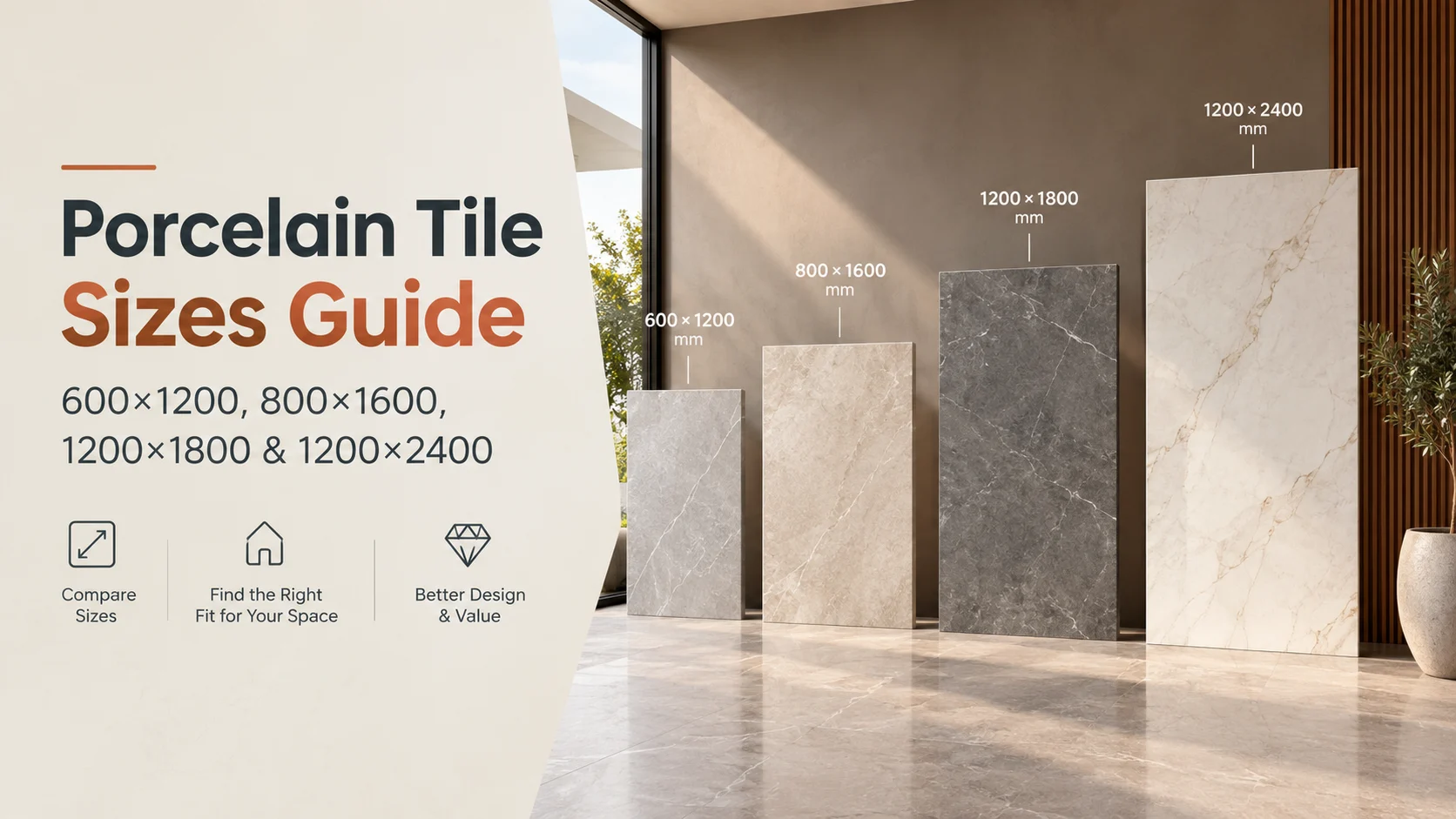
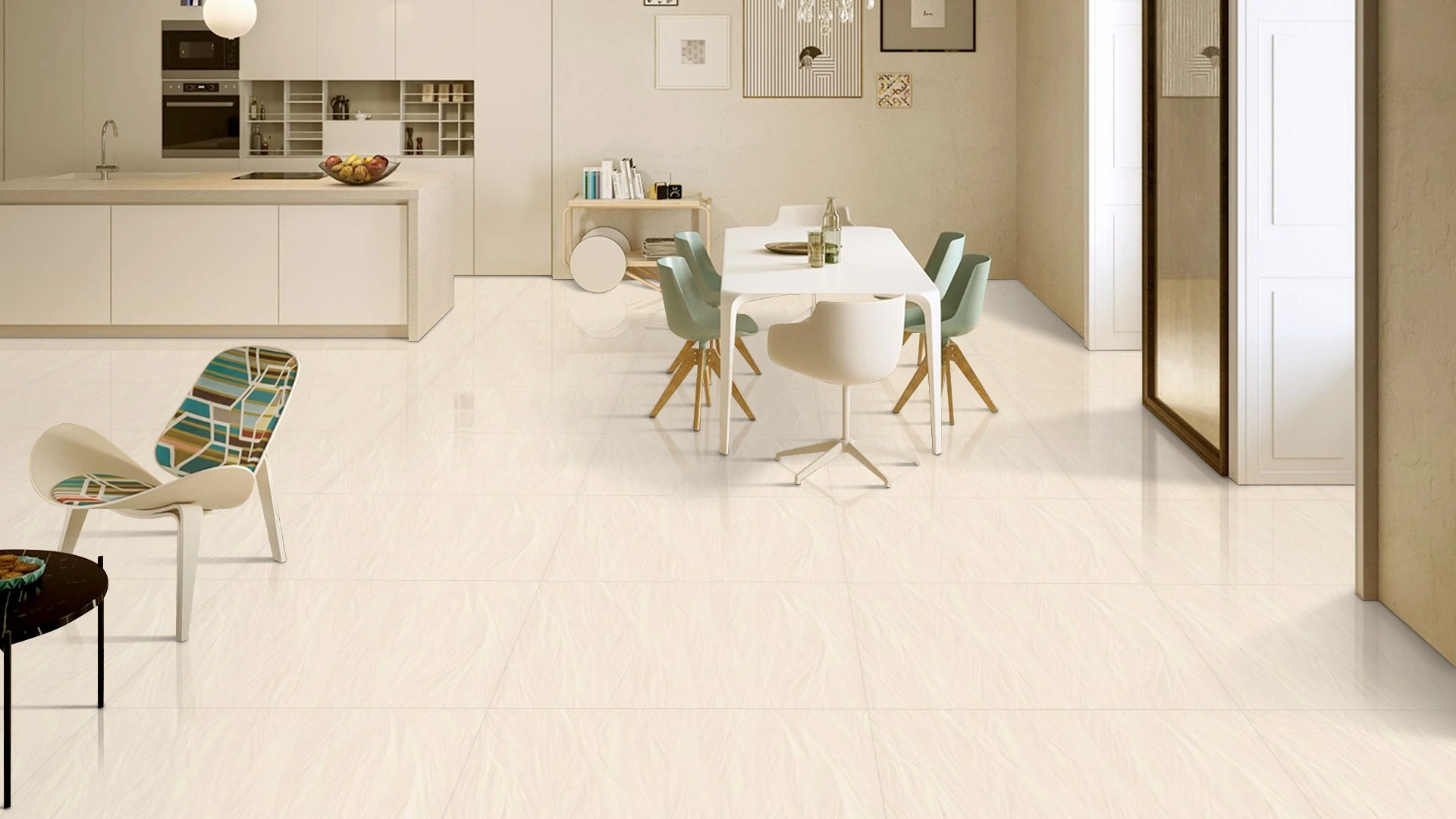
This is among the most frequently posed questions by homeowners, and the answer is formatted and laid out. One of the most efficient methods of achieving an open and seamless feel in any room is to use large-format porcelain tiles that are usually either 24x48 inches or 32x32 inches. The reduced number of grout lines allows the eye to move longer distances without any breaks, and even a small area can become much larger.
In order to use porcelain tiles in small areas, remember the following:
• Use large-format tiles (at least 24 inches on one side) to reduce visual fragmentation.
• Lay tiles diagonally to draw the eye across the full width of the room.
• Choose light or neutral tones to reflect natural light and amplify the sense of space.
• Keep tile grout lines thin and match grout colour closely to the tile for a more seamless look.
That not being said, it is not a bad idea to go too large in very small rooms. A good rule of thumb is to keep the tiles no bigger than a third of the shortest wall. For rooms under 80 square feet, a 24x24-inch tile tends to strike the right balance between openness and proportion.
Understanding Porcelain Tile Durability Ratings

Not all porcelain tiles are made equal. In order to buy durable porcelain tiles, you must know the PEI rating on the Porcelain Enamel Institute scale. This rating runs from 0 to 5 and tells you how much wear a tile can handle:
• PEI 0–1: Wall tiles only, not suitable for floors.
• PEI 2: Residential bathrooms with light foot traffic.
• PEI 3: Most residential spaces, including kitchens and living rooms.
• PEI 4: High-traffic residential and light commercial spaces.
• PEI 5: Heavy commercial use: malls, hotels, and hospitals.
In most houses, a PEI rating of 3 or 4 is sufficient to meet most of the requirements. Beyond the PEI rating, also look at floor tile thickness: standard tiles range from 6mm to 10mm for walls, and 10mm to 20mm for floors. Thicker tiles are more rigid and less prone to cracking underfoot.
Rectified tiles should be considered in case you are planning a large-format installation. These are precision-cut to exact dimensions, allowing for tighter grout lines and a more refined, seamless finish. They do require a perfectly level substrate and professional installation.
What Is the Best Porcelain Tile Finish for High-Traffic Areas?
The tile finish influences not only its appearance but also its functionality. The following is the comparison of the three primary finishes:
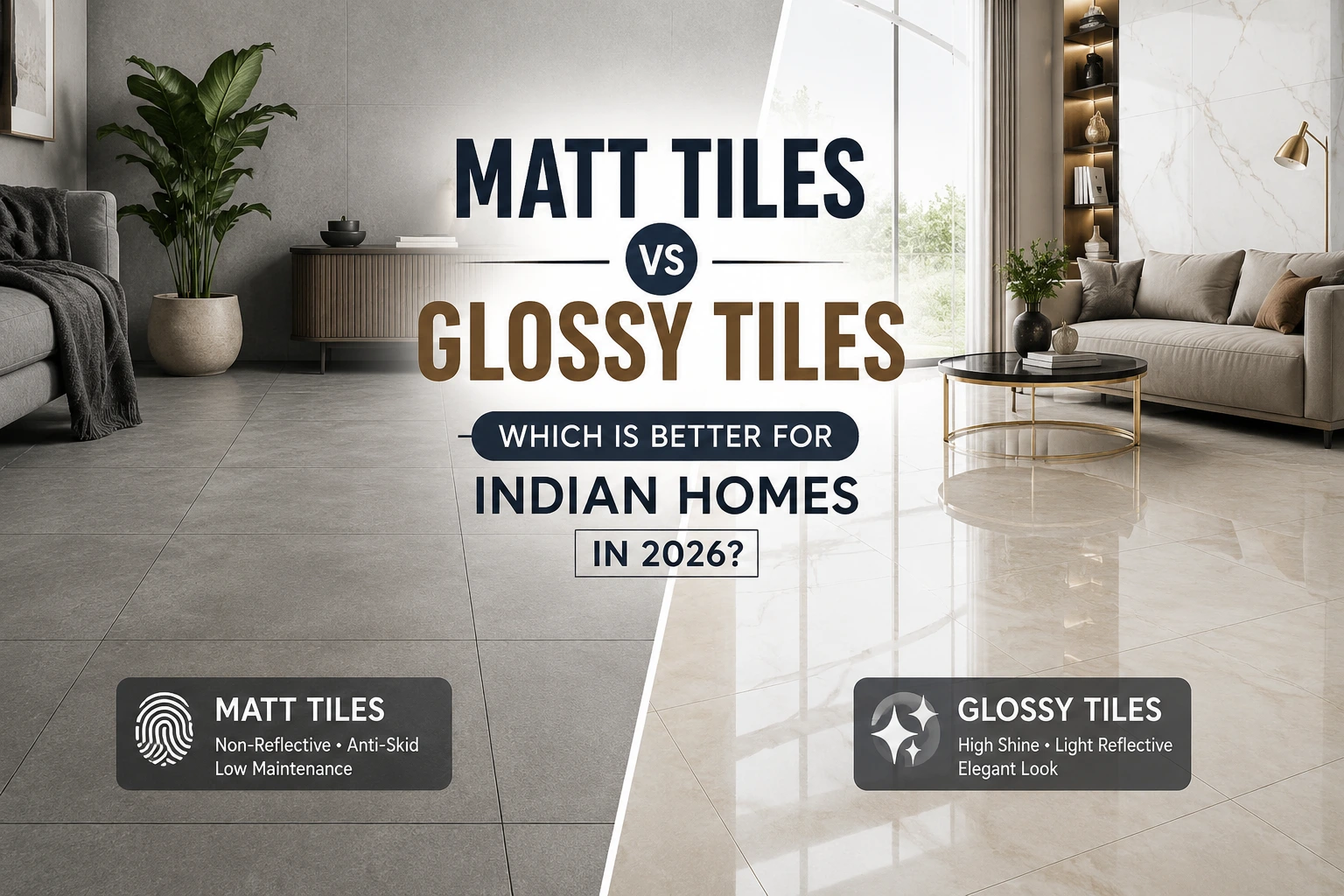
1) Matte Finish: Matte tiles are the most viable option on floors, particularly in places where there is a lot of traffic. Footprints, dust, and surface scratches are much better concealed by them than by glossy tiles. Their low-sheen finish is also naturally slip-resistant, which is very necessary in kitchens, bathrooms, and doorways.
2) Glossy Finish: Glossy or glazed porcelain tiles are light reflectors, and therefore, they are best used on walls, backsplashes, and feature panels. They are able to open up a room visually, but they reveal watermarks and fine scratches easier, and hence they are not suitable in busy floor areas.
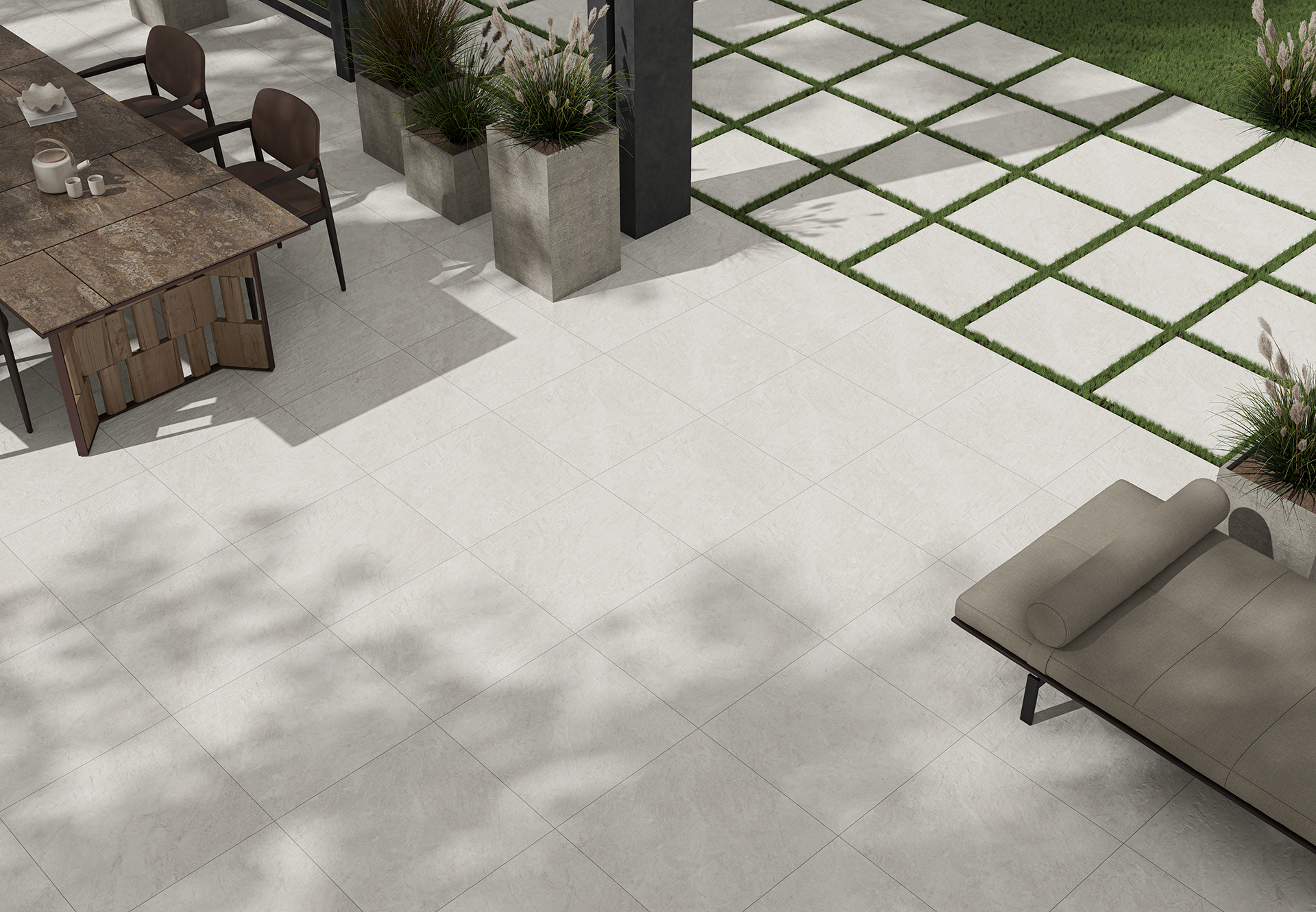
3) Textured / Anti-Slip Finish: Textured surfaces provide depth and grip. They are the preferred choice in wet areas such as shower floors and outdoor areas. Most of the finest outdoor porcelain tiles are textured matte porcelain tile finishes, which are safe and attractive.
How to Choose Porcelain Tiles Room by Room

Choosing the right tile is not one-size-fits-all. Here is a room-by-room breakdown to simplify your decision:
Kitchen:
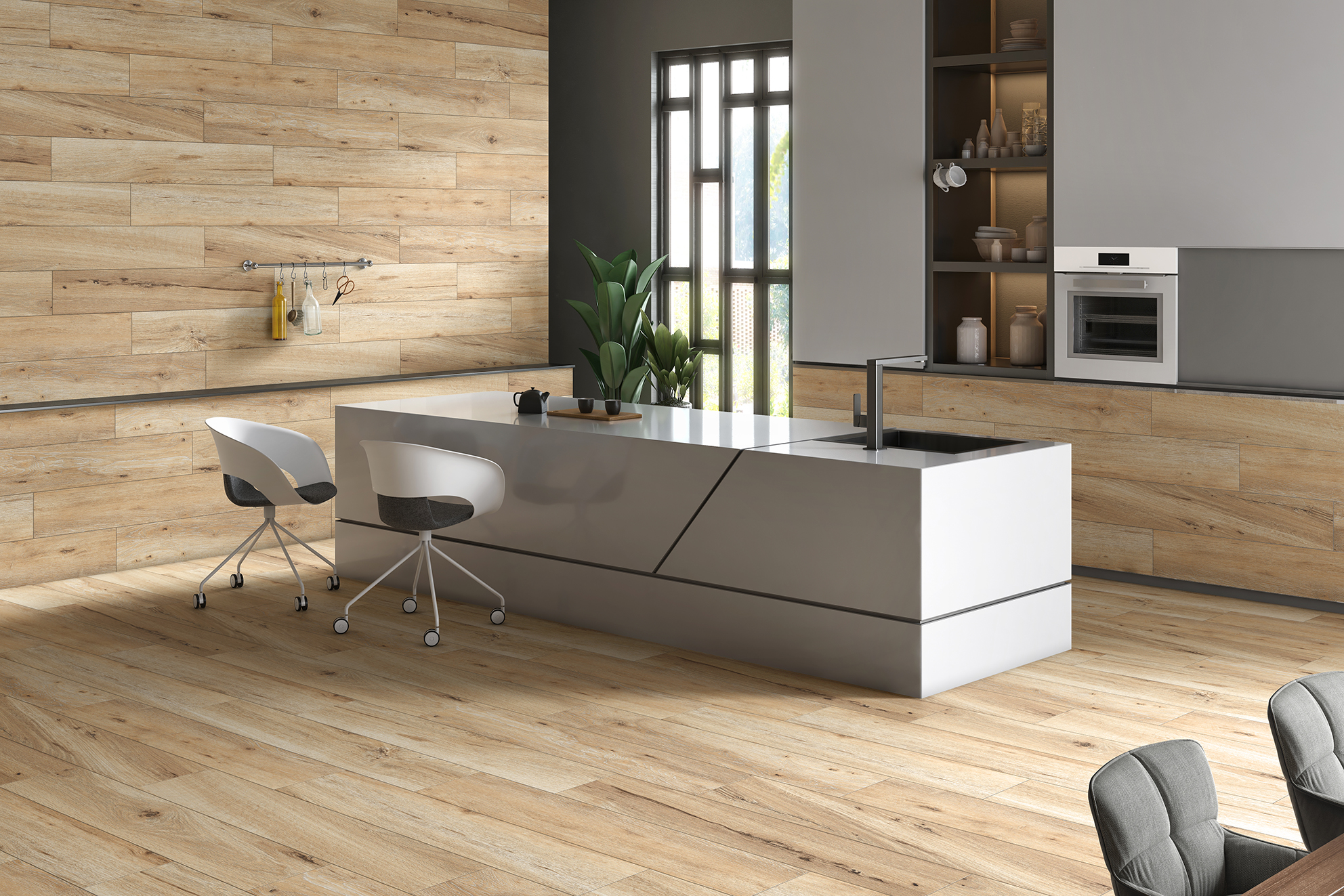
The kitchen is a busy place that experiences spills, grease, and daily foot traffic. Use matte or textured porcelain tiles with a PEI rating of 4 and above. Surfaces that are stain-resistant are required. Big-format tiles are particularly effective in this case, and they minimise grout lines where dirt can be concentrated.
Bathroom:
Water resistance is the priority in any bathroom. Choose water-resistant floor tiles with a slip-resistant finish for the floor and glossy glazed porcelain for walls to brighten the space. A 12x24 inch format works well in standard-sized bathrooms, while mosaic formats are ideal for shower floors.
Living Room:
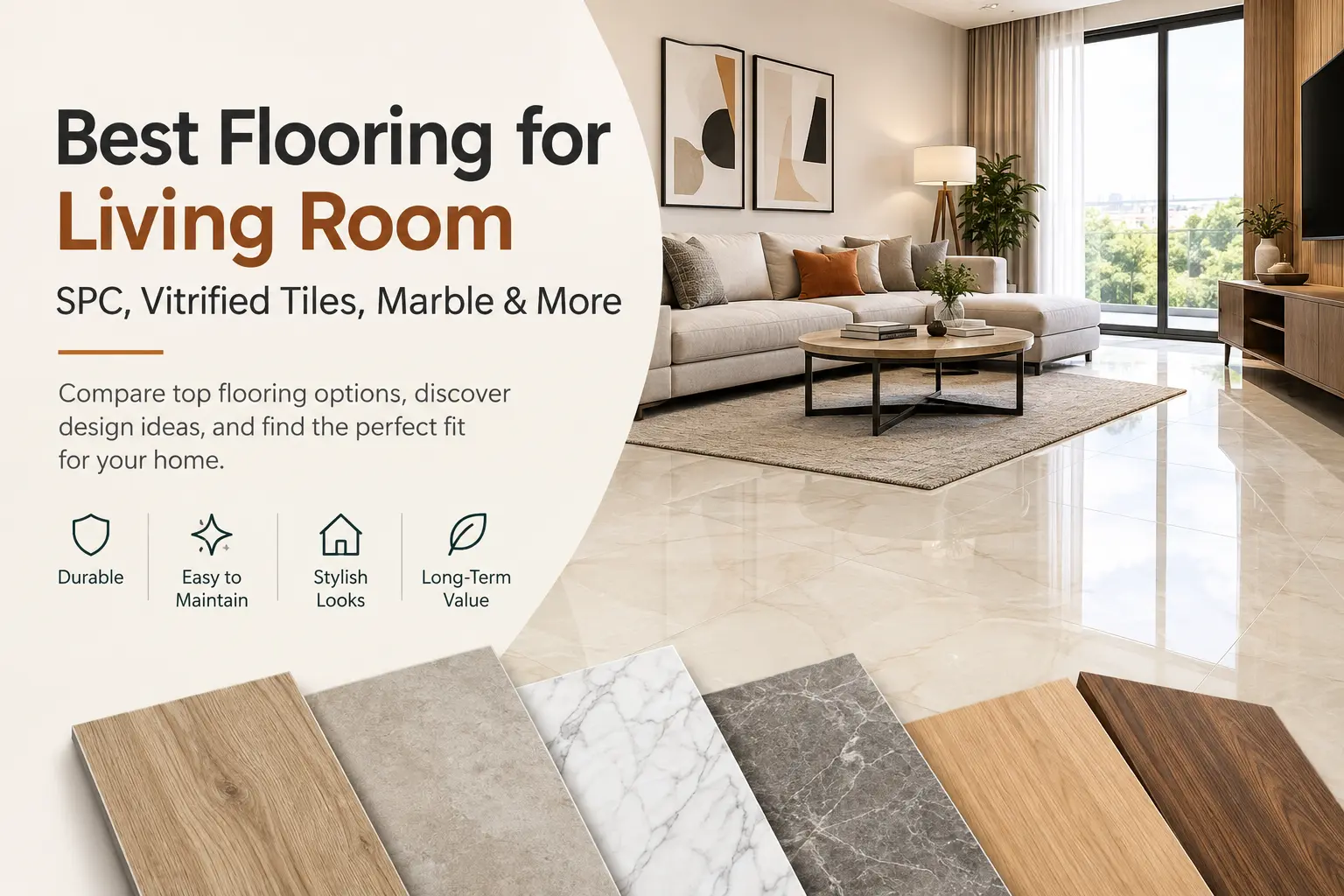
In a living room, aesthetics and comfort take centre stage. Opt for large format matt glazed tiles in warm neutral tones for a sophisticated, seamless look. Natural stone look tiles, whether marble-effect or travertine-inspired, are particularly popular right now and work beautifully with underfloor heating.
Outdoor Spaces:
For patios, balconies, and garden paths, use indoor/outdoor porcelain tiles that are rated for frost resistance and wet conditions. A textured, non-slip finish is non-negotiable outdoors. Indoor-outdoor continuity, matching internal and external tiles, is a strong 2026 design trend that helps spaces feel larger and more connected.
Porcelain Tiles vs Ceramic Tiles: Which Is More Durable?
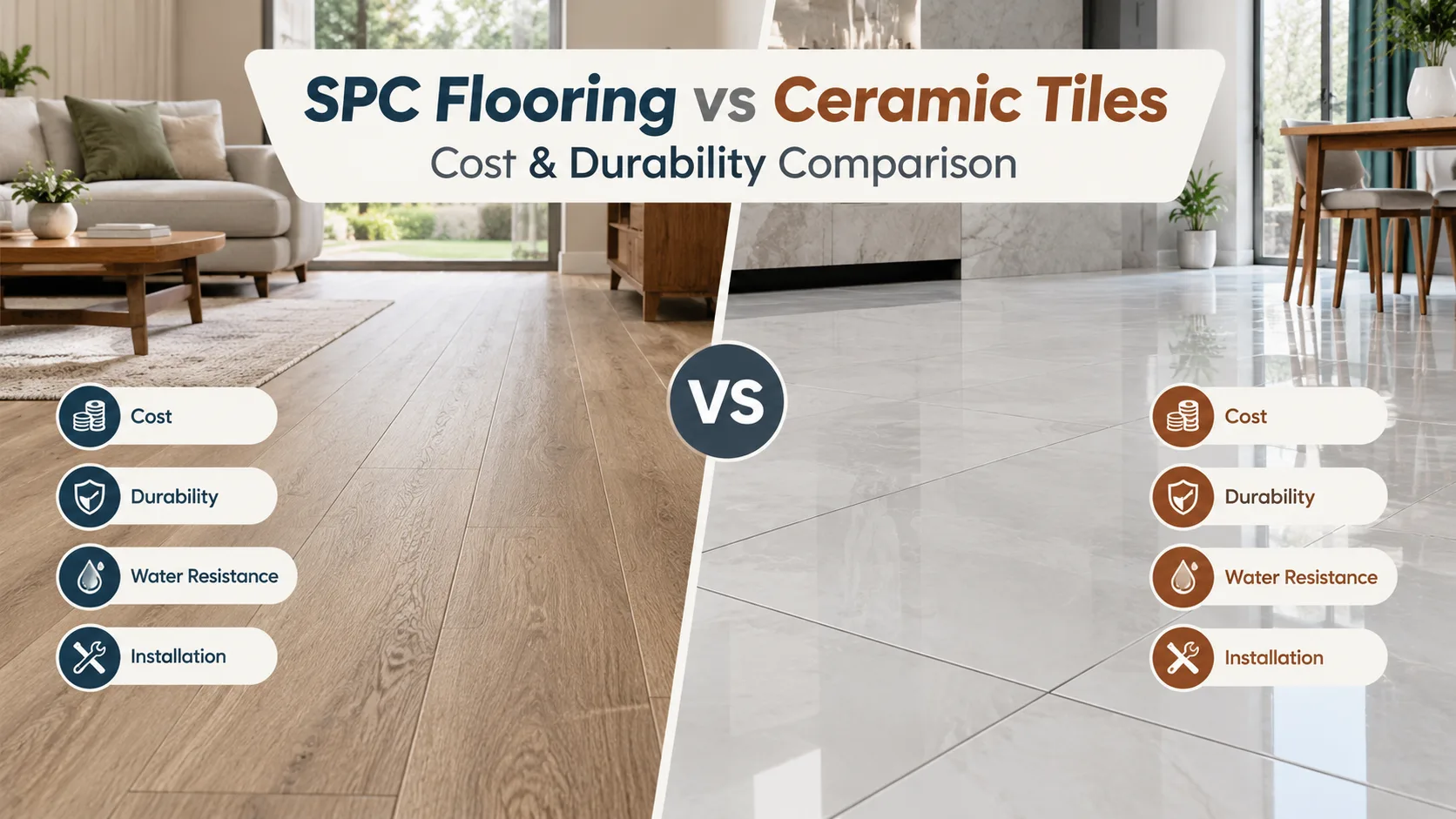
When it comes to the porcelain vs. ceramic tile debate, the answer for floors and wet areas is almost always porcelain. Here is a quick comparison:
| Feature | Porcelain Tiles | Ceramic Tiles |
| Water Absorption | Below 0.5% | 3% – 7% |
| Hardness | Very High | Moderate |
| Durability | Excellent | Good |
| Best For | Floors, wet areas, outdoors | Walls, dry indoor areas |
| Maintenance | Very Low | Low – Moderate |
| Cost | Moderate – Premium | Budget – Moderate |
Ceramic tiles are also an excellent option on the walls of dry rooms, and they are usually lighter and cheaper. However, in the case of any floor in a high-traffic area, bathroom, kitchen, or outdoor area, the benefit of porcelain tile durability is obvious. Porcelain just better copes with the needs of daily life, and it needs much less maintenance in the long term.
Expert Tips for Buying the Best Porcelain Floor Tiles
Before you head to a showroom or place an order online, keep these expert tips in mind to make sure your porcelain tile selection guide translates into a result you'll love for years:
• Order at least 10% more tiles than your measured area to allow for cuts, wastage, and future repairs.
• Always check batch numbers on boxes; tiles from different batches can vary slightly in colour.
• Request physical samples and view them in your actual room lighting, not just under showroom lights.
• Match your grout colour to the tile tone for a seamless finish, or contrast it intentionally for a bold graphic look.
• For rectified tiles, always hire a professional installer; uneven subfloor prep leads to cracking and lippage.
• Consider the coefficient of friction (COF) rating alongside the PEI rating, especially for wet zones and outdoor areas.
When comparing the best porcelain floor tiles across brands, also look at edge finish: polished, unpolished, or bevelled edges each create a very different aesthetic once grouted.
How Do I Maintain Porcelain Tiles for Long-Term Durability?
The ease with which porcelain can be maintained is one of its best qualities. The following is what good maintenance would look like:
• Sweep or vacuum regularly to prevent grit and debris from acting as abrasive material underfoot.
• Use a pH-neutral cleaner for mopping; avoid harsh acid-based or bleach cleaners on glazed porcelain tile finishes.
• Glazed porcelain tiles do not require sealing; however, unglazed or matte porcelain may benefit from periodic sealing to maintain their finish.
• Re-grout joints every 5–10 years depending on wear, as cracked or stained grout is the most common cause of tile deterioration.
• Address chips or cracks early; isolated damage rarely spreads if dealt with quickly, especially in low-maintenance floor tiles.
Quality porcelain can last decades with a minimum of effort, and thus it is one of the most cost-effective long-term investments you can make in your home.
Making the Right Choice for Your Space
The final decision to use porcelain tiles for space and durability is based on the right tile for the right room and application. Consider PEI rating of durability, format size of spatial impact and type of finish of practical performance. You are tiling a small bathroom or a large open-plan living room; there is a porcelain tile that will suit your needs perfectly.
At Antovia Surfaces, we unite a selective assortment of high-end vitrified tiles, large format porcelain, glazed finishes, and natural stone-appearance alternatives that are sourced based on quality, style, and long-term performance. Our team is at your service to assist you with your decisions and locate the tiles that will make your vision come true.
Explore our collections or visit our showroom today to find the perfect porcelain tiles for your space.
FAQs:
Q1. What are porcelain tiles, and why are they better than ceramic tiles?
Porcelain tiles are produced using dense and refined clay, which is fired at extremely high temperatures, which makes them harder, denser, and less porous than ceramic tiles. They have a low water absorption rate of less than 0.5 per cent as compared to 3-7 per cent of ceramic tiles. This renders porcelain tiles much more appropriate on floors, bathrooms, kitchens, and outdoor areas where moisture, stains, and high foot traffic are the order of the day.
Q2. What size porcelain tile should I use to make a small room look bigger?
The most suitable types of large format porcelain tiles are the 24x48 inch or 32x32 inch, which are the best in making a small room appear larger. The reduced number of grout lines form a smooth visual flow that deceives the eye into thinking there is more space. The effect is further improved by laying the tiles diagonally and using light neutral tones. In very small rooms, do not use tiles bigger than a third of the shortest wall.
Q3. What does the PEI rating mean for porcelain tiles?
The PEI (Porcelain Enamel Institute) rating is used to determine the extent to which a tile can withstand foot traffic and wear on a 0 to 5 scale. PEI 1 is only applicable to walls; PEI 3 is applicable to most residential floors; PEI 4 is applicable to high-traffic residential and light commercial areas; and PEI 5 is applicable to heavy commercial. It is advisable to always ensure that the PEI rating is matched to the level of activity of the room before buying.
Q4. What is the best porcelain tile finish for bathroom and kitchen floors?
The most suitable finishes on the floor of the bathroom and kitchen are matte and textured porcelain tiles. They are inherently resistant to watermarks, footprints, and scratches on the surface and are less prone to slipping compared to glossy tiles. Porcelain tiles that are glossy or glazed are more appropriate to the walls and backsplash, where their light-reflecting quality is beneficial to the appearance of the space, and their safety is not a concern.
Q5. Are porcelain tiles suitable for outdoor use?
Yes. Porcelain tiles are ideal outdoor tiles, as long as they are frost-resistant and have a textured, anti-slip surface. They are much more resistant to moisture, UV fading, and temperature changes than most natural stone substitutes. The 2026 design trend of using similar indoor-outdoor porcelain tiles is a common design technique that brings visual continuity between the indoor and outdoor environment.
Q6. How do I maintain porcelain tiles to keep them looking new for longer?
Porcelain tiles are low maintenance in nature. Sweep or vacuum frequently to get rid of abrasive grit. Wash floors using a pH-neutral cleaner; do not use harsh acids or bleach on glazed floors. Glazed porcelain does not need to be sealed, whereas unglazed or matte porcelain can be improved by regular sealing. Grout joints should be re-grouted after 5-10 years to avoid degradation. Simple care will make quality porcelain last several decades without losing its finish.
Q7. How many porcelain tiles should I order for my project?
Always have at least 10 per cent more extra tiles than your measured area of floor or wall. This additional amount is to cover cuts, breakage during installation, and future repairs in case individual tiles require replacement. Also ensure that all the boxes are of the same batch number – tiles of different production batches may be slightly different in shade or texture, and this is noticeable when they are laid next to each other.